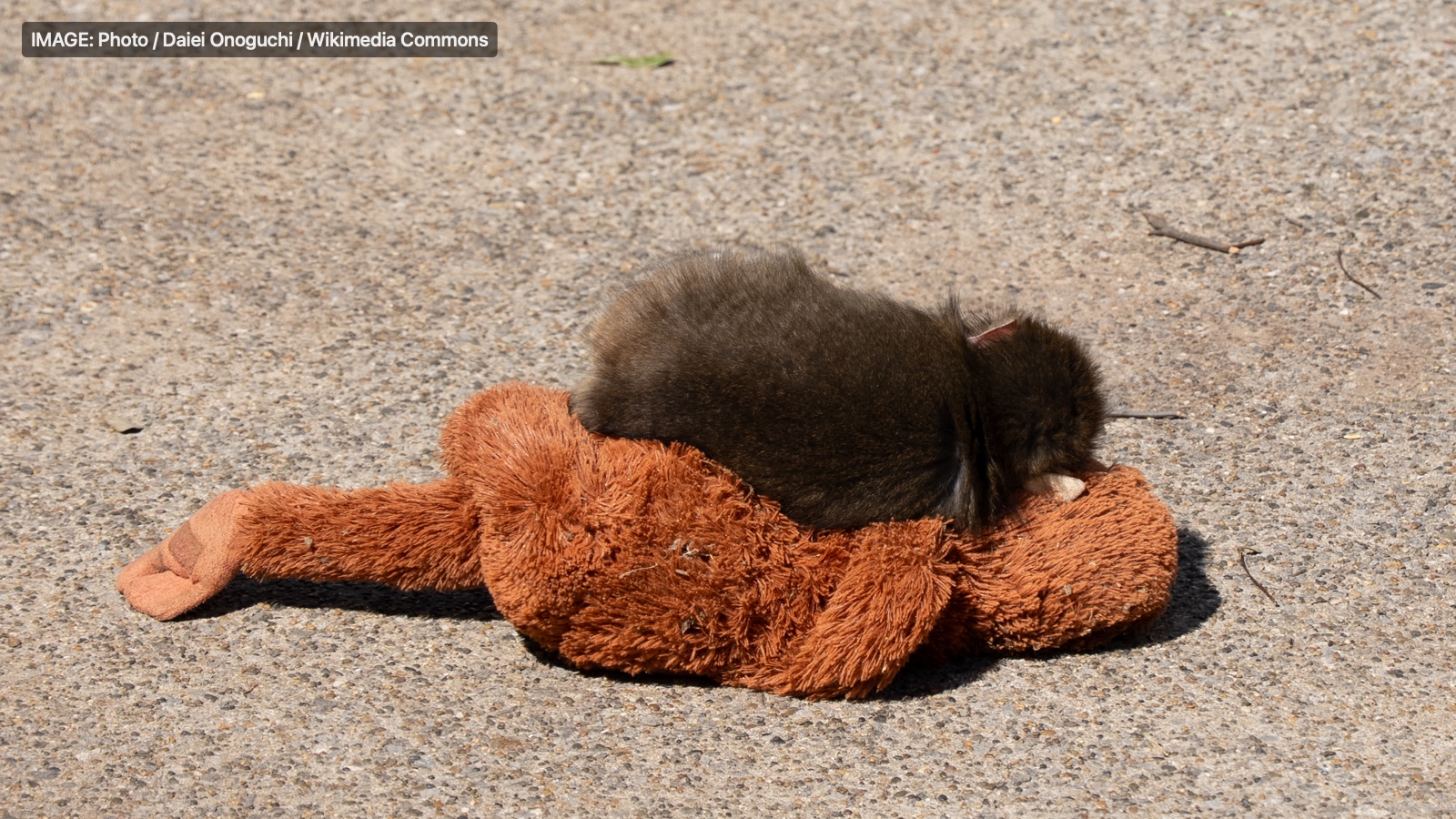
A baby Japanese macaque clinging to an orange stuffed orangutan became one of 2026’s most recognizable animal images. On November 26, Gakken will publish the first book devoted to Punch, the young macaque at Ichikawa City Zoological and Botanical Gardens in Chiba Prefecture, Japan.
The image that made Punch famous is only the opening scene. Ganbare Punch: Kozaru no seichō monogatari, which can be rendered in English as Go, Punch! The Growth Story of a Baby Monkey, follows him from hand-rearing into life with a troop. That longer arc matters in a year when viral baby animals have often become more familiar than the species behind them.
Punch was born on July 26, 2025. His mother didn’t begin caring for him, so the zoo’s keepers stepped in and raised him by hand. They gave him towels and stuffed toys to hold, including the orange IKEA orangutan that viewers came to know as “Oran Mama.”
The plush wasn’t simply a sentimental prop. In the zoo’s account of Punch’s care, keepers explained that something to cling to supported a behavior normally directed toward a mother and helped prevent excessive dependence on people. Two caregivers still supplied physical contact and reassurance during feedings, but the larger goal was always to return Punch to other macaques.

That work began well before he entered the main enclosure. At about three months old, Punch could interact freely with other macaques through a barrier. After he passed four months, keepers started accompanying him onto the zoo’s Monkey Mountain. Before the full introduction, he also spent time with a young female who had behaved gently toward him.
On January 19, 2026, Punch began living with the troop. The stuffed orangutan remained nearby as a refuge when he felt uncertain, but it didn’t replace the social education happening around him. Other macaques corrected him, avoided him, approached him and played with him. By March, the zoo said he was spending more time away from the plush as those relationships developed.
There is a difficult balance in hand-rearing a social animal. Human care may keep an infant alive, yet success eventually means the animal can rely less on people. Discvr followed a related transition when Milani, a hand-reared giraffe calf, moved from round-the-clock care into a herd. Punch’s route was different, but the destination was similar: a life organized around his own species.
The book records the harder part
Gakken says the 48-page book draws from more than 10,000 photographs taken by Punch’s keepers. Its photo section includes early images with Oran Mama and later scenes of Punch playing with other macaques. A picture-book-style narrative recounts his first year, while an illustrated guide explains Japanese macaque anatomy, daily life on Monkey Mountain and communication within the troop.
The book was produced with the cooperation of Ichikawa City Zoological and Botanical Gardens and Ichishin Holdings. Zoologist Tadaaki Imaizumi supervised the project, and the images include work by the zoo and wildlife photographer Toyofumi Fukuda. Gakken credits Ochopi and China Kinoko for the illustrations.
This isn’t being presented only as a souvenir for people who followed Punch online. The project grew from a 2020 educational partnership between Ichikawa City and Ichishin Holdings. Copies will be donated to school libraries in the city, and Gakken says part of the sales will go back to Ichikawa City and the zoo. The publisher’s official announcement and book preview also shows how the animal guide broadens the story beyond a single famous face.
That may be the book’s most useful choice. People around the world met Punch through an image of vulnerability: a small monkey holding tight to something soft. His keepers were working toward a less instantly photogenic outcome, one in which the plush became less important and the troop became more so.
Punch’s story was never just about what he held. It was about what he was learning to join.
Featured image: Daiei Onoguchi / Wikimedia Commons, CC BY-SA 4.0. Center-cropped to 16:9; creator credit added at upper left.


Leave a comment