Jennifer “Jenny” Balcarras was 48; her daughter, Selah Reed, was 20. They died near a walking trail in Bella Coola, British Columbia. Conservation officers announced on November 6 that they’d captured a grizzly, but hadn’t determined whether it was involved in their deaths.
Their family had reported them missing on November 1, 2026. Searchers recovered their remains in the Snooka West Trail area on November 2 and 3. Balcarras was an art therapist who had settled in Bella Coola that summer. Her brother described a woman comfortable in remote places, including Alaska, and rejected suggestions that she and her daughter were inexperienced around wildlife.
The investigation has brought back fear from another encounter in the valley. A grizzly attacked students and staff from Acwsalcta School on November 20, 2025, injuring 11 people. Three children and an adult were badly hurt. Officers subsequently trapped eight bears, yet the search ended without finding the animal responsible.
All eight captured grizzlies were excluded through forensic examination and released or relocated. That history has become important again: investigators still have evidence from the school-group attack, including a DNA profile, to compare with samples obtained during the new search.
December 5, 2025: conservation officers explain the exclusions in the earlier school-group investigation.
A genetic profile can remain useful long after traps have been removed. Dean Hildebrand, founder of the British Columbia Institute of Technology’s forensic DNA laboratory, explained in Canadian news interviews that profiles can be stored electronically for later comparison. His laboratory isn’t handling the Bella Coola investigation, but the method he described allows an unresolved case to be tested against an animal encountered months or years later.
The comparison starts with material left at a scene. A matching profile from a captured bear can identify the source of that material. Investigators then interpret the result alongside wounds and other physical findings to reconstruct the encounter. Research on deer and elk mortality investigations has documented the need to distinguish material left during an attack from traces deposited by scavengers afterward.
In Bella Coola, officers are also examining physical features of captured animals. The conservation service’s November 6 announcement said testing was underway to determine involvement. As of November 9, no public DNA result or decision on the captured grizzly had been located. Officials continued to describe the deaths as a suspected grizzly attack, with the number of bears involved still unresolved publicly.
The two investigations could therefore yield a shared identity, different animals or no conclusive connection. The present capture alone answers none of those possibilities. Bella Coola lies within the Great Bear Rainforest, where multiple grizzlies use a landscape containing schools, homes, roads and walking routes.
Elsewhere in British Columbia, genetic work has already changed an announced identification. In Maple Ridge, officers confirmed on August 14, 2026, that a black bear killed by police had attacked a child. That finding, reached after further evidence gathering and DNA analysis, reversed their initial assessment that police had killed the wrong animal.
Back in Bella Coola, trapping continued after the November 6 announcement, and the conservation service reported bear sightings near the attack area. Its direction to the public remained to avoid the trail area while officers worked.
Protecting people in a landscape shared with bears
For the grizzly being assessed, the outcome depends on identification. The conservation service has said it will kill any bear confirmed responsible for the fatal incident and release unrelated animals. It described arrangements with wildlife biologists and the provincial veterinarian to care for the captured bear during the examination.
That response is about preventing serious harm. British Columbia’s published single-grizzly conflict guidelines require investigation of high-risk incidents and include confirming the animal’s identity among the assessment steps. They also provide non-lethal options for suitable lower-risk situations, including managing attractants, conditioning bears to avoid people and relocation.
A provincial explanation published in 2012 warned that bears accustomed to obtaining human food may return after relocation or create conflict elsewhere. That history is relevant to management decisions, although officials haven’t publicly characterized the captured grizzly as food-conditioned. Nor have they established the encounter’s motivation or a likelihood of another attack.
Grizzly behavior is more specific than the idea of an animal defending everything within its territory. WildSafeBC describes grizzlies as non-territorial animals that defend personal space, food and young. Their home ranges can overlap, and they travel between feeding areas. A bear may use a stretch of river, move elsewhere and return when food becomes available again.
In autumn, building reserves for winter occupies much of a bear’s activity. This intensive feeding phase, called hyperphagia, brings coastal grizzlies to salmon streams as well as other food sources. Bears absorbed in feeding may be less aware of approaching people; running water and thick vegetation can further obscure an encounter until the distance is short.
That makes local conditions and warnings more useful than a fixed assumption about when bears should be asleep. Seasonal restrictions can give animals space around important feeding areas. In this case, the authorities’ instruction concerns the Snooka West Trail area; no blanket August-to-December closure was identified in the announcements reviewed.
The women’s final encounter remains largely unexplained publicly, including whether either carried bear spray. Advice for future walkers should stay separate from judgments about their preparations. Another claim raised in the discussion, that menstruation attracts grizzly attacks, is unsupported. Yellowstone National Park’s backcountry guide reports neither a statistical association between menstruation and bear attacks nor evidence of special attraction to menstrual odor in grizzlies or black bears.
For someone traveling through bear habitat, the immediate aim is to avoid a close surprise. Parks Canada and WildSafeBC advise making your presence known where water or vegetation can hide an approach. Keep bear spray within reach rather than buried in a pack, and learn to use it before setting out. Traveling together and keeping dogs under control can also reduce the risk of an encounter escalating.
A response during an attack depends on the bear’s behavior. Playing dead applies to physical contact in a defensive attack. Persistent non-defensive pursuit or a predatory attack calls for an aggressive response, including spray and fighting back if attacked. Neither approach is a universal instruction for every bear seen on a trail.
Around homes, preventing access to food can reduce repeated visits. Fruit, livestock and beehives can be protected with properly installed and maintained electric fencing. WildSafeBC’s fencing guidance documents support for eight new installations in the Bella Coola Valley in 2020. Comparable work to keep grizzlies and people safer in Montana has used fencing and secured attractants around rural properties. These are targeted protections for places where food draws animals close to people, rather than a barrier separating an entire valley from wildlife.
Whether to reopen British Columbia’s licensed grizzly hunt is a different decision. The B.C. Wildlife Federation has called for it, while conservation researchers and Coastal First Nations oppose that response. The provincial ministry told CBC the hunt remains closed. Its effect on future encounters is contested, rather than an established remedy for what happened here.
The Nuxalk Nation is confronting the immediate loss while considering how residents and bears can continue to share the valley. Elected Chief Samuel Schooner said the community needed time to determine its own solutions. “Nuxalk have lived with bears for thousands of years, and we consider them to be our kin,” he said in a statement quoted by CBC.
Children have received escorts on the way to school, and rides have been offered to help people get around. The community also recommended an unenforced 8 p.m. curfew. For residents, the work of making the valley safer includes ordinary journeys that can’t simply stop: a school bus arriving, a trip home and the next day’s need to go out again.
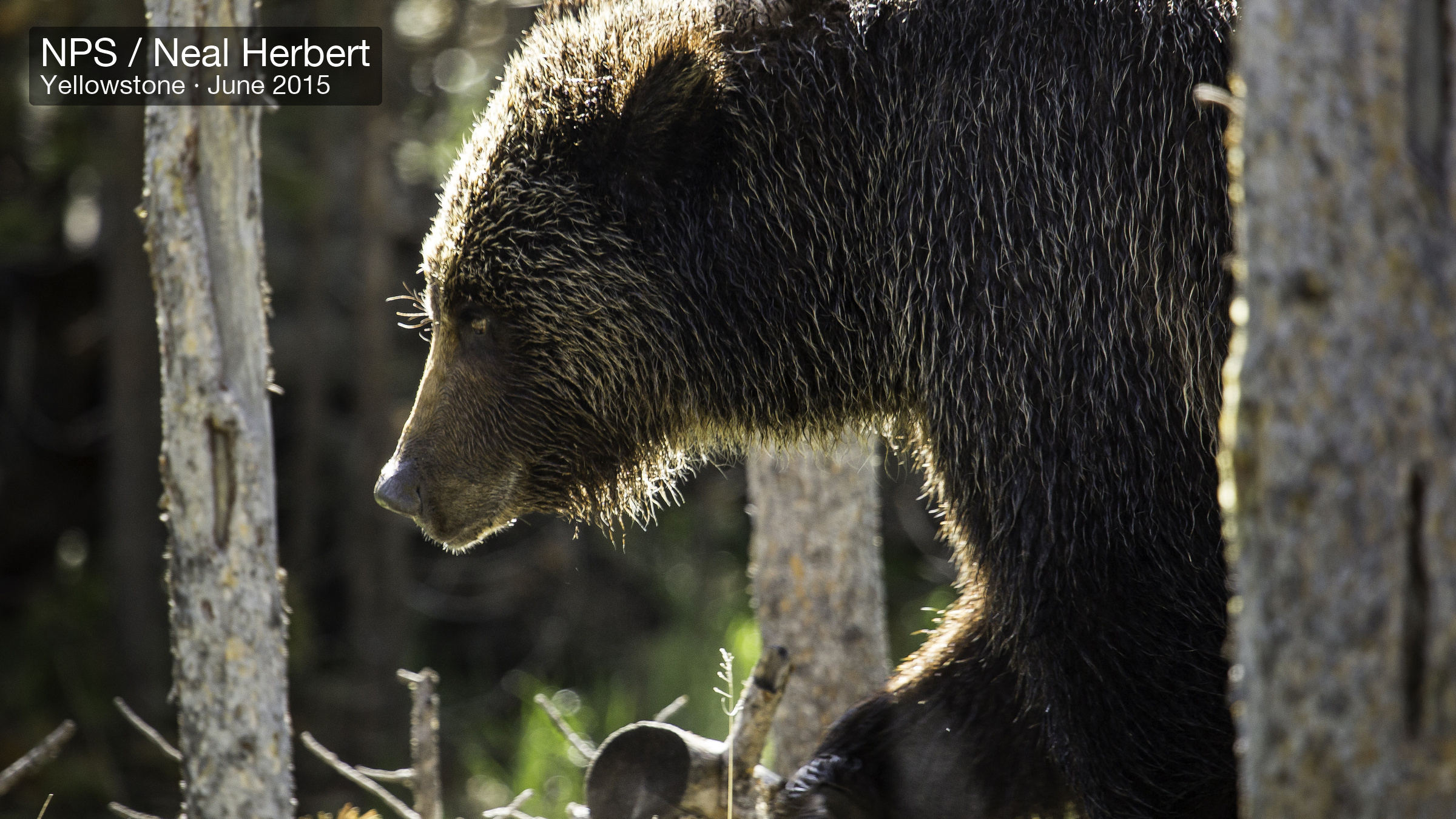
Featured photo: Neal Herbert / National Park Service, “Grizzly near Swan Lake,” Yellowstone National Park, June 6, 2015. Public domain; cropped and credited.