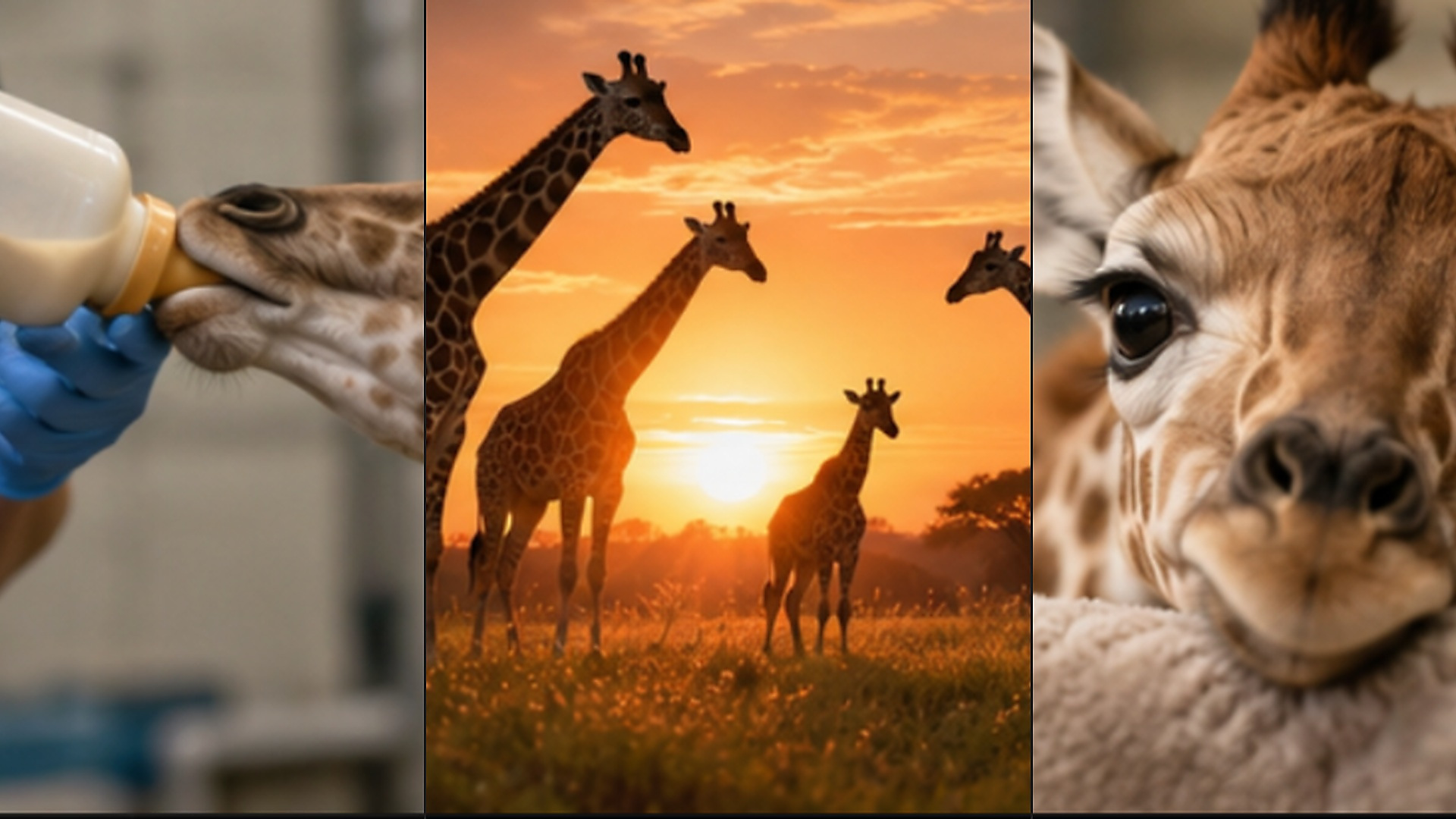
On October 8, 2026, Milani was introduced to the giraffe herd at Tanganyika Wildlife Park in Goddard, Kansas. Dee, a female calf only a few months older, was among the first animals to approach. The two sniffed one another and then ran across the habitat.
For Milani’s caregivers, that ordinary burst of calf energy was the result they had worked toward since July. The premature newborn had arrived unable to breathe reliably, stand, nurse or live safely beside adult giraffes.
Milani’s story reached many of the same readers following April’s and Tessa’s giraffe families. Beneath Discvr’s Facebook post about Milani, one person asked whether her mother had accepted her. Virtue never had the opportunity.
Virtue’s appetite had been declining for weeks during late pregnancy. Keepers first used medication and urine tests that didn’t require restraint, then moved to a chute she had been trained to enter. That allowed the team to collect blood, give fluids and examine the pregnancy.
The first bloodwork showed elevated lactate. A second examination within 72 hours found a sharp increase, signs of abnormal clotting and failing organs. The park sought input from six veterinarians and specialists connected to nine institutions.
By July 11, the team believed Virtue’s decline could not be reversed. She was placed under anesthesia for a terminal cesarean section. Milani was removed surgically, and Virtue was humanely euthanized while still under anesthesia. She never regained consciousness.
Tanganyika’s first public medical account listed advanced disease in Virtue’s heart and kidneys along with a uterine cyst. It also said complete pathology was still pending. A later park account said the clinical picture suggested pregnancy toxemia. As of November 1, 2026, the park had not published a final pathology report explaining how those findings fit together.
Milani then required immediate resuscitation. During a typical giraffe birth, the calf moves through the birth canal and drops from a standing mother. Those forces help expel fluid and prompt the newborn to begin breathing. The first hours of a healthy calf’s life are among the milestones viewers watch for during a giraffe birth livestream.
A surgical delivery bypassed much of that process. The team cleared Milani’s airway, dried her, provided oxygen and used physical stimulation until her breathing became more dependable.
Staying alive was only the first step
Milani couldn’t nurse from her mother, so she missed the early colostrum feedings that normally supply a calf with maternal antibodies. Her caregivers used a bovine colostrum product and an intravenous transfusion of giraffe plasma to provide temporary immune protection.
The plasma came from Dickerson Park Zoo in Springfield, Missouri. Tanganyika identified a giraffe named Mili as the donor, while Dickerson said Mili and Grady both participate voluntarily in routine blood collection. The zoo said the dose sent to Kansas represented about six years of plasma draws. Milani’s name partly honors Mili.
The emergency also showed why plasma banks exist. Rather than waiting for a crisis and then searching for a suitable donor, participating facilities collect and freeze plasma in advance. When the request arrived on July 11, a Dickerson keeper began the trip to Kansas in less than an hour.
Milani’s early care continued around the clock. Staff controlled how much milk she received, monitored hydration, temperature, glucose and blood values, and helped her practice standing. A feeding tube supplied nutrition until she could take a bottle willingly.
There was good reason to be cautious about feeding. A 2021 veterinary case series followed 10 newborn giraffes that needed hospital care and hand-rearing. Five were treated for suspected inadequate transfer of maternal antibodies, and six developed diarrhea. Every calf in the series survived to discharge, but the study also showed how quickly nutrition and digestion can become medical issues.
Milani’s progress came in small physical gains. She stopped needing oxygen. She learned to remain upright without support, then mastered the harder sequence of lowering herself and standing again. Eventually, the feeding tube came out.
One question about her bowel movements drew roughly 200 likes in Tanganyika’s broader social coverage. The humor hid a practical concern. Before Milani could move toward the herd, keepers needed her to eat and eliminate waste consistently enough that both had become routine.
Human contact made those milestones possible. A calf comfortable with her caregivers was more likely to accept bottles and handling. At the same time, the team had to prepare her for a social life that would eventually center on giraffes rather than people.
Another lactating female was not available, and placing an unstable calf among adults weighing thousands of pounds would have created a new danger. Tanganyika planned introductions in stages, choosing animals according to their behavior and Milani’s readiness.
Dee offered an important first companion because she was close to Milani in age. When the meeting finally happened, the calves examined one another and began running. Tanganyika said the rest of the herd also accepted Milani.
The park says it knows of no earlier giraffe calf that lived after delivery by cesarean section. The wording should remain qualified. In a 2007 veterinary case from Longleat Safari Park, an adult giraffe recovered after surgeons removed a male calf that was already dead. Published records remain sparse, and there is no worldwide registry capable of proving an absolute first or producing a reliable survival percentage.
Milani’s move into the herd did not make her unusual beginning disappear. It changed the kind of care she needed. Instead of spending her days separated for intensive monitoring, she could begin learning from giraffes of different ages while continuing to grow.
For nearly three months, people supplied the breathing support, nutrition and physical help that kept her alive. By October, the next part of her development belonged to the herd.

Leave a comment