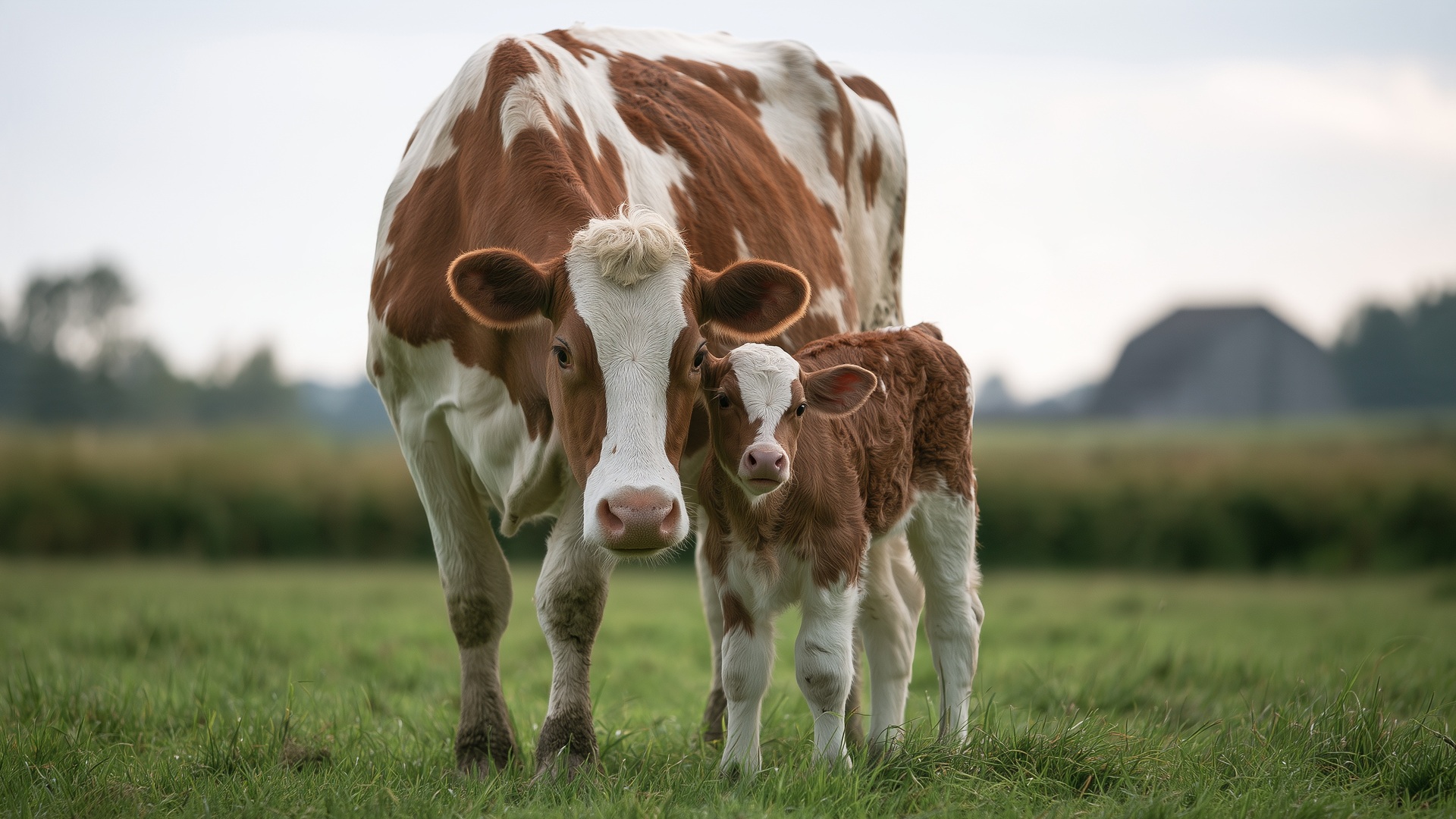
At Rainton Farm in southwest Scotland, a calf can nurse from its mother for five or six months while the farm continues to produce milk for people. The business, known as The Ethical Dairy, says it milks its cows once a day during that period. Keeping the calves alongside them took years of adjustment, including an early trial that failed financially.
The arrangement changes one of the first decisions made in a dairy calf’s life. On many commercial farms, mother and calf are separated within hours of birth. At Rainton, the farmers built their operation around a longer relationship. Their experience raises a practical question for an industry facing scrutiny over animal welfare. What would it take to give more calves that time?
In England, reporting published by Dorset Life on November 1, 2026, described undercover footage obtained by Animal Justice Project that appeared to show cows being struck and calves handled roughly at farms supplying Arla. The group’s allegations included a newborn being taken from its mother at Longlands Farm in Frampton just 25 minutes after delivery.
Arla told the publication it had opened an urgent investigation. Red Tractor, the farm-assurance organization, said it needed further details about the footage’s timing and locations to investigate. The allegations concern a small selection of suppliers within Arla’s British network, which coverage puts at roughly 2,400 farms.
Behind the individual cases is a practice familiar across dairy farming. Early separation lets staff take direct control of feeding and monitor how much a calf drinks. Farmers also cite disease prevention and the difficulty of separating animals once their bond has grown stronger. Milk that would otherwise be consumed by the calf can enter the farm’s saleable supply.
The first feed is particularly important. Colostrum, the milk produced immediately after birth, supplies antibodies that help protect a calf against infection. A calf left beside its mother still needs supervision to ensure it actually nurses and receives enough. Difficult births, weak calves and trouble reaching the udder can complicate that first meal. The importance of those early antibodies also shaped Milani’s care as a newborn giraffe, after she was born unable to nurse from her mother.
England’s cattle welfare code recommends that calves spend at least 12 hours with their mothers, preferably 24. Earlier removal should be for disease control under veterinary advice, with the arrangement recorded in the farm’s health and welfare plan. The code also calls for careful attention to colostrum intake, including help with feeding when necessary.
The health argument for routinely separating every newborn has received substantial scientific scrutiny. Annabelle Beaver and colleagues examined 70 research articles for a 2019 review in the Journal of Dairy Science. Across the evidence, they found no consistent health advantage supporting early separation. Findings varied for outcomes including pneumonia, immunity and mortality, and differences in feeding or hygiene sometimes made comparisons difficult.
Their analysis emphasizes how much depends on the care surrounding birth. Clean facilities, prompt feeding and attention from staff remain necessary when cows raise their calves. The same tasks have to be performed well when people take over feeding.
Maternal care also has a social dimension. Researchers have examined it by comparing the behavior of calves raised with maternal contact against those separated early.
Keeping the bond changes the challenge
A second 2019 review, led by Rebecca Meagher, examined behavior, welfare and productivity. The studies suggested benefits for calves’ social development and a reduction in abnormal behaviors when contact lasted longer. Nursing calves also gained more weight during the milk-feeding period. The researchers cautioned that study designs differed and evidence for some longer-term effects remained limited.
They also found a difficult consequence. Animals allowed to remain together can show stronger distress when separation eventually comes. Separating them within the first day reduced that immediate response in the studies reviewed. A farm extending contact must therefore plan for both the benefits of the relationship and the eventual disruption of it.

This makes weaning and separation important parts of the system’s design. Stopping milk intake and removing a familiar social partner are changes that can happen together or at different times. Researchers are investigating gradual approaches, restricted periods of contact and opportunities for animals to remain close while nursing ends.
The European Food Safety Authority recommended in 2023 that calves remain with their mothers for at least a day, with longer contact encouraged for its welfare benefits. It also recommended small-group housing and enough room for young calves to rest and play.
Evidence from working dairy farms is beginning to fill out the picture. In a 2025 Austrian study, Anna Rademann and colleagues visited 50 farms, half practicing cow–calf contact and half using early separation. Contact systems included calves raised with their own mothers or foster cows. Calves in those systems received better overall welfare classifications and showed fewer oral behaviors unrelated to feeding, such as licking objects.
The farms differed in other ways, too. Contact farms provided more space and pasture access, among other management differences. The study was observational, so those advantages belong to the whole farming arrangement. It couldn’t isolate how much improvement came from contact with a cow alone.
For a farmer, the financial calculation begins with the milk the calf drinks. Meagher’s review found that nursing reduced the amount available for sale during the contact period. Evidence of a lasting reduction in milk production was inconsistent. Even a temporary reduction in saleable milk, however, has to be accommodated in a business’s costs and income.
The operators of The Ethical Dairy credit improvements in health and productivity, alongside reduced inputs, with helping them find a viable approach. Their commitment became permanent in 2019, seven years after the financially unsuccessful first trial. A redesigned system had been operating across the herd since 2016.
The next practical test is how calves leave that arrangement. A farm that lets them nurse for months still has to help them eat independently and adjust to separation. Extending their time together makes that later transition part of the welfare promise.


Leave a comment