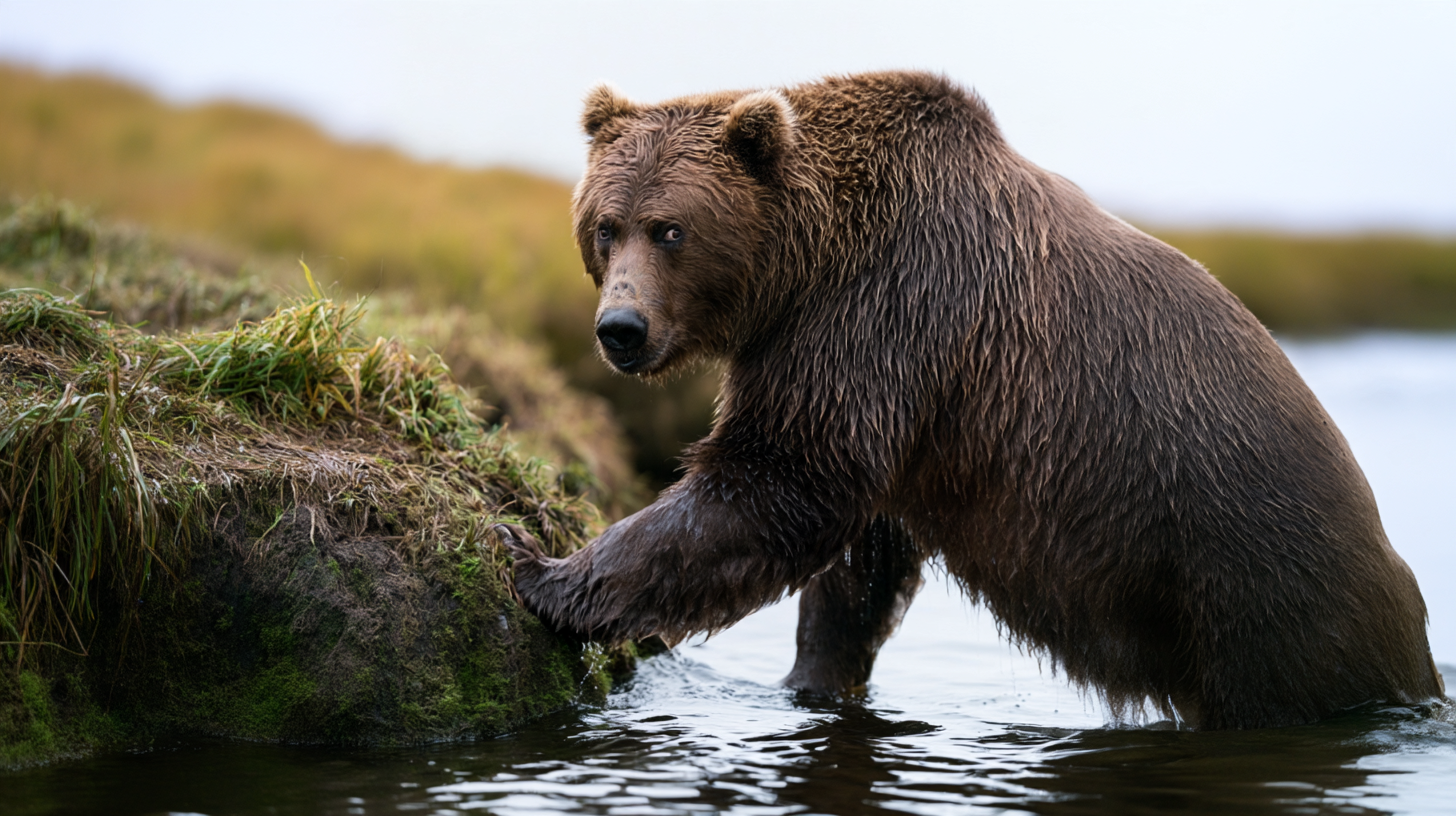
Fat Bear Week 2026 is giving its opening matchups an extra day after record turnout overloaded the voting system on September 22. Organizers extended those contests into Wednesday, September 23, while confirming that successfully submitted votes will still count.
The delay affects the first four pairings in this year’s expanded Fat Bear Week bracket. The competition features brown bears from Brooks River in Alaska’s Katmai National Park and Preserve, with mothers and cubs competing together alongside individual bears.
Katmai Conservancy’s announcement described the turnout as the largest for an opening day in the event’s history. It didn’t provide a numerical total, so the record shouldn’t be confused with a confirmed count of votes or individual voters. The practical change was clear: people who couldn’t get through would have another opportunity.
Explore.org traced the access problem to its polling provider’s limit on simultaneous viewers. Its notice asked people who had finished voting to close the page, freeing capacity for others. The organization said it was working with the provider to resolve the problem.
The extended contests pair 132’s family with 284’s family, and 806’s family with 901’s family. The other two matchups put 909 against 428 Studious, and 131 against 910. As of September 23, Explore’s public results table didn’t list winners or final totals for those contests.
One family enters with a summer story that reaches well beyond the polls. In July, Bear 132’s missing cub spent several days apart from its mother and two siblings before the family reunited near the lower Brooks River. Nobody witnessed the separation. The family’s tournament entry now includes all three cubs.
Why the opening round includes whole families
Five family groups appear in this year’s tournament. Explore says their inclusion recognizes a summer when Brooks River recorded 19 bear families and 37 cubs, both records for the site. Those numbers describe the river’s observed bear population, not the number of animals on the ballot.
For a mother, accumulating winter reserves happens alongside feeding and protecting dependent young. Cubs are growing while learning how to live around the river. A photograph of a large adult therefore captures only part of what a family has managed during the season.
The feeding behind those transformations is worth watching in its own right. How bears catch salmon depends on their skills, access to fishing spots and changing river conditions. The resulting fat reserves sustain them through hibernation, when they don’t eat or drink.
The competition began with a much smaller voting exercise. Fat Bear Tuesday took place on September 30, 2014, using Facebook likes. The first weeklong tournament followed in October 2015. By 2025, more than 1.7 million votes were being cast across the event, with participation from over 100 countries. Bear 32 Chunk won that year’s title.
For this year’s extended opening round, the official voting page remains the place to check active contests. Published voting hours are noon to 9 p.m. Eastern, equivalent to 8 a.m. to 5 p.m. Alaska time. The NPS announcement still lists September 29 as the final, with no voting on September 26 or 27.
Because the first round has spilled into another day, voters should check the live polls rather than assume an older bracket graphic reflects the current daily lineup.

Leave a comment