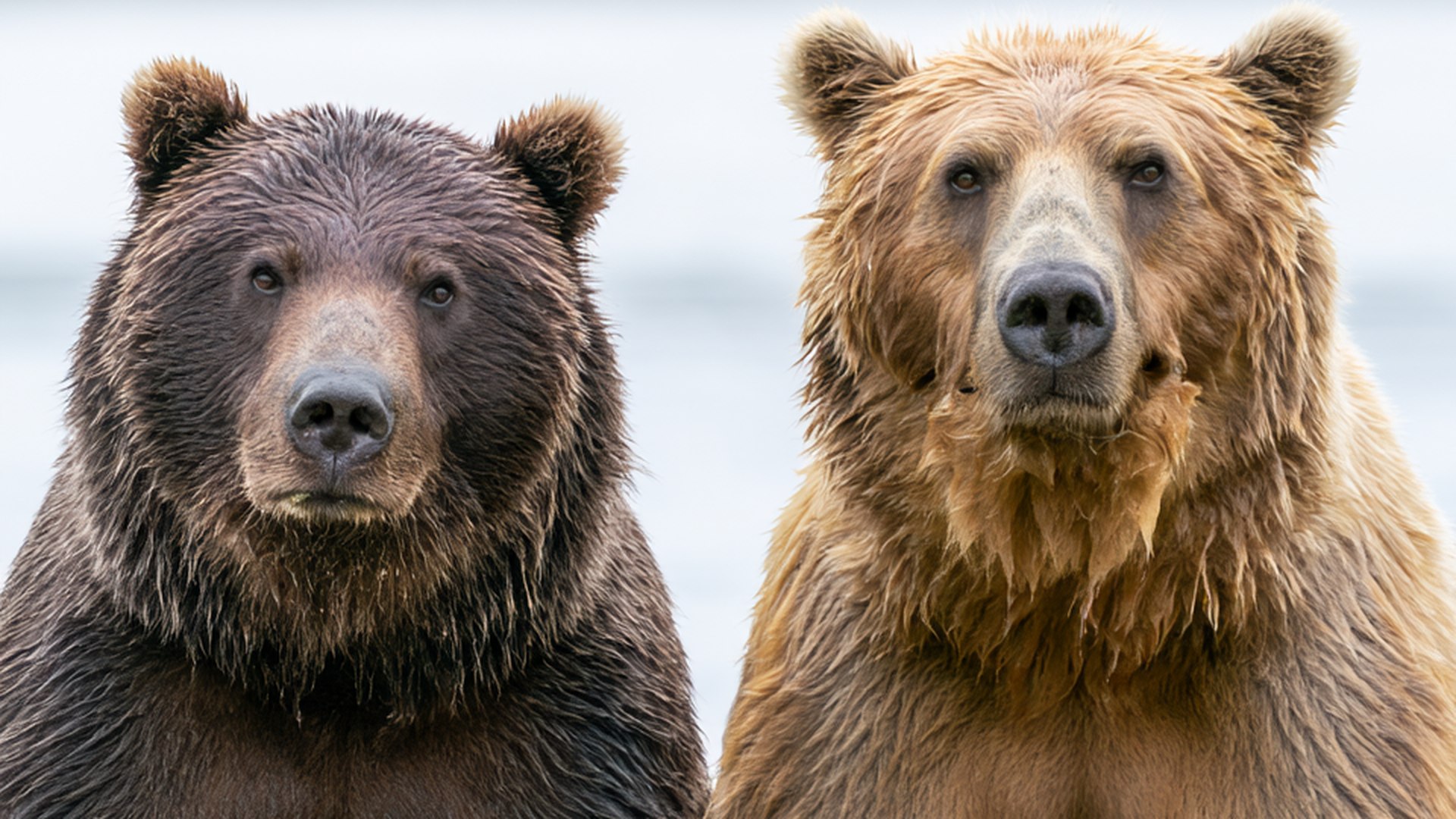
Fat Bear Week’s 2026 bracket is set, and the biggest change isn’t the return of a famous heavyweight. The field has grown to 16 entries, and five of those slots belong to family groups rather than solo bears. Explore.org’s 2026 bear profiles say Brooks River recorded 19 bear families and 37 cubs this summer, both record highs for the site.
That makes the bracket reveal more than a roster update. Discvr’s earlier look at why Fat Bear Week feels like a fall holiday focused on the attachment that grows when people follow the same wild animals across seasons. This year’s tournament puts that continuity directly into the bracket, with mothers and cubs sharing the field with established adult males, including reigning champion 32 Chunk.
Voting begins September 22 and ends September 29, with no voting on September 26 or 27. Polls on the official Fat Bear Week page are scheduled to remain open from noon to 9 p.m. Eastern on voting days. Each matchup allows one vote per email address, and the entry with the most votes advances.
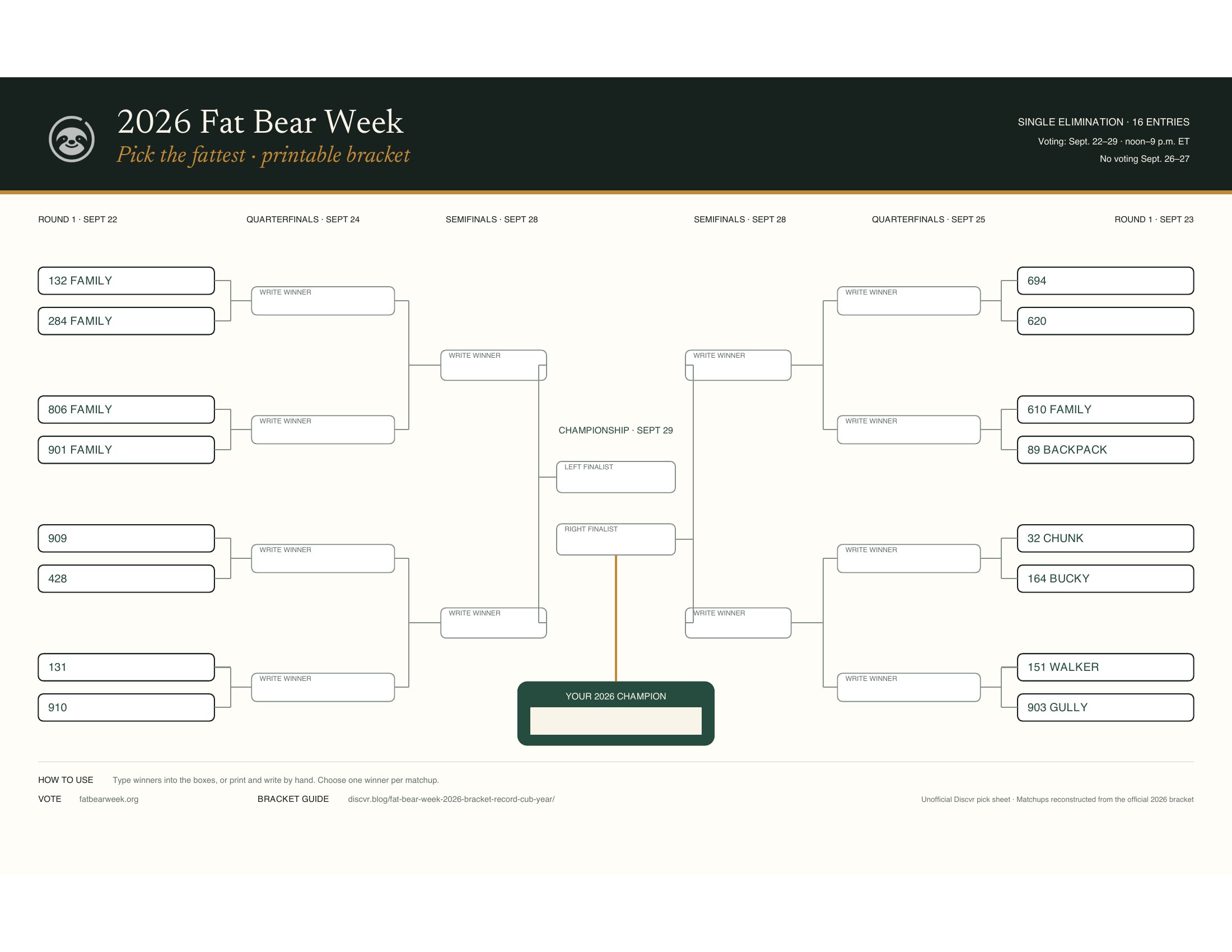
Download the 2026 Fat Bear Week bracket
Pick your winners and follow every matchup through the championship. Download Discvr’s free printable bracket, fill it out digitally or print it, and compare your picks as voting unfolds.

Discvr reconstruction of the official 2026 matchups. Family entries represent a mother competing with her cubs.
First-round matchups
| Date | Matchup |
|---|---|
| Sept. 22 | 132 Family vs. 284 Family |
| Sept. 22 | 806 Family vs. 901 Family |
| Sept. 22 | 909 vs. 428 |
| Sept. 22 | 131 vs. 910 |
| Sept. 23 | 694 vs. 620 |
| Sept. 23 | 610 Family vs. 89 Backpack |
| Sept. 23 | 32 Chunk vs. 164 Bucky |
| Sept. 23 | 151 Walker vs. 903 Gully |
The official bracket is important for one small but meaningful distinction. There are 16 entries, not simply 16 individual bears. Five are family groups: 132, 284, 806, 901 and 610.
There is also no separate Fat Bear Junior tournament on the published 2026 schedule. In previous years, cubs had their own competition. This time, younger bears are represented alongside their mothers in the main event, shifting some of the attention from individual size to the demands of raising and protecting offspring.
Why this year’s bracket tells a different story
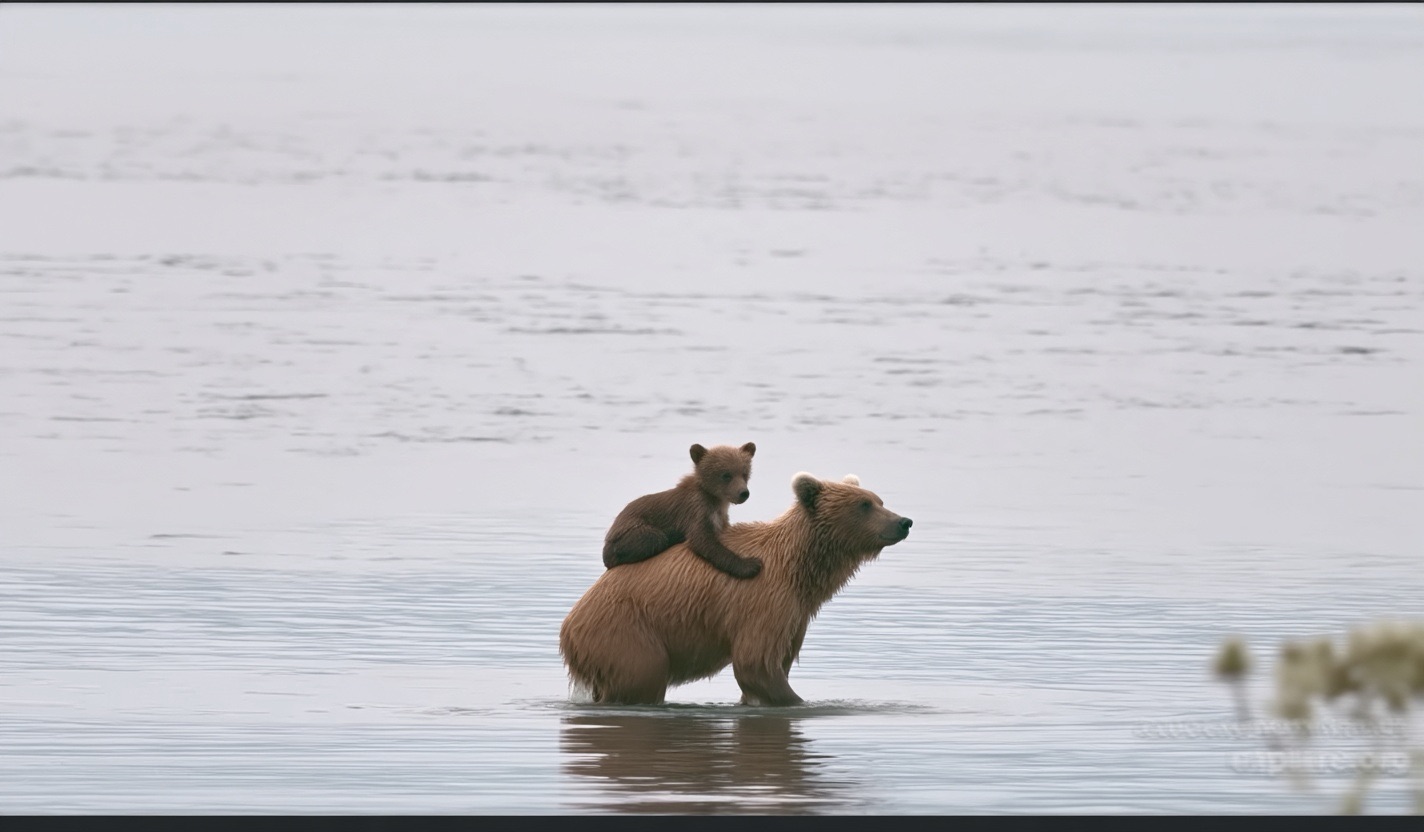
Several of the family entries capture just how unusual the summer has been. Bear 132 enters with three spring cubs, while 284 has two. Bear 610 is a first-time mother with two spring cubs. Bear 806’s family is the most unusual of the group, because she is caring for one biological spring cub and an older cub that had previously been raised by two-time Fat Bear Week champion 128 Grazer.
The cameras didn’t capture the moment that older youngster began associating with 806, so exactly how the relationship formed remains unknown. What viewers can see is the result: a mixed-age family moving through Brooks River during a season already notable for its number of mothers and cubs.
The family-heavy field also makes Fat Bear Week’s central comparison less straightforward. A mother supporting cubs, a growing younger bear and a massive adult male are facing different energetic demands. The tournament puts them into head-to-head matchups anyway, but the biology behind those transformations isn’t the same.
The most obvious heavyweight matchup arrives September 23, when defending champion Chunk meets 164 Bucky in the first round.
Chunk’s 2025 title already came with one of the tournament’s more unusual survival stories. He returned to Brooks River that summer with a badly broken jaw. The National Park Service says the break is now fully healed but permanent, leaving part of his lower jaw hanging to the right side of his muzzle. Despite the injury, Chunk adapted his feeding, built the reserves needed for hibernation and went on to win Fat Bear Week 2025.

Bucky’s route to prominence has looked different. He became known as a younger bear for repeatedly fishing along the edge of the deep plunge pool below Brooks Falls, using a difficult position to intercept salmon while avoiding some of the most crowded fishing spots. As he has grown, he has become capable of displacing more bears and challenging for better positions along the river.
Now Bucky is large enough to meet the defending champion directly in the bracket. The matchup puts two forms of success beside each other: Chunk’s adaptation to a major injury and Bucky’s progression from an inventive young fisherman into a much larger adult male.
There are familiar family lines elsewhere in the field. Bear 428 is a daughter of 128 Grazer. Sisters 909 and 910 are daughters of former champion 409 Beadnose. Bear 89 Backpack is the son of former champion 435 Holly, while 620 is 910’s daughter. Fat Bear Week increasingly contains animals whose histories can be followed across generations rather than a collection of anonymous bears appearing for a single week.
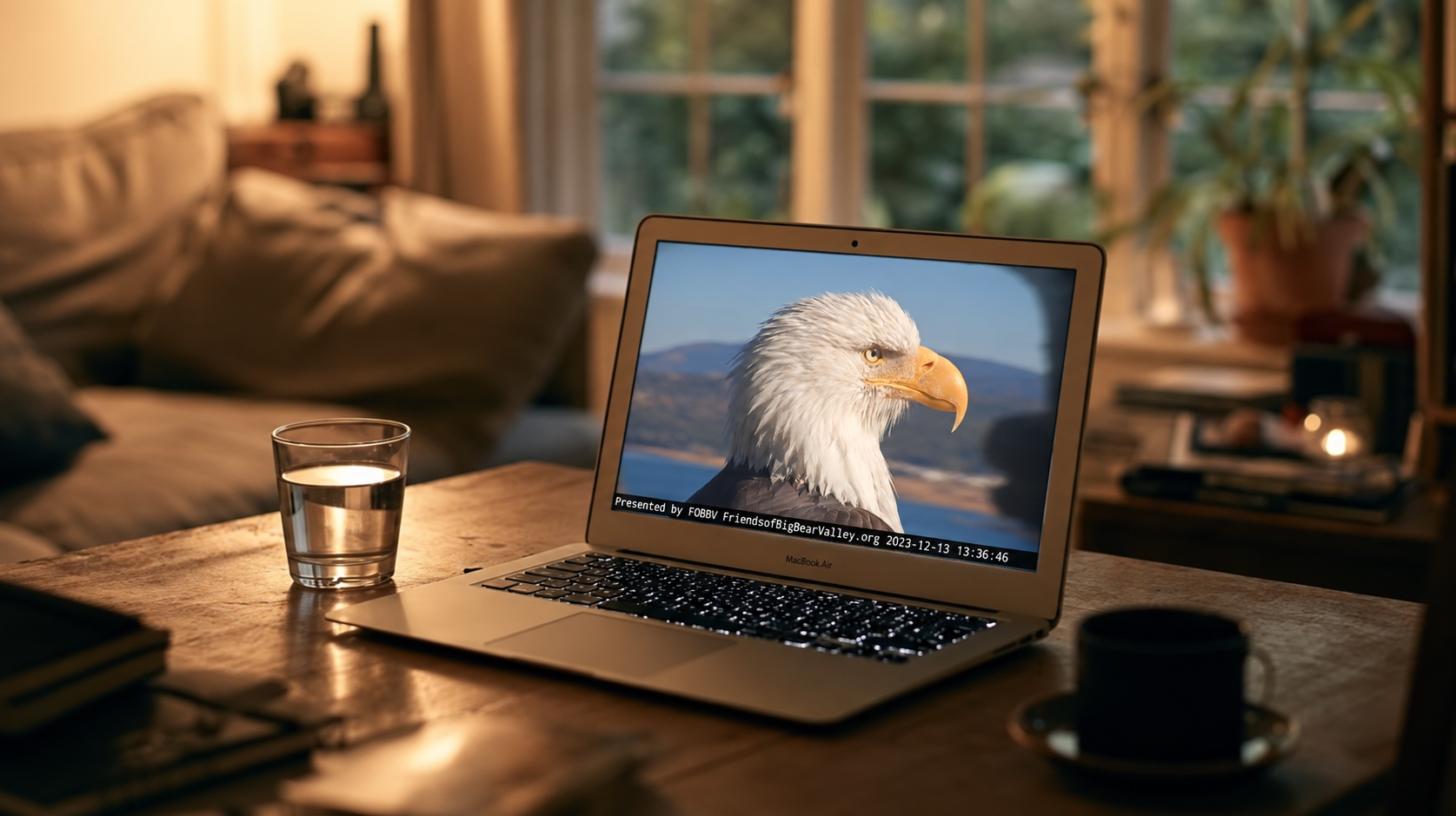
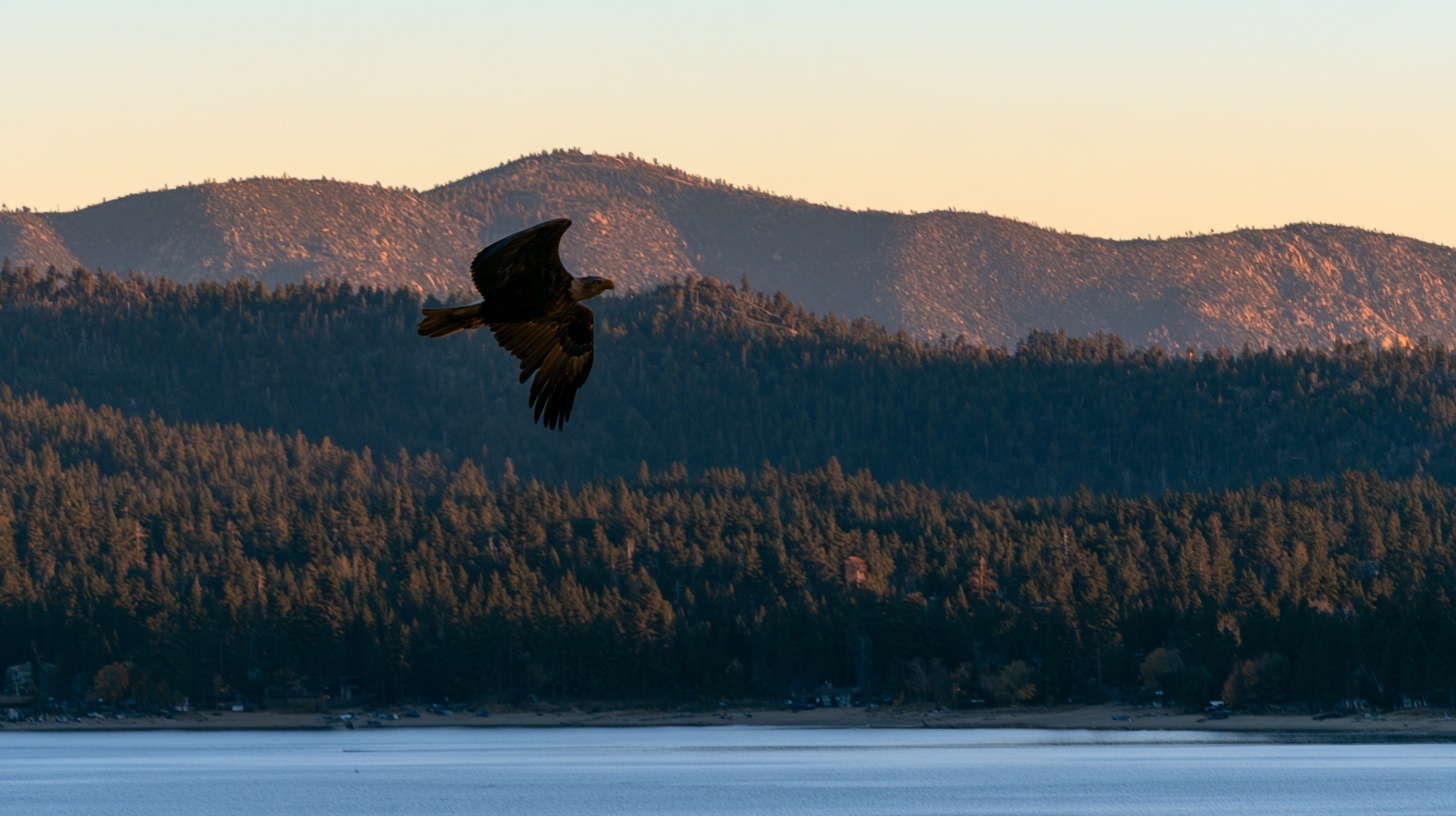
That long memory is a major reason the webcams matter. The cameras don’t make these animals tame, but repeated observation lets people recognize individuals, see offspring grow and notice changes in behavior from one season to the next. Discvr readers have seen a similar kind of long-term attachment around Big Bear’s live-cam bald eagles, where familiarity develops without changing the fact that the animals remain wild.
The biological reason behind Fat Bear Week is less playful than the bracket. Brooks River is an unusually productive salmon stream, and the falls force migrating fish to gather before moving upstream. Bears return because that concentration creates a dependable opportunity to feed during the months when building fat can determine how well they make it through winter.

For the bears, autumn fat is stored energy. During hibernation they don’t eat or drink, and they can lose roughly one-third of their body weight. Mothers face an additional burden because they may have to support cubs while meeting their own energetic needs. Younger bears are still growing. Older bears may have to compete with larger animals for productive fishing positions.
That is why the final result shouldn’t be read as a biological ranking of the healthiest bear. Fat Bear Week is deliberately subjective. Voters can consider visible weight gain, the challenges an animal faced, its stage of life and the demands of raising cubs. A massive adult male and a mother feeding young aren’t solving the same problem, even when they appear in the same bracket.
The event has grown far beyond its early online following. More than 1.7 million votes were cast from over 100 countries during the 2025 contest before Chunk won his first championship. The 2026 field is larger, but the bigger change may be what the bracket is asking viewers to notice. This season’s story isn’t only about which individual looks largest. It includes a record year for cubs, five family entries, unusual maternal behavior and another generation of bears learning how to use the salmon-rich river.
Made your picks yet? Download the printable 2026 Fat Bear Week bracket and follow the tournament through the September 29 championship.
Voting opens September 22 and the champion will be decided September 29. By then, one entry will have won the bracket. The more lasting record of the season may be everything the cameras showed on the way there.
Leave a comment