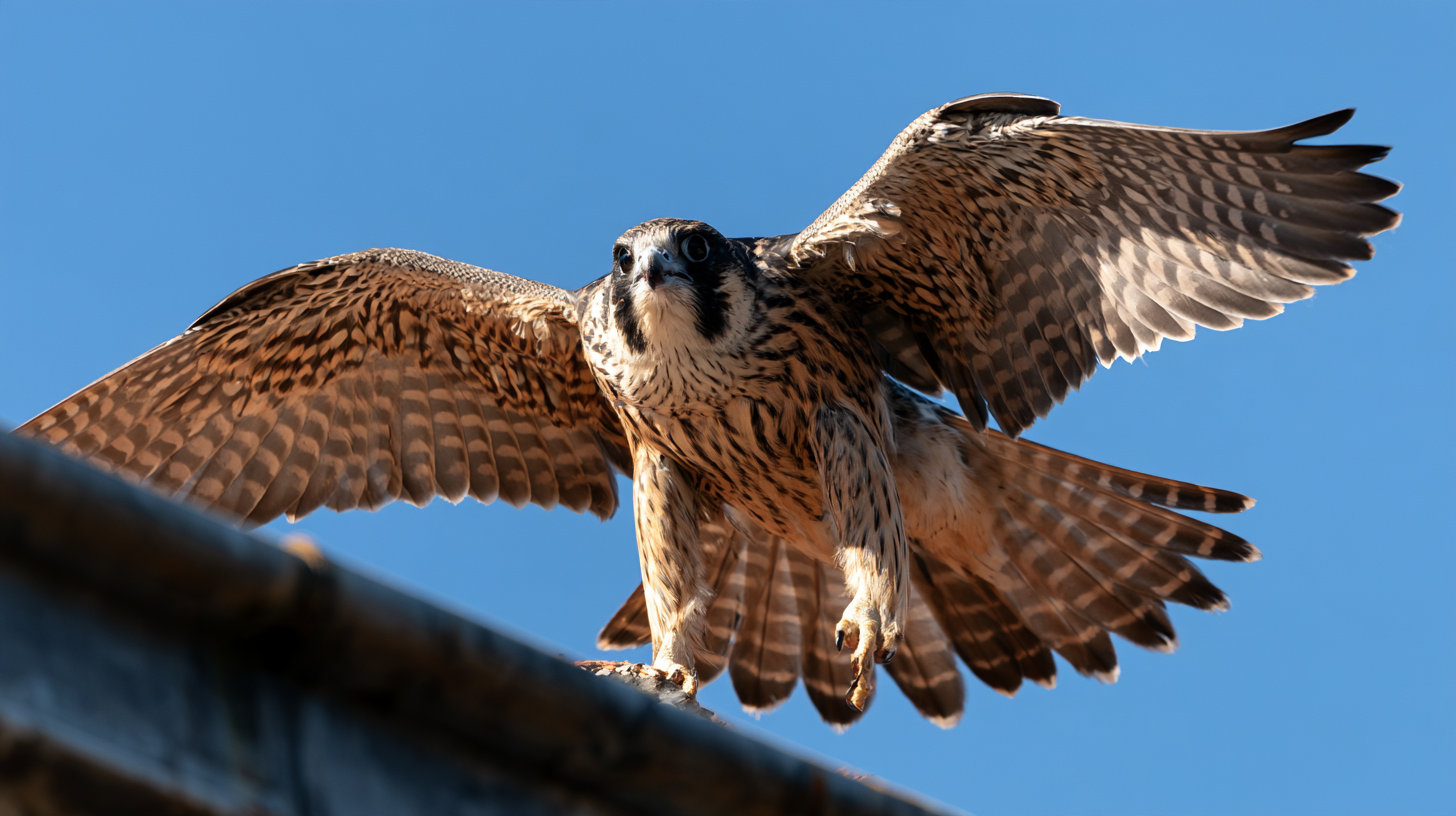
In 1991, peregrine falcons laid eggs in a gutter high on Melbourne’s 367 Collins Street office tower. The eggs failed to hatch. The following year, falcon researcher Victor Hurley installed a nesting box, raising the surface where future clutches would be laid above the running water.
That small change helped establish a nesting site people would follow for decades. Successive falcon families have raised chicks on the building’s level-33 ledge, where cameras now let viewers watch the parents bring food and the youngsters grow into their flight feathers. The familiar Melbourne address has become a place to return to each spring, even for people who’ve never set foot in Australia.
A peregrine doesn’t need the sort of nest a robin might weave. It can lay in a cliff recess, a tree hollow or a structure another bird has left behind. A high building offers some of those same features, with ledges overlooking a landscape where prey is available. Pigeons and other city birds supply hunting opportunities, while the falcons’ elevated position gives them room to launch into the air.
The details of this particular ledge helped. Hurley described its southeast-facing position in a 2018 ABC interview: it receives sunlight in the morning without the same exposure to afternoon heat. The original gutter, however, carried water past the eggs and chilled them. Raising the nesting surface allowed that water to drain underneath.
The birds also had people willing to work around them. Recalling the early years in a 2021 interview with Swinburne journalism publication The Burne, Hurley described workers encountering protective falcons near the building’s antenna deck. Workers, their union, building management and the Victorian Peregrine Project helped accommodate the birds.
Then someone had to get the view downstairs. Builders ran about 400 meters of coaxial cable to the foyer, and Hurley supplied a television he owned. People could see the nest without going anywhere near the ledge.
He remembered visitors arriving with their lunch and folding chairs. Children and school groups came, too. A small television audience could spend part of its day with the falcons, watching whatever happened to unfold above the street.
That regular acquaintance is familiar to readers who’ve followed Jackie and Shadow’s family life. A food delivery or a chick’s progress means more when the viewer remembers what came before. At Collins Street, that habit began in a building foyer long before people could check the nest on their phones.
The footage moved online in 2016. Over the following years, the livestream opened the nesting season to people far beyond Melbourne, but the physical home still needed someone to maintain it.
In August 2020, Hurley traveled from Mildura on a roughly 1,300-kilometer round trip to replace the aging wooden boxes with metal ones. He worked from a crane about 150 meters, or 490 feet, above the street. The replacement took four hours.
“At that height everything has to be tethered, even your pencil,” he told ABC in its account of the nest-box replacement.
The falcons’ place in the building extended beyond the ledge. Its public-art program includes work inspired by the birds, with paper engineer Benja Harney and illustrator Kareena Zerefos contributing to its visual identity. Office workers can encounter the falcons’ influence downstairs as well as their nesting activity on a screen.
Growing up on the Melbourne ledge
The adults introduced for the 2026 season are known as F24 and M24. BirdLife Australia believes they also nested here in 2024 and 2025, with three chicks fledging in each season. The nesting site’s much longer history belongs to a succession of pairs; volunteers had identified at least six by 2018.
BirdLife’s August 31, 2026 update recorded four eggs. By October, the cameras had shown four chicks, although the brood later suffered a loss. In an October 14 update, wildlife publication Wild Island reported that one chick had died and three remained.
For young peregrines, the first weeks revolve around warmth and meals. During the early nestling stage, the male typically delivers prey while the female broods and feeds the chicks. Later, both adults supply food for the growing brood. They tear it into pieces small enough for the waiting mouths.
Peregrines can descend on prey at more than 300 kilometers per hour, about 186 mph, in a hunting dive. That speed comes from a maneuver called a stoop, when a peregrine draws its wings, feet and tail inward. Around the nest, its work involves repeated food deliveries and close attention to chicks that can’t yet feed themselves.
The youngsters soon become more mobile. The Pennsylvania Game Commission describes peregrine chicks moving around the nesting area and beginning to tear at prey by about three weeks old. Their growing ability to handle food is one of several changes taking place before they can fly.
BirdLife places a peregrine’s usual first flight at about 40 days old, roughly six weeks. By then, the flight feathers have developed enough to carry the youngster away from its nesting place.
Parents continue bringing food after fledging while the juveniles practice flying, landing and hunting. Over the following weeks, receiving food gives way to catching it for themselves, and eventually they disperse from the nesting area.
The viewing experience changes with them. Early on, much of the family’s activity happens within a small patch of nesting surface. Once the young birds can fly, their movements and meals extend beyond the camera’s frame.
To follow the Collins Street nest, BirdLife’s guide to the falcons and their livestream links both north-facing and south-facing cameras. The two views offer different perspectives on the ledge. For another seasonal wildlife feed, Discvr’s guide to Churchill’s polar bear cameras explains where to watch the autumn gathering along Hudson Bay.
At Collins Street, the camera can show a youngster leaving the ledge. Following that bird afterward becomes a task for people looking up from the city below.
Leave a comment