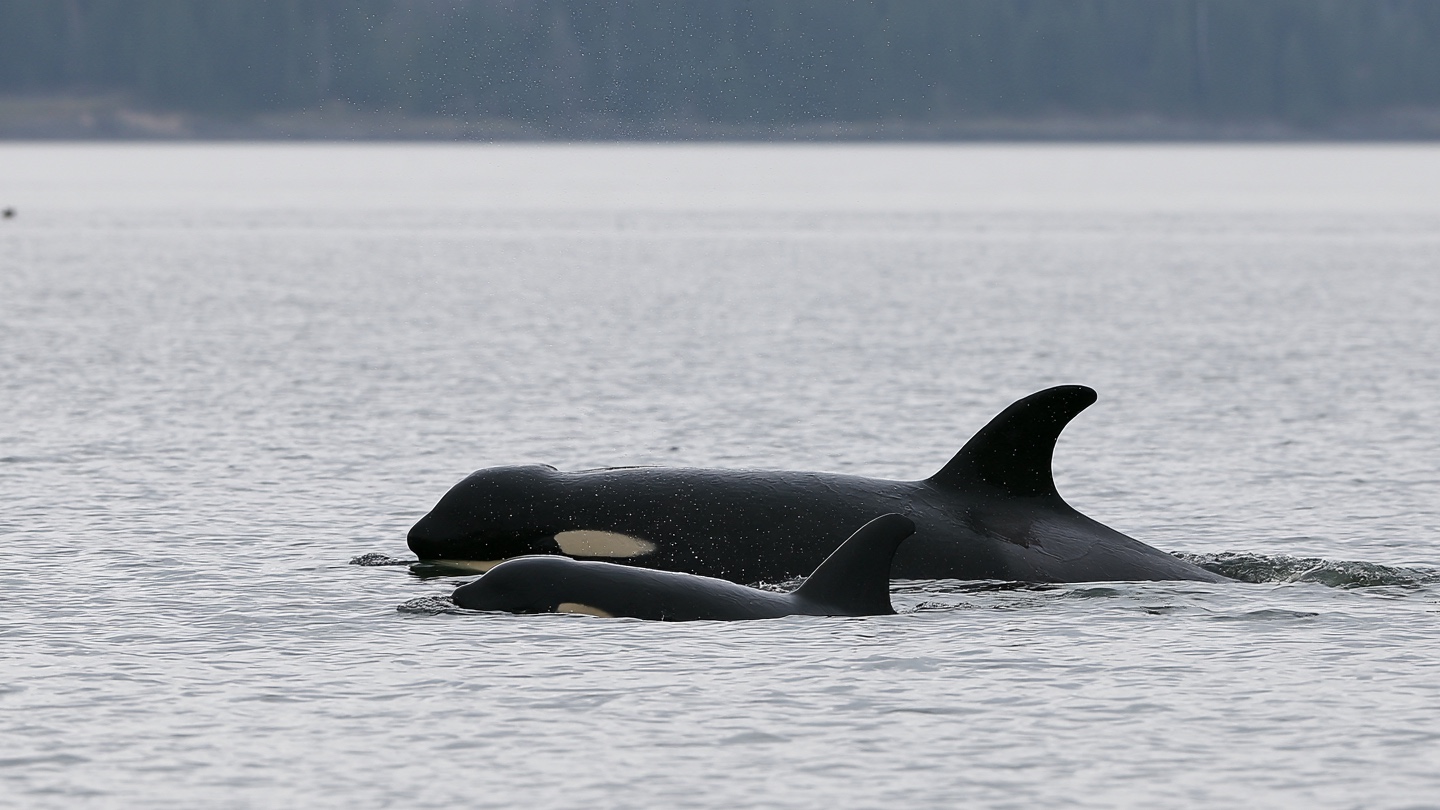
The little orca beside Tahlequah was lifting his head above the water. In a November 7, 2026, field report, researchers described repeated spyhops from her young son, J65, and shared photographs of him with his mother and older brother, Phoenix.
For a whale so often pictured carrying a calf that couldn’t survive, it’s a welcome scene: a baby moving through the water under his own power, with his family nearby.
J65 was nursing and socializing when the Center for Whale Research began observing him. The team reported no apparent health problems during its October 19 and 20 encounters. Researchers estimated he was under a week old at the first sighting and identified him as male from aerial footage.
Tahlequah’s 2018 daughter lived only briefly. Witnesses reported the newborn swimming near Victoria, British Columbia, on July 24; researchers responding to the sighting found her dead.
Tahlequah, identified in their records as J35, kept bringing the sinking body back up. With the calf balanced on her forehead, she continued traveling with her pod. Researchers documented at least 17 days of carrying across roughly 1,000 miles. On August 11, they confirmed that she had stopped and was chasing salmon in Haro Strait.
Her family history has continued through births as well as losses. Her eldest surviving son, Notch, was born in 2010. Phoenix followed in September 2020. Then came another daughter, J61, first observed in December 2024. She died, too. NOAA footage from near Seattle shows Tahlequah carrying J61’s body on January 1, 2025.
J65 arrived the following October. He joins a family in which sons can remain close to their mothers throughout their lives.
What it takes for a calf to survive
Tahlequah and her offspring belong to the endangered Southern Resident population, whose three pods range through waters off the western United States and Canada. The July 2026 census counted 76 whales, before researchers documented J65.
A calf needs a mother who can find enough food to keep nursing him. For Southern Residents, that means access to salmon, especially Chinook. Many of those salmon populations are themselves threatened or endangered.
Finding fish is harder in noisy water. Vessel traffic can interfere with feeding and communication, while pollutants accumulate in the whales through their prey and can affect health and reproduction. NOAA’s recovery efforts address these pressures together, from restoring salmon habitat to reducing disturbance.
That long dependence makes the water around this family part of the story. The conditions that allow Tahlequah to feed will help determine whether her youngest son gets the chance to grow.
The November photographs add something quieter to Tahlequah’s story. Phoenix, once the newborn beside her in 2020, is now the older brother. J65 is the small one surfacing nearby, already raising his head above the water.
Featured image: Editorial illustration, not photographs of Tahlequah, J65, or the 2018 event.
Leave a comment