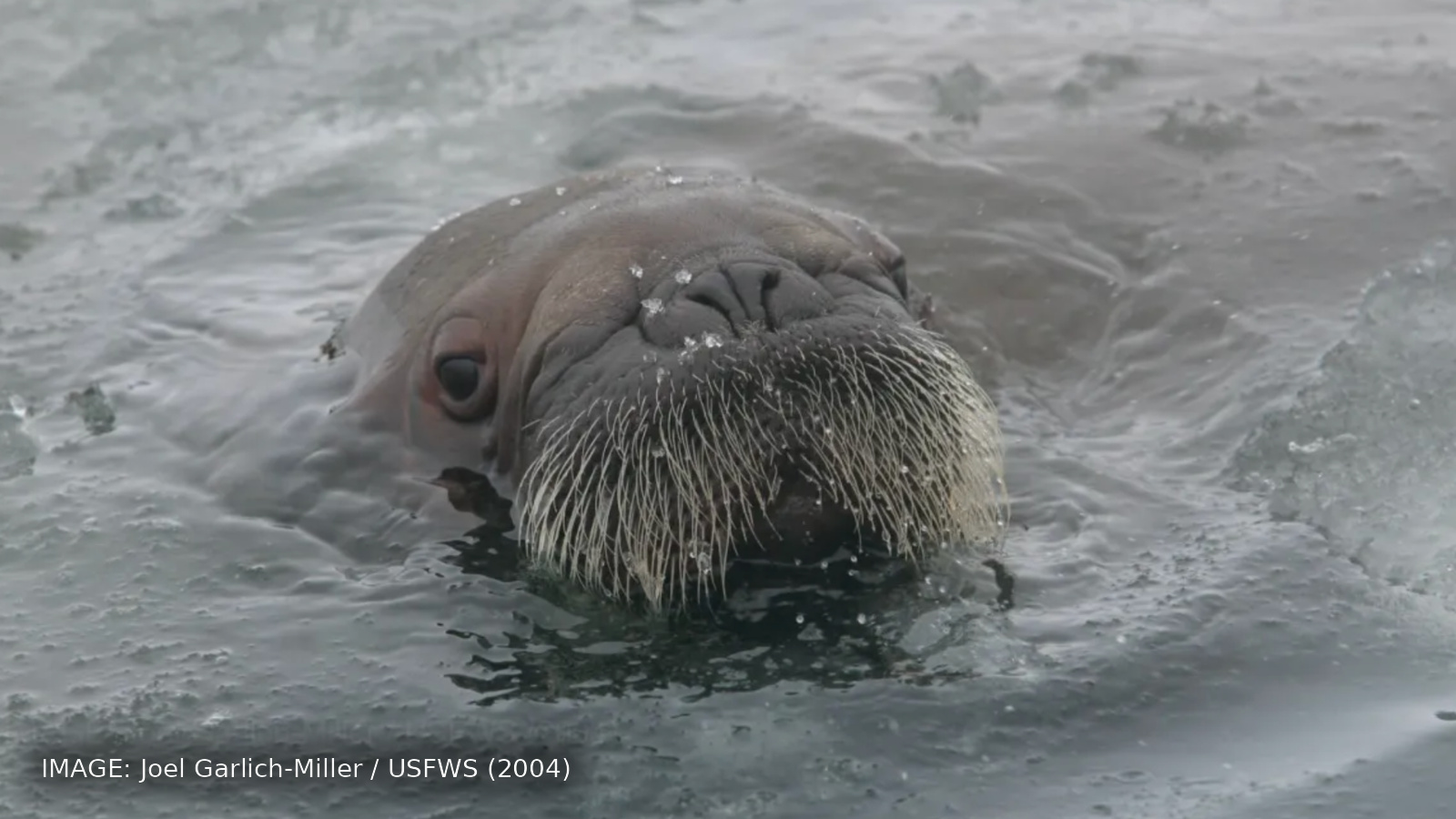
A young walrus and two people were stranded together by an Arctic storm. For about three days, U.S. Geological Survey biologist Tony Fischbach and college student Violet Anniskett waited in an abandoned building near Point Lay, Alaska, hoping the weather would clear. They couldn’t leave the calf unattended. According to Anniskett, he wouldn’t sleep unless one of them was in the room.
It’s an unusually intimate detail from a difficult wildlife rescue. Young mammals often depend on touch and proximity to feel secure, something visible in the comfort provided to other orphaned animals. But Annautaq, the male Pacific walrus named in the Alaska SeaLife Center’s rehabilitation journal, was an estimated five months old and weighed about 200 pounds. His need for companionship was as consequential as his need for food and medical treatment.
By October 6, 2026, Annautaq had recovered enough to leave the Alaska SeaLife Center in Seward for a permanent home. The center hadn’t yet publicly identified his destination. And while his immediate danger had passed, the circumstances that saved him had also made one thing clear: he wasn’t going to be released back into the wild.
That outcome began on a beach in northwestern Alaska, where Fischbach and Anniskett had been studying walruses. They were collecting samples from dead animals to investigate exposure to harmful algal toxins, not looking for a calf to rescue. A storm had brought powerful surf, and a large walrus herd had moved away from shore.
As the researchers examined the beach, they found a young walrus tucked between the older remains of two adult walruses. Those carcasses were not identified as his parents, and the cause of his separation from his mother remains unknown. There is also no evidence that harmful algal toxins caused the deaths of those adults or the calf’s predicament.
The calf was in immediate danger. Fischbach described gulls approaching the helpless animal, while two polar bears were active on the island. After securing authorization from the U.S. Fish and Wildlife Service and support from the local Iñupiaq community, the researchers moved him more than half a mile to a disused building where they could protect him as they waited for help.

Neither the weather nor the location made a quick evacuation possible. Anniskett, who comes from Point Lay and studies at Ilisaġvik College, and Fischbach stayed with the walrus through the delay. The center’s account quotes Anniskett remembering how quickly the calf attached himself to his temporary guardians: “He bonded with us fast and wouldn’t sleep unless one of us were in the room.”
She didn’t simply hand him over when transportation arrived. Local residents and researchers helped get the animal to the Point Lay airport, where Alaska SeaLife Center responders took over for an 800-mile-plus journey by plane and road to Seward. Anniskett traveled with the rescue team and helped the veterinary staff understand how the calf had been cared for during the wait.
He arrived late on September 14. At his first examination, the young walrus was alert and responsive, but dehydrated and carrying several superficial injuries. Veterinary staff supplied fluids, treated the wounds and began a specialized feeding and care routine. In the center’s records, his diet is listed as walrus formula.

Why saving him doesn’t mean returning him to the sea
A wild Pacific walrus calf normally spends one to two years with its mother. During that time, the mother provides milk, protection and a relationship that a five-month-old orphan can’t simply learn to do without. Walruses are social animals, and physical closeness is part of a young calf’s development.
For rehabilitation staff, that produces a difficult trade-off. A calf may need near-constant human contact to survive, yet that same contact helps make future release unsafe or unrealistic. The Alaska SeaLife Center said at least two caregivers worked around-the-clock shifts with Annautaq. Their work involved more than feeding him. It also meant being present while he rested, monitored his surroundings and adjusted to a world without his mother.
The U.S. Fish and Wildlife Service generally treats stranded walrus calves as poor release candidates because they need maternal care for so long, although placement decisions are made case by case. Annautaq’s transfer therefore wasn’t an unexpected reversal of the rescue plan. It was the next stage of caring for an animal that had become dependent on people.
The Alaska SeaLife Center knows how complex that transition can be. In 2024, it treated another orphaned Pacific walrus, a female named Ukiaq, before she moved to SeaWorld Orlando to live with other walruses under specialist care. Annautaq was the 12th orphaned Pacific walrus calf admitted to the Seward center since it opened in 1998, a reminder of how uncommon these patients are.

Annautaq’s rescue also took place in a changing Arctic. Pacific walruses historically use floating sea ice as platforms for resting between trips to feed on the seafloor. As summer ice retreats, more animals gather on beaches in large coastal groups. The U.S. Geological Survey’s walrus research documents how crowded haulouts can increase the danger of trampling when a herd is disturbed. Researchers are also studying the extra energy needed to travel between coastal resting sites and offshore feeding grounds.
None of that establishes why Annautaq became separated from his mother. The center reported that heavy surf preceded the herd’s departure, but it hasn’t identified the precise cause of his orphaning. The two carcasses beside him don’t answer that question either.
What the rescue does show is how several forms of knowledge had to come together. Fischbach’s experience studying Pacific walruses helped him recognize the danger. Anniskett brought familiarity with Point Lay and, later, continuity of care for the calf. Community members supported the intervention and arranged crucial steps in the journey. Wildlife officials authorized the response, and the Seward team supplied the intensive care that followed.
There are larger efforts to protect animals at risk, but the decisions in this case were immediate and specific: move a calf out of danger, wait out a storm, keep him company, then find people equipped to care for him over the long term.
The public still doesn’t know where Annautaq will spend the rest of his life. The Alaska SeaLife Center confirmed his transfer in its October 6 rescue account and said it would name the receiving facility later. For a calf found alone on an exposed Arctic beach, reaching that next stage is a significant change. Meeting his social and medical needs over the long term will be the work of his new caregivers.
Leave a comment