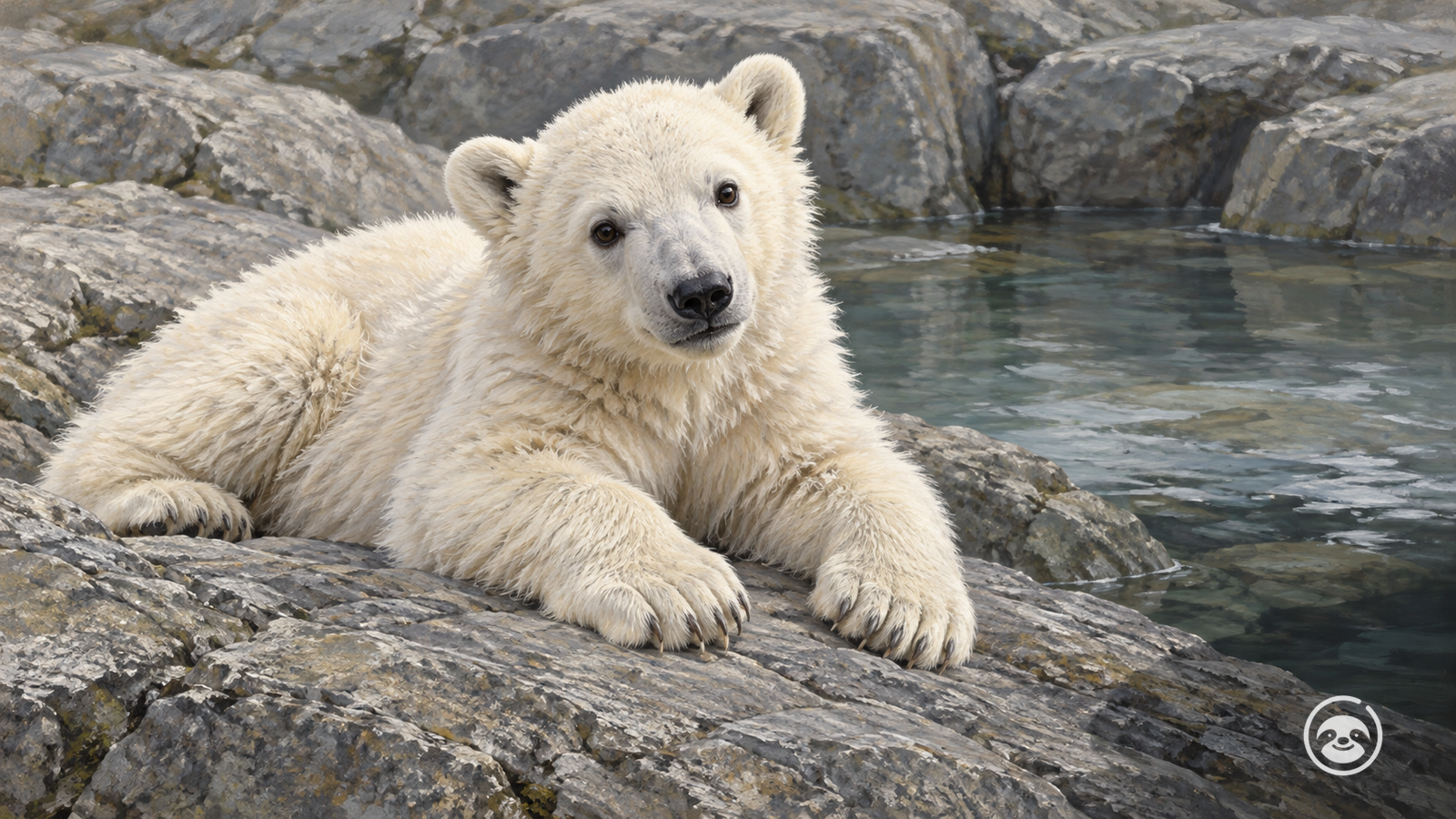
Mantayo was the public’s choice for the orphaned polar bear cub now on view at Winnipeg’s Assiniboine Park Zoo. The zoo announced the name on October 15, 2026, nearly two months after he arrived from Churchill.
His rescue began near Churchill, the Hudson Bay town where wild polar bears gather each fall. His mother was found dead in the area in mid-August, leaving a cub still in his first year. Manitoba conservation officers took him into care.
He spent time at Churchill’s Polar Bear Holding Facility while arrangements were made to bring him south. Assiniboine Park Zoo’s veterinary staff traveled north to assess him and oversee the transfer. He reached Winnipeg late on August 20. The zoo had last received polar bear cubs in 2017.
The Leatherdale International Polar Bear Conservation Centre became his first home at the zoo. Staff kept him in quarantine for 30 days, with access to a shallow pool, digging ground outdoors and an indoor enclosure.
By October 8, visitors could see him at the conservation center, and a public naming poll was underway. The Town of Churchill and students at its Duke of Marlborough School had helped put together the four choices.
The winning choice came from a Cree name for a local river. In its explanation of the shortlisted names, the zoo gave the translation “River of Strangers,” explaining Mantayo as strangers and Seepee, also written sîpî, as river.
Voters could also choose Fletcher, after a lake within Wapusk National Park, or one of two names celebrating the school: Duke and Marly. The poll closed late on October 13.
Mantayo was estimated to be about 10 months old when his name was announced. Zoo spokesperson Lindsay Hughes told The Canadian Press that he was settling in and could often be seen swimming or rolling around.
Growing up in human care
A mother supplies food and protection while her cub learns to hunt and travel across sea ice. That dependence typically lasts more than two years, according to Polar Bears International. Mantayo had lost that help before his first birthday.
Assiniboine Park Zoo says orphaned cubs raised by people can’t return to life in the wild, because they wouldn’t be able to survive independently.
The rescue of orphaned walrus Annautaq also ended with a move into permanent care, after responders had kept the young animal alive through an Arctic storm.
In Winnipeg, Mantayo’s care includes helping him become comfortable with the people responsible for his meals and health. An October 8 feature by The Narwhal and the Winnipeg Free Press described staff offering food with tongs to reward calm behavior, which can make veterinary checks easier later.
Staff also introduced visitors gradually, adjusting the duration and size of the groups. If he growled or charged the fence, they slowed the process, curator of animal care Jackie Enberg explained in the same feature.
Mantayo brought the zoo’s rescued polar bear population to seven. As he grows, staff will assess whether he’s ready for introductions to older bears, taking the animals’ personalities into account when considering possible companions.
He may eventually move into the zoo’s Journey to Churchill habitat.
For now, visitors can see him at the conservation center, and the zoo has said it will keep sharing updates. Whether he eventually shares a habitat with one of the older bears will be a decision for the staff watching him grow.

Leave a comment