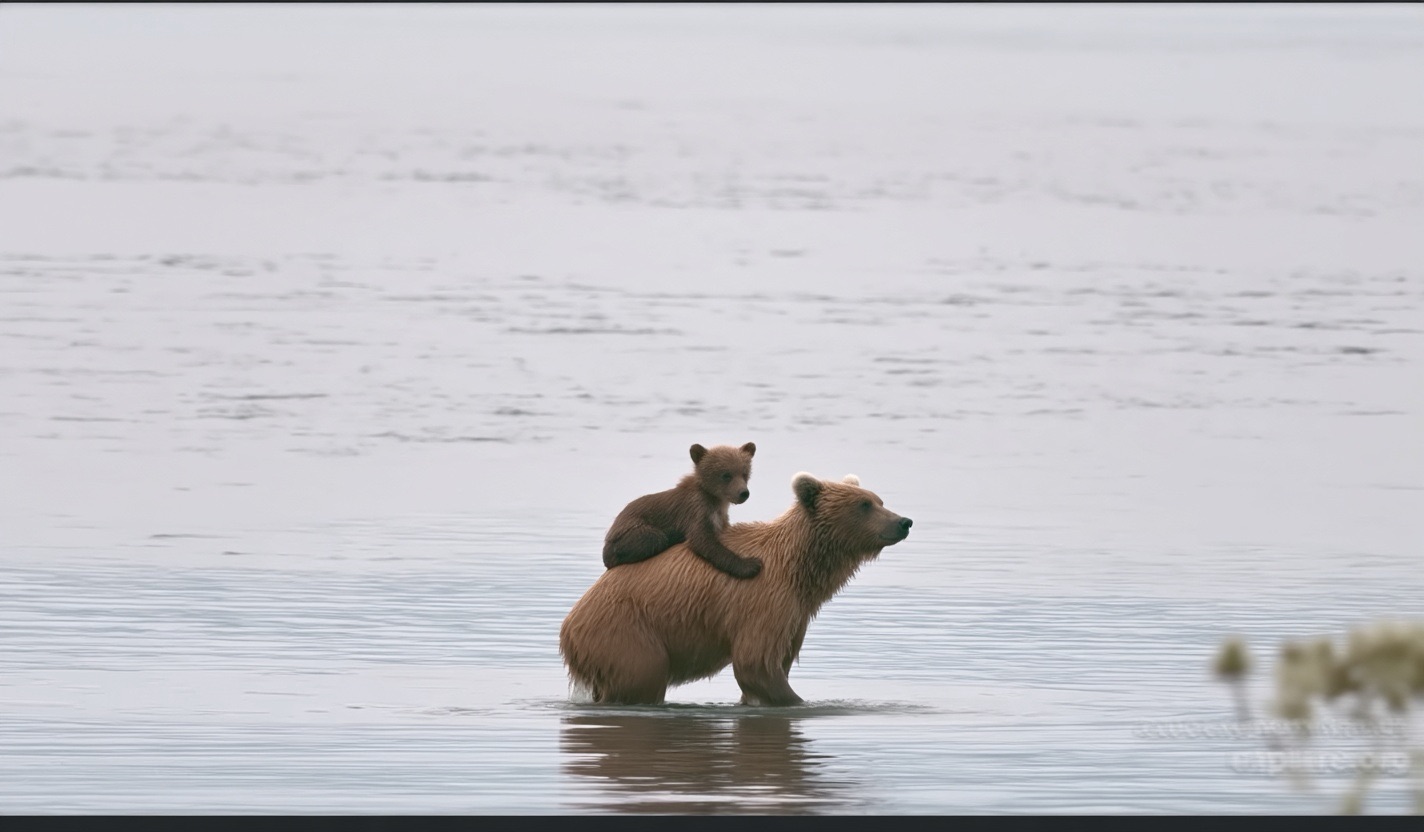
Bear 89’s nickname preserves a detail that his adult size makes easy to forget: he once traveled through Brooks River on his mother’s back. In 2006, during his first summer in Alaska’s Katmai National Park and Preserve, the cub repeatedly climbed aboard Holly as she swam. He became known as Backpack.
Twenty years later, the brown bear reached the Fat Bear Week final. His nickname had outlasted the behavior that inspired it, connecting a large adult male to a time when he was small enough for his mother to carry.
There’s an important distinction in that childhood story. Explore’s biography of Backpack places the back-riding in 2006 and a serious leg injury in 2007. The rides came first. The chronology doesn’t support saying that he originally climbed onto Holly because he was injured.
Holly has her own identifying number, 435. At Brooks River, numbers let park staff distinguish individual bears and follow them across seasons. A nickname is optional, which helps explain Bear 910’s number-only identity. Backpack happens to have both.
For Backpack, the two labels connect observations of the same animal at very different ages. The cub riding through the river, the injured yearling and the adult fishing at the falls are all parts of one bear’s history.
Holly changed where she fished
During the summer of 2007, Holly chose a different place to catch fish. She stayed away from Brooks Falls and worked near the river’s mouth, where large, aggressive bears were encountered less often. Her yearling’s injury had made the crowded fishing area harder for the family to use.
A 2013 National Park Service account by Michael Fitz describes another adjustment: Holly appeared to reduce her traveling pace so Backpack could follow. Where she went and how quickly she moved both mattered to a cub struggling to keep up.

Backpack had a pronounced limp and avoided putting weight on an injured front leg. His limited mobility also made fleeing another bear more difficult. For this family, a fishing spot had to offer more than access to food. It had to be somewhere the cub could manage, too.
Nobody had witnessed how he was hurt. Neither Explore’s biography nor the park’s account establishes a broken bone or identifies an attacker. The injury was visible; its cause wasn’t.
By September 2007, his leg had healed. In 2008, observers saw him living independently, with no visible sign of the earlier injury.

The park’s historical account includes another photograph, taken in July 2013: Backpack fishing at the lip of Brooks Falls. Years earlier, his limited mobility had helped keep Holly away from that fishing area. Now her former cub was feeding there on his own.
Leave a comment