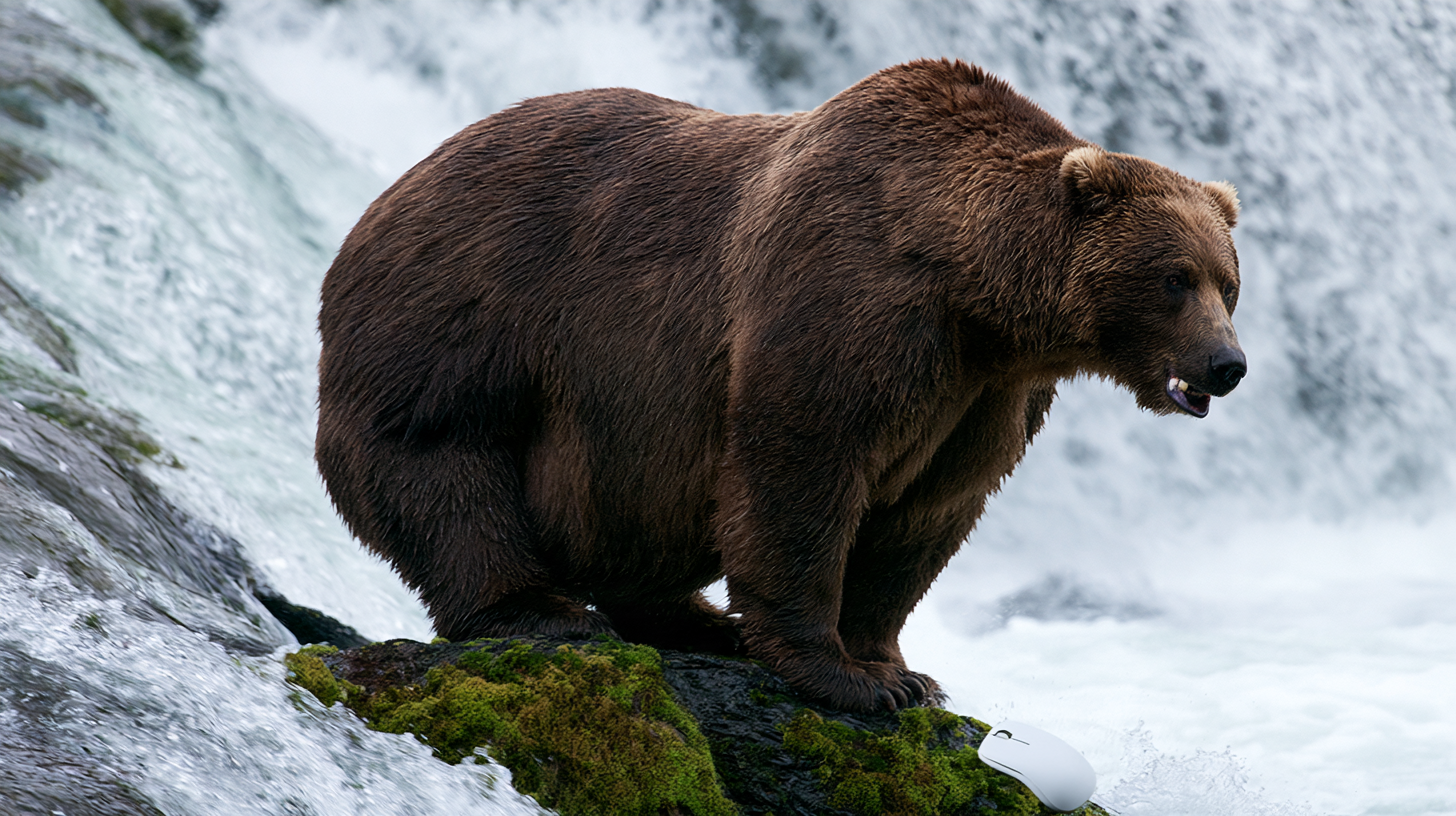
Readers following Chunk’s story after Fat Bear Week 2026 expanded to 16 entries have asked a fair question: if a bear’s jaw is badly broken, why not capture the animal, repair it and release it?
The answer starts with an important distinction. Chunk isn’t known to be awaiting treatment.
According to Katmai National Park and Preserve, Bear 32, better known as Chunk, returned to Brooks River in early summer 2025 with a broken jaw. Park staff don’t know how it happened, though they say a fight with another male bear was likely. The park says the break is permanent and fully healed, and that Chunk can still eat and gain enough weight for winter hibernation.
Why an operation isn’t a simple option
That doesn’t make the injury minor. It means that any intervention would have to offer a clear benefit that outweighs the risks of handling a free-ranging adult brown bear.
Capturing one would mean locating, immobilizing and assessing a large wild animal in an active river ecosystem. Surgery, if it were appropriate, would only begin the work. Recovery could require infection monitoring, restricted feeding, repeat examinations and protection against re-injury.
Katmai has explained that it generally doesn’t tranquilize bears injured through natural causes for veterinary care. The park’s approach is to let natural processes continue, while recognizing exceptional cases involving human-caused harm. In 2014, for example, staff and a specialist intervened to remove a wire snare from Bear 854 Divot after determining it was likely to become fatal.
Chunk’s public record points in a different direction. His injury is healed, and the park says he’s continued to feed successfully. That doesn’t tell us every detail about his comfort or long-term health. It does mean there’s no public evidence that a repair is planned.
Brooks River also isn’t a quiet recovery ward. As why Fat Bear Week feels like a holiday for wildlife fans explains, the salmon run gives bears a short, crucial chance to build reserves for winter. Feeding access can depend on timing, size and competition from other bears. A recovering animal would have to return to that environment without routine veterinary aftercare.
So the more useful question isn’t why nobody has “fixed” Chunk’s jaw. It’s what his story shows about a wild animal adapting to a serious injury. So far, Chunk’s ability to keep feeding has made that adaptation visible.
This explainer was prompted by reader questions in Discvr’s Fat Bear Week discussion.

Leave a comment