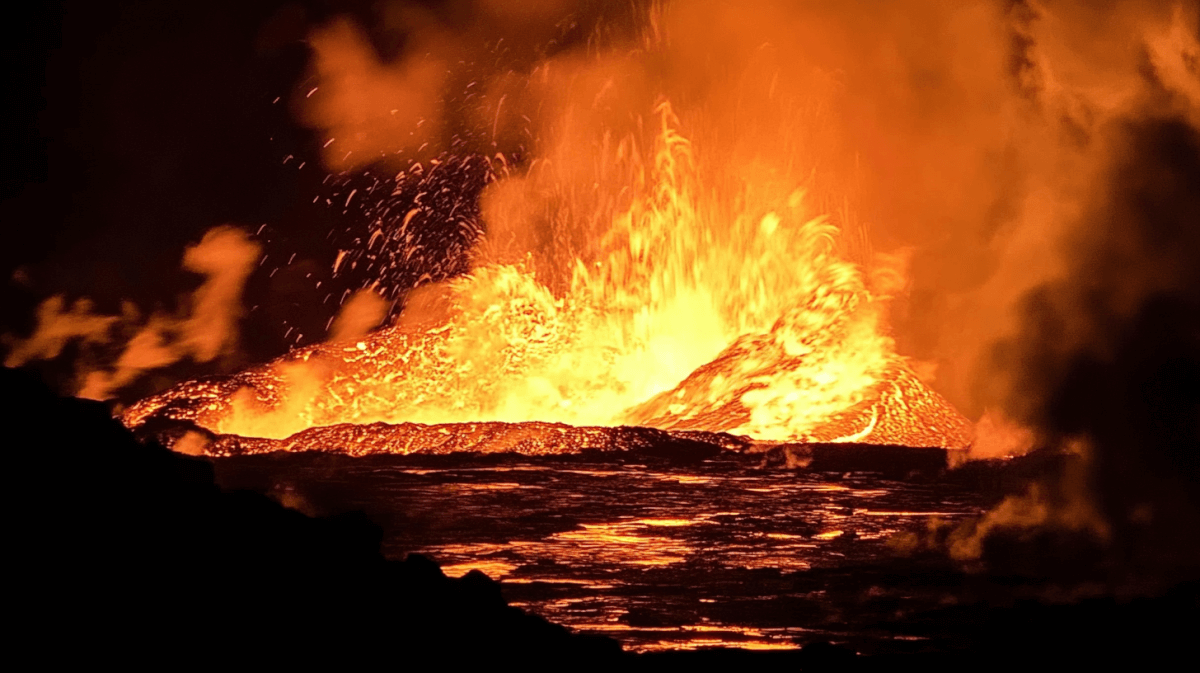
Kilauea’s summit stirred in the pre-dawn hours of December 23, sending arcs of molten lava surging through Halemaʻumaʻu Crater. Many on Hawaii’s Big Island had been monitoring trembling seismographs, but the sudden glow and thick plumes of steam still took some by surprise.
Families who recall the volcano’s 2018 outburst, when flows engulfed roads and homes, began planning for possible detours. In the minutes after the lava breached the crater floor, residents logged on to USGS livestreams and social media, bracing for the latest phase of an unpredictable force.
Kilauea’s Volatile Awakening
Officials acknowledged that sulfur dioxide levels could climb, turning fresh air into a haze of vog that aggravates asthma and other conditions. Though the caldera zone has been closed to the public since 2007, a chorus of curious onlookers gathered at safer vantage points beyond the park’s restricted areas.
Some recalled only faint wisps of steam a few days earlier, while others noticed subtle shifts in how the earth felt underfoot. They shared stories of narrow roads through old lava fields and the lingering warmth that rises from cracks in the basalt.
Local guides fielded calls from travelers who saw dramatic videos of fountains reaching impressive heights. Hotel lobbies echoed with talk of tours that promise a glimpse of flowing rock, though updated safety protocols limited most visitors to overlooks away from possible ground collapse.
Park officials urged caution, reminding everyone that Kilauea’s surges can escalate quickly. A single shift in wind can carry sulfur dioxide far from its source, affecting farms and neighborhoods downwind.
Hawaii's Kilauea volcano, one of the most active volcanoes in the world, started erupting early Monday morning. https://t.co/CtZS4UaLqA pic.twitter.com/GDXTCK7Stt
— AccuWeather (@accuweather) December 23, 2024
Throughout the week, rumbles continued beneath the surface as the U.S. Geological Survey refined its warnings. Scientists recorded earthquake swarms beneath the summit, the first indicators of fresh magma surging upward. Some residents prepared for the worst, while a few enthusiasts documented every change, from the shimmer of molten rock to the crackling hiss of new fissures.
By day’s end, watchers reflected on Kilauea’s restless nature and the island’s enduring bond with its volcanic heart. It’s a place where fiery eruptions merge with everyday life. Beneath a rising column of smoke, families, scientists, and adventurers alike acknowledged that the next page of Kilauea’s story is still being written, shaped by the clash of molten rock and the forces that guide it toward the surface.
Leave a comment