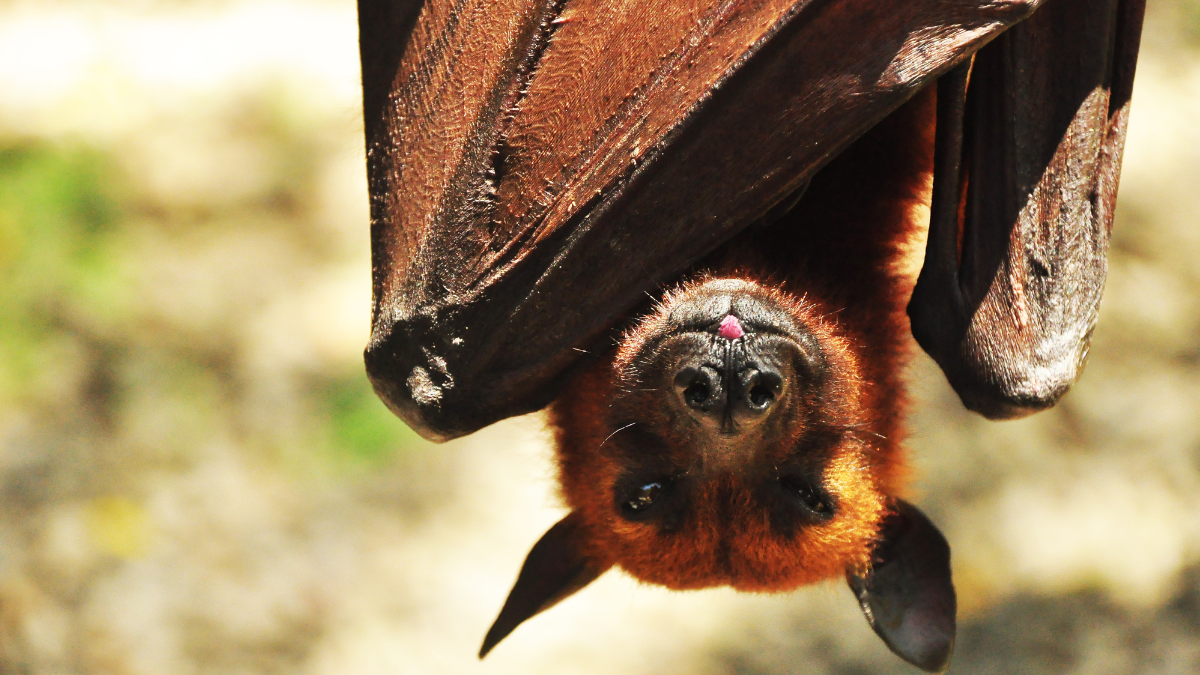
When a photo of a bat hanging from a wire in the Philippines went viral a few years ago, the internet erupted in disbelief. Was this creature real? It looked almost human in size, a cloaked figure with leathery wings and a fox-like face.
The truth is stranger, and in some ways, more fascinating: the golden-crowned flying fox is one of the largest bats in the world, and for centuries it has lived at the crossroads of myth and reality.

From folklore to forest canopy
In Filipino folklore, giant bats have long been linked to terrifying figures like the aswang and manananggal, shapeshifting monsters said to fly at night and prey on unsuspecting villagers. Their wings cutting through the dark sky were seen as omens of disaster, or even as the embodiment of evil itself. These myths persist in rural areas, coloring how people react when they glimpse a bat’s vast wingspan overhead.
But there’s another side to the story. In some coastal and indigenous communities, flying foxes are regarded as guardians of the night or protectors of the sea’s bounty. Seeing them roosting in mangroves or soaring above rivers was taken as a sign that balance in nature—and in daily life—was being kept.

The reality of a gentle giant
Up close, the golden-crowned flying fox is less monster and more marvel of adaptation. With a wingspan that can stretch over five feet, it is truly imposing in flight. Yet its body is closer to the size of a housecat. These bats feed not on blood but on fruit, especially figs, and will travel dozens of miles each night to find them. In doing so, they act as essential seed dispersers, carrying the forest’s future in their bellies and droppings.
Daylight hours are spent in crowded roosts high in the forest canopy. Colonies can number in the thousands, their combined wingbeats once filling the evening skies in clouds that locals still remember with awe. Today, those vast colonies have dwindled, a reminder of how fragile their survival has become.

By Gregg Yan – Low resolution derivative work from original photograph personally provided by photographer., CC BY-SA 3.0, Link
Between fear and fascination
The golden-crowned flying fox embodies a tension between fear and wonder. Online, it is framed alternately as nightmare fuel or a “gentle giant.” On the ground in the Philippines, it is tied to both chilling legends and reverent beliefs. Science tells us it is a vital player in forest health, yet culture keeps it anchored in myth. This duality is precisely what makes it so compelling—and why its story spreads so quickly.
To see one in person is to feel that pull: a creature that seems born from folklore, yet in truth is a fruit-eating ally of the forests. Its survival depends not on myths of terror but on recognizing that this remarkable bat is part of our shared natural heritage.


Leave a comment