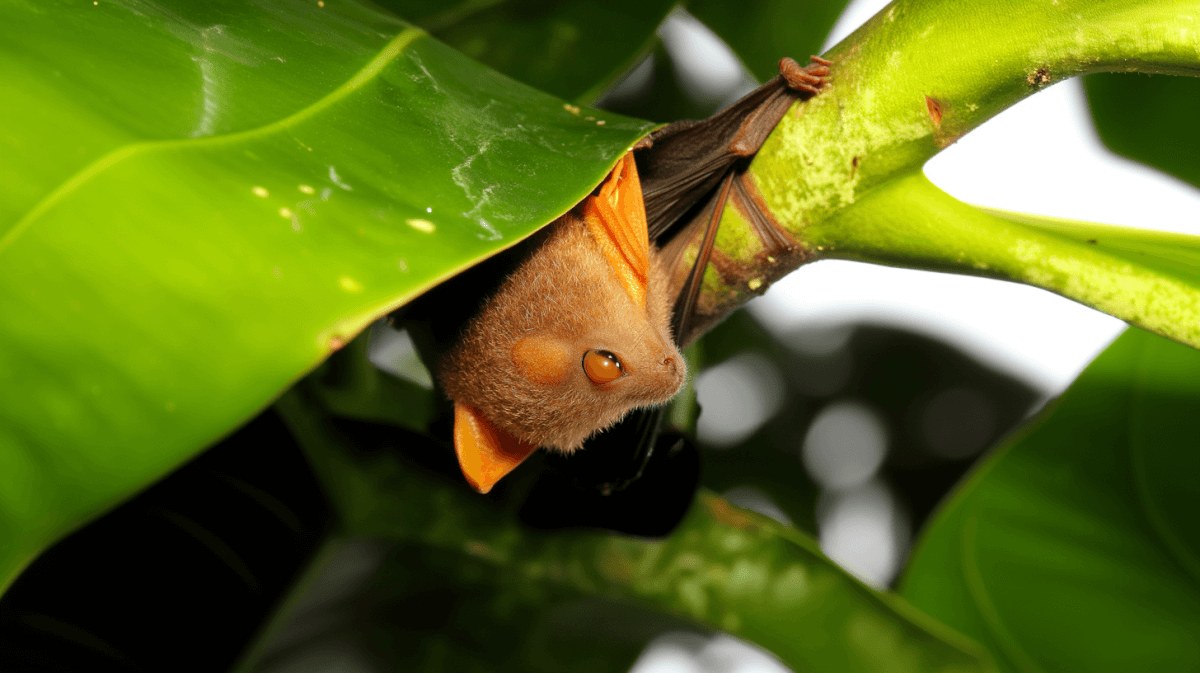
Did you know that there’s a bat species that looks like it’s been dipped in Halloween candy? Meet the Painted Vesper Bat, a small but striking creature that’s capturing the hearts of nature enthusiasts worldwide.
The Painted Vesper Bat, scientifically known as Kerivoula picta, is a tiny insectivorous phenomenon native to Southeast Asia. With its vibrant orange fur and dark wing membranes, this bat has earned the playful nickname “Halloween Bat” due to its uncanny resemblance to the colors associated with the spooky holiday.

The Pained Vesper Bat is a colorful character in the night sky
The Painted Vesper Bat’s most distinguishing feature is its unique, vibrant coloration. Its fur ranges from bright orange to reddish-brown, creating a stark contrast against the dark night sky. This coloration has inspired a variety of creative comparisons among observers, with some likening it to a flying Cheeto or a goldfish with wings.
The Painted Vesper Bat makes a big impression despite its small size—typically weighing only a few grams. Its appearance is so distinctive that it often elicits reactions of surprise and delight from those lucky enough to spot one. The bat’s Halloween-themed coloration has made it a favorite subject for nature photographers and fans.

But there’s more to this bat than just its striking appearance. Like other vesper bats, the Painted Vesper Bat is a master of echolocation. It navigates and hunts using ultrasonic screams, which are inaudible to human ears but highly effective for detecting insects in flight. This ability, combined with its fierce expression when vocalizing, can make the bat appear quite intimidating in photographs despite its diminutive size.
Habitat and Behavior of the Painted Vesper Bat: More Than Meets the Eye
The Painted Vesper Bat is not just a pretty face in the world of chiropterology. These bats have adapted to various Southeast Asian habitats, showing a particular affinity for banana plantations. They’re often nestled within dry leaves, using the foliage as natural camouflage and shelter during the day.
Unlike some bat cousins, Painted Vesper Bats lack nose leaves, which many bat species use to focus their echolocation calls. Instead, these bats must open their mouths to emit their ultrasonic vocalizations. This characteristic sets them apart from leaf-nosed bats, which can produce constant-frequency hums without opening their mouths.
The Painted Vesper Bat’s echolocation abilities are truly remarkable. While not the loudest among bats (some North American species can produce calls up to 120 decibels), its vocalizations are finely tuned for hunting in its specific environment. The frequency and characteristics of its calls represent an evolutionary balance between range and detail, allowing it to locate and capture small flying insects efficiently.
Conservation efforts for the Painted Vesper Bat and its habitats are crucial. As with many bat species, they face challenges of habitat loss and human disturbance. However, their adaptability to various environments, including agricultural areas like banana plantations, offers some hope for their continued survival.

Leave a comment