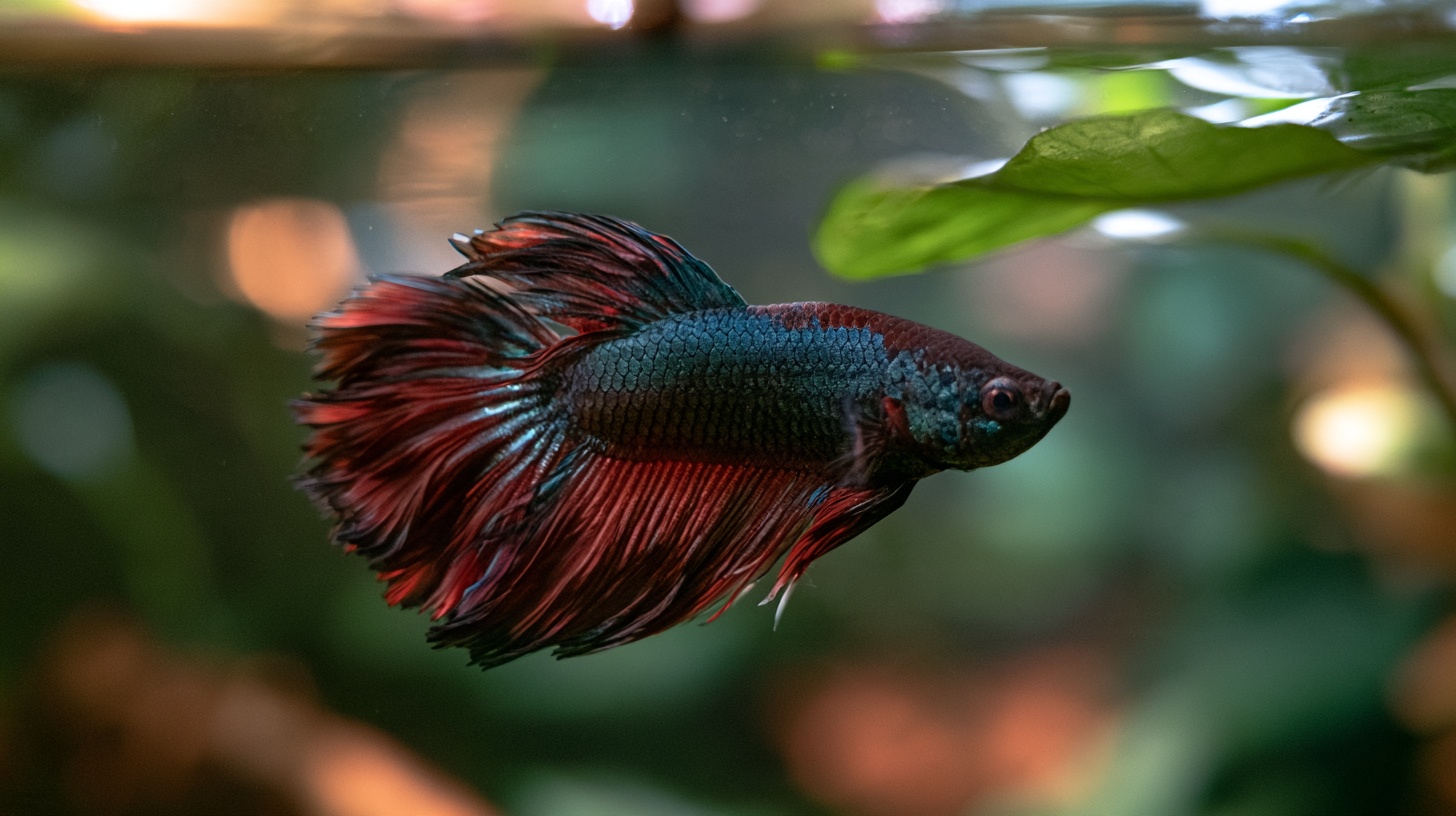
“Aren’t they fighting fish?” a Discvr reader asked after seeing a petition to get bettas out of pet-store cups. It’s a fair question. Two male bettas can injure each other, and keeping them apart is sound advice. A divider answers the fighting question. How much room each fish needs on its own side is another matter.
In a study of betta swimming behavior, researchers Ronald Oldfield and Emily Murphy observed male bettas in half-liter bowls, each holding about two cups of water. They also watched them in aquariums holding 10, 38 and 208 liters. The fish spent less time swimming in the bowls. Once they had 10 liters to move around in, their swimming rates looked much like those in the two bigger tanks.
A fish in a cup can be a surprisingly poor guide to how much space it needs. A shopper sees a betta sitting quietly and has no way to know how that fish would spend the afternoon with room to explore. The experiment offers a glimpse. It also helps explain why the familiar sight of a betta alone in a cup tells us so little about how to house one at home.
For a single betta, RSPCA Australia recommends 20 liters or more, a little over five US gallons, as an ideal home aquarium. If you’ve heard that 10 liters is enough, that figure comes up in the swimming research. Ten liters was the smallest aquarium the researchers tested after the half-liter bowl. They didn’t test any sizes in between or try to settle every question about a permanent home.
A planted five-gallon tank gives the fish more ways to use that space. Bettas rise to breathe air, and a broad leaf can serve as a resting spot just below the surface. Cover gives the fish somewhere to retreat. A lid keeps a jumping betta inside, with an air gap above the water.
What could replace the cup?
A reader recalled a shop that housed fish in separate planted compartments. Another said she looks for stores that keep their bettas in heated, filtered compartments. Both described something a shopper can picture: each male has a space of his own, and the store can still heat and filter the water.
Several readers disagreed about whether a warm room does the job of a heater. The thermometer belongs in the water. RSPCA Australia recommends using an aquarium heater to keep the water at about 75–79°F. A filter with a gentle flow serves a different purpose. Bacteria in an established filter help process ammonia from fish waste. A betta can come to the surface for air and still need clean water below it.
One shopper said she’d bought several bettas after seeing them in poor condition. If that happens, a useful first step is to show a staff member the fish and describe what you noticed. Bettas sometimes rest in one spot. A fish that stays lethargic or unresponsive deserves closer attention.
The group Betta World For Bettas is asking Petco, PetSmart, Pet Supplies Plus and Pet Supermarket to replace cups with heated, filtered displays or stop selling bettas. For readers asking where to sign, the organizers’ petition spells out what they want each company to do by March 2027: publish a plan, including a timetable for making the change across its stores.
The experiment offers a simple way to look at those future displays. Keeping a male betta apart from its neighbor takes a barrier. Giving that fish room to turn, explore a plant and swim away from the spot where it rests takes space on its side of the glass.



Leave a comment