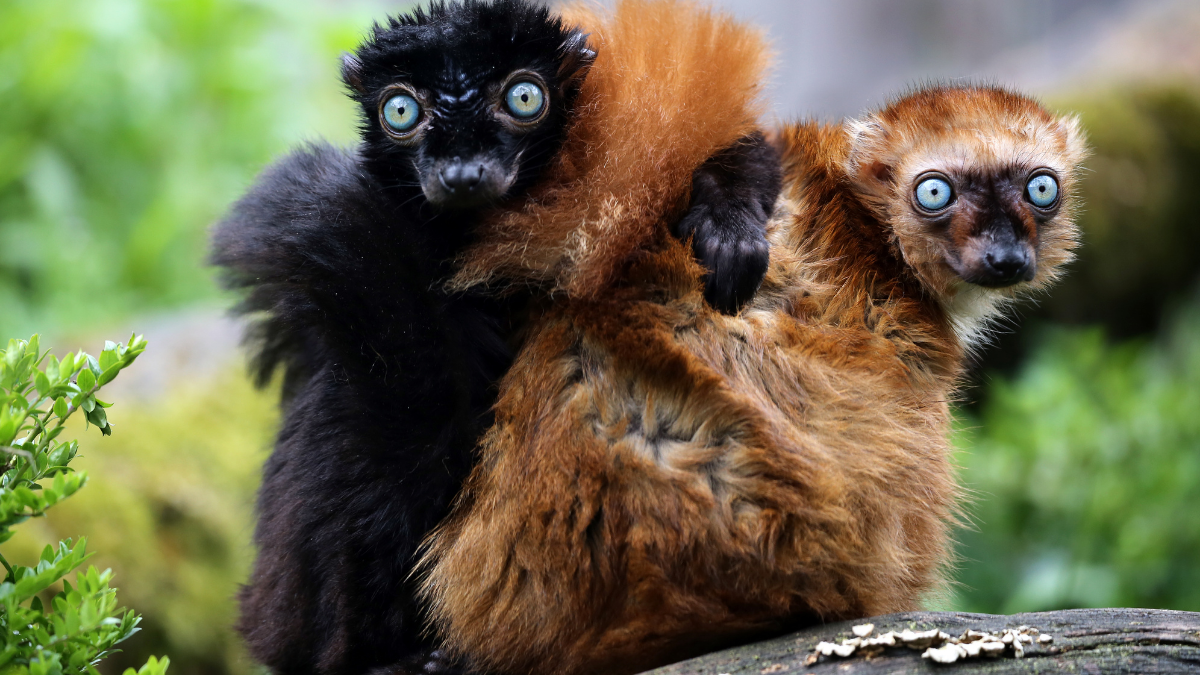
It has electric blue eyes and a face that looks uncannily human. But the blue-eyed black lemur, found only in a sliver of northwestern Madagascar, is inching closer to extinction.
Officially known as Eulemur flavifrons, the species is one of the rarest primates on the planet. It’s also one of the few with naturally blue eyes, a trait it shares with only one other primate: us.
The lemur’s limited range, concentrated in the Sahamalaza Peninsula, makes it acutely vulnerable. Deforestation, illegal logging, and hunting have already caused an estimated 80 percent population decline in just one generation. Some experts believe there may be fewer than 1,000 individuals left in the wild.
Recent fieldwork has revealed that the species lives in smaller, more fragmented habitats than previously understood. But researchers were also surprised to find the lemur in unexpected forest patches, expanding its known range by nearly 30 percent. That discovery came with a silver lining: no evidence of hybridization with its close cousin, the black lemur, which simplifies conservation planning.

Life on the edge
Blue-eyed black lemurs are cathemeral, meaning they’re active both day and night. In intact forests, they mostly forage in the canopy, eating fruit, flowers, and the occasional cicada. But in degraded areas, they’re forced to travel longer distances and spend more time on the ground, putting them at greater risk.
That behavioral shift is taking a toll. Lemurs living in disturbed forest patches have been found to carry significantly higher parasite loads, a signal of physiological stress. Their home ranges can be nearly twice as large as those in healthy habitats, and their access to nutrient-rich trees is more limited.
Socially, they’re matriarchal. Groups of up to ten individuals are led by dominant females, who make key decisions and often initiate confrontations. Males bear the burden of competition, especially during the short breeding season. But both sexes participate in grooming and play, with infants clinging to their mothers for the first few months of life.

Despite its charismatic appearance, Eulemur flavifrons faces steep odds. Conservation groups like AEECL are working with Malagasy communities to build firebreaks, patrol protected areas, and reforest key corridors. In 2024 alone, over 15,000 seedlings were planted near Sahamalaza National Park.
Education is also central. NGOs are funding school programs and supporting teachers in remote villages, fostering pride in local biodiversity. In some cases, community patrols have begun dismantling snares and reporting poachers themselves.
Captive breeding offers a safety net but is no silver bullet. In European zoos, high infant mortality and limited genetic diversity have stunted population growth. A handful of hand-reared lemurs have survived thanks to around-the-clock care, but reintroduction remains a distant goal.

What makes the blue-eyed black lemur remarkable isn’t just its color or rarity. It’s how its story reflects the fragility and resilience of Madagascar’s ecosystems. Saving it means addressing broader challenges: poverty, education, and land use.
In the words of conservationist Christoph Schwitzer, “There’ll be no lemurs left in five years if this goes on.”
Every tree planted, every snare removed, every child who learns to value these creatures is part of the solution. The blue-eyed black lemur’s future is still unwritten. But the time to change the ending is now.


Leave a comment