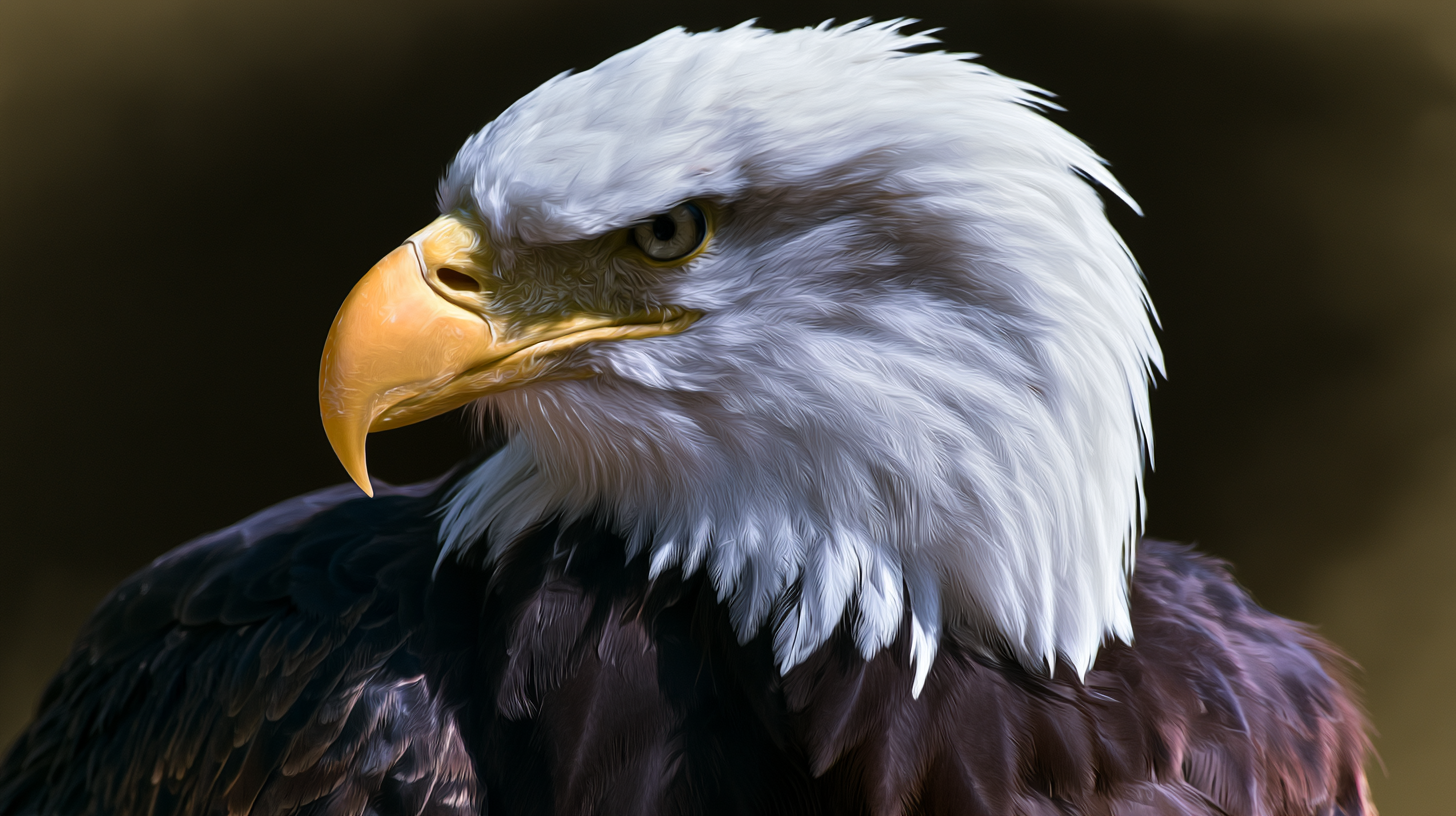
A source-backed guide to what is confirmed, what veterinary medicine can explain and what no one can honestly predict yet.
Last medically updated July 27, 2026; reporting verified July 29, 2026.
Jackie’s supporters have moved beyond one broad question—“Is she getting better?”—and are asking the harder, more useful ones.
What does a packed cell volume of 16% actually mean? How can veterinarians treat severe anemia before they know what caused it? What would Jackie have to prove before she could return to Big Bear? And what, if anything, does Shadow’s time near a visiting subadult eagle mean?
The short answer is that Jackie has shown real improvement, but she remains critically ill. The longer answer requires separating four things that often get blended together online: what observers saw, what eagle and veterinary science makes possible, what officials have confirmed, and what nobody can know yet.
Current status
In the latest detailed medical update, issued July 27, the Ojai Raptor Center said Bald Eagle patient 26-519 remained stable but critical in intensive care. Her PCV had increased from 8% before the weekend to 16%. She was eating on her own, showing better energy and alertness, and becoming more resistant during feedings. Ojai was still monitoring her bloodwork daily and had not reached a definitive diagnosis.
There is an important naming distinction. Friends of Big Bear Valley says the rescued, unbanded eagle is likely Jackie. Ojai’s medical updates identify the bird as Bald Eagle patient 26-519. In this guide, “Jackie” refers to the eagle FOBBV identifies as Jackie.
The questions, answered quickly
| Question | Best evidence-based answer |
|---|---|
| Is a PCV of 16% normal? | No. Published bald-eagle references place typical values much higher. Ojai also says 16% remains below normal. |
| Is doubling from 8% good news? | Yes. It is an encouraging trend, especially beside better eating and alertness, but it is not the same as recovery. |
| Is there a PCV number that guarantees release? | No. Ojai has not announced a threshold, and release cannot be based on PCV alone. |
| Do we know what caused the anemia? | No. Lead was negative, imaging did not show hooks, sinkers or other metal objects, and no definitive diagnosis had been reported by July 27. |
| Can vets treat Jackie without knowing the cause? | Yes. They can protect oxygen delivery, hydration, nutrition and organ function while testing and treating plausible threats. A transfusion can buy time; it does not cure the underlying problem. |
| Is a four-to-six-week release estimate credible? | Not yet. No official timetable exists. Medical stability must come before flight conditioning and release testing. |
| Is Shadow choosing a new mate? | Proximity to a visiting subadult does not establish courtship or a new pair bond. |
| Could the visitor be one of Jackie and Shadow’s offspring? | It is possible for young eagles to revisit a natal region, but this unbanded visitor cannot be identified from proximity or appearance alone. |
What does Jackie’s 16% PCV actually mean?
Packed cell volume, or PCV, is the percentage of whole blood occupied by red blood cells. Those cells carry oxygen. A PCV of 16% means that, in a measured sample, roughly 16% of the blood volume consisted of red cells.
That is not a wellness score. It is one measurement inside a much larger clinical picture.
A peer-reviewed study of 41 captive bald eagles established a PCV reference interval of approximately 35% to 57%. Other avian teaching materials use somewhat different ranges because populations, laboratories and methods differ. Ojai has not published the exact reference interval its laboratory is using, so it would be wrong to turn any internet range into Jackie’s official target.
But the broad conclusion is clear: 16% is still severely low.
The move from 8% to 16% is encouraging for two reasons. It doubled the measured proportion of red cells, and it occurred alongside reports that Jackie was eating independently, more alert and more energetic. Those signs matter because PCV is most useful when interpreted with the patient’s behavior, breathing, weight, hydration, blood chemistry and blood-cell appearance.
It is also important to describe the math correctly. Jackie’s PCV increased by eight percentage points and doubled relative to the earlier value. That does not mean she is “halfway recovered.” The path from severe anemia to release is not linear, and a single favorable result cannot show whether the improvement will hold.
No responsible source can name a release number for Jackie from the available information. Veterinarians need a sustained trend, not one peak. They also need to know whether her body is replacing red cells, whether cells are still being lost or destroyed, and whether the underlying illness is controlled.
How can veterinarians treat severe anemia when the cause is still unknown?
Treating the emergency and diagnosing its cause are related jobs, but they are not the same job.
When an eagle’s red-cell level is dangerously low, the immediate problem is reduced oxygen-carrying capacity. A veterinary team can support circulation, hydration, nutrition, temperature and organ function while it investigates why the anemia happened. That is not guesswork. It is stabilization: keeping the patient alive and protecting vulnerable organs while evidence accumulates.
A clinical review of transfusion medicine in birds describes three broad paths to anemia:
| Mechanism | What it means | Examples veterinarians may investigate |
|---|---|---|
| Blood loss | Red cells are leaving the body or circulation | Trauma, internal bleeding, parasites or a clotting problem |
| Red-cell destruction | Cells are being destroyed faster than they can be replaced | Some toxins, infections or immune-related processes |
| Reduced production | The body is not making enough new red cells | Severe or chronic inflammation, kidney disease, bone-marrow disease or certain nutritional problems |
The public information does not establish which path applies to Jackie. It also does not establish that her body “isn’t producing” red cells. That conclusion would require information about immature red cells, blood-smear findings and other tests Ojai has not released.
Here is what had been publicly reported by July 27:
- Jackie had severe anemia and inflammation affecting her kidneys.
- Her kidney values had improved.
- Her lead test was negative.
- X-rays did not show fishing hooks, sinkers or other metal objects.
- FOBBV reported that a CT scan showed no obvious cancer or metal in her body.
- She received a blood transfusion and initially improved.
- Her blood values later declined, then improved again.
- Ojai was providing several prophylactic treatments while consulting other wildlife veterinarians.
- Extensive testing had not produced a definitive diagnosis.
Those findings narrow the investigation, but they do not close it. A scan that shows no obvious cancer, for example, is reassuring; it does not exclude every cancer, microscopic disease or bone-marrow disorder. Likewise, a negative lead result answers the lead question, not every possible toxic exposure.
FOBBV reported on July 23 that zinc results were still pending. No later public result had been included in the July 27 medical update. That means the public does not know the result; it does not mean the veterinary team lacks it.
What about fireworks debris, rodenticide, iron or red meat?
There is no published evidence connecting Jackie’s anemia to fireworks debris in fish. It can be discussed as a fan theory, but not as a finding in this case.
FOBBV reported that Jackie was receiving prophylactic treatment for possible rodenticide exposure even though it was not thought to be the leading explanation. Prophylactic treatment means acting against a plausible danger before it has been confirmed. It does not turn that danger into the diagnosis.
Anemia also does not automatically mean dietary iron deficiency. Iron, supplements or particular foods help only when they match the cause and the animal’s broader medical condition. In a critically ill eagle with kidney inflammation and an unresolved diagnosis, diet and supplementation are veterinary decisions. “Give her more red meat” is not a safe treatment conclusion.
Further blood-cell analysis, infectious-disease testing or even bone-marrow investigation can be part of a general workup for unresolved anemia. Ojai has not announced a bone-marrow procedure for Jackie, so it should be presented only as a general possibility—not as her next scheduled test.
What did the transfusion do, and what happens if the PCV falls again?
A whole-blood transfusion supplies circulating red blood cells that can carry oxygen immediately. It can also provide plasma proteins and clotting components. In severe anemia, that support can create time for diagnostics, medication and the bird’s own recovery processes to work.
The transfusion did not identify or cure Jackie’s underlying disease. That is why a post-transfusion rise can be followed by another decline. Falling PCV can reflect continued blood loss, red-cell destruction, inadequate production, or changes in fluid balance that alter the concentration measured in a sample.
If Jackie’s PCV stalls or falls, the veterinary team can compare serial results rather than overreacting to one number. It can reassess blood-cell regeneration and appearance, chemistry values, evidence of bleeding or destruction, hydration, weight and clinical behavior. It can then adjust supportive care or pursue additional diagnostics.
The public does not know whether Jackie will need another transfusion, and no outside estimate should pretend otherwise.
What must happen before Jackie could be released?
There is no credible public release date.
The tempting answer is to take one encouraging PCV result and build a countdown from it. That skips most of wildlife rehabilitation. Under California’s current wildlife rehabilitation standards, a bird must be free of a condition likely to prevent survival, display the natural behaviors it needs in the wild, remain appropriately wary of people and be released into suitable habitat under appropriate conditions.
For Jackie, the likely sequence looks like this:
- Medical stabilization. Her anemia and organ values must become consistently stable or improve, not swing unpredictably after intensive support.
- Independent eating and healthy body condition. Eating on her own is encouraging, but she was initially reported underweight. Weight, hydration and strength must hold without intensive assistance.
- A move from intensive care to prerelease housing. Only after the medical crisis eases can a rehabilitation team safely give her more space and activity.
- Flight and survival-behavior assessment. The team must see controlled takeoff, sustained flight, turning, landing, perching, balance, stamina, foraging behavior and normal avoidance of people.
- Final veterinary and rehabilitation clearance. Release timing and location must account for weather, habitat, season and the territorial and social needs of a bald eagle.
The California wildlife rehabilitation manual specifically describes prerelease housing as a place for full mobility and natural behaviors such as flying, predator avoidance, hunting and foraging.
That is why a four-to-six-week estimate is not medically grounded today. Some raptors recover in weeks; others need months; some cannot be released. The cause of Jackie’s anemia, whether the improvement holds and how she performs after intensive care will determine her path.
Would Jackie recover faster if Shadow were with her?
There is no evidence that proximity to Shadow would accelerate red-cell recovery. Capturing or relocating a healthy wild mate would also conflict with the purpose of wildlife rehabilitation.
For a critically ill wild eagle, minimizing stress and preserving wild behavior are priorities. The appropriate reunion is not a hospital visit. It is a release to suitable habitat if and when Jackie can survive independently.
What could happen with Shadow and the visiting subadult if Jackie returns?
First, separate the observation from the storyline.
Viewers saw Shadow and a visiting subadult in the same area. According to FOBBV’s July 26 habitat update, bald-eagle specialist Dr. Peter Sharpe estimated the visitor at about 3½ years old. Bald eagles generally acquire full adult plumage at around five years, and breeding at four can occur but is less common. Sharpe considered the bird young to be seeking a mate or nesting territory.
FOBBV also reported that Shadow had behaved defensively toward the subadult while Sandy and Luna were present. After young eagles disperse and outside the nesting season, adults may tolerate other eagles more readily. FOBBV offered a useful comparison: Jackie spent more than an hour near a subadult in 2023 while appearing relaxed.
None of that proves courtship.
If Jackie returns to Big Bear, several outcomes are biologically plausible:
- Jackie and Shadow resume their established pair and territorial routines.
- The subadult leaves or remains at a greater distance.
- The adults temporarily tolerate the visitor outside the breeding season.
- One or both resident adults drive the visitor away.
What will happen depends on the birds, season, food, territory and the visitor’s behavior. It cannot be predicted from one perch or camera sequence.
If Jackie could not return, Shadow could eventually form a new pair. Bald eagles are generally socially monogamous, and a surviving bird can take another mate after losing one. There is no fixed timetable, however, and there is no evidence that the current subadult is a replacement mate.
“Cheating,” “mistress” and “villain” may generate comments, but they convert normal wild behavior into a human relationship plot. The more accurate—and ultimately more interesting—story is that a young eagle is moving through a landscape now central to a major habitat campaign.
Could the subadult be one of Jackie and Shadow’s previous eaglets?
Young bald eagles do disperse, sometimes over long distances, and they can later revisit their natal region. A study of satellite-tracked bald eagles found a median natal dispersal distance of about 43 miles, with substantial variation. California wildlife officials note that some young eagles travel to northern or western Canada before returning months later.
So “Do they ever come back?” has a nuanced answer: they can return to a broad area, but they usually begin by ranging far beyond the nest territory.
FOBBV says Big Bear eaglets have generally dispersed about four weeks after fledging. The lake can also attract unrelated young eagles because it offers fish, waterfowl, mature roost trees and comparatively secure habitat. Ojai has offered those resources as an explanation for the number of young eagles seen around Big Bear. A cluster of camera sightings does not necessarily equal the same number of unique birds; one visitor may appear repeatedly.
A past banded visitor, JU1, was traced to Lake Hemet roughly 42 miles away—an excellent reminder that a visiting eagle need not belong to the Big Bear family.
As for this visitor:
- Sandy and Luna are 2026 juveniles and do not match a 3½-year age estimate.
- Sunny and Gizmo hatched in 2025 and would also be far too young if that estimate is accurate.
- Jackie and Shadow’s unbanded 2022 daughter, named Spirit, is closer in age, but there is no band, tracker or other identifier connecting her to this bird.
- Plumage-based age estimates are approximate, and appearance alone cannot establish family identity.
The most accurate label remains “visiting subadult.”
FOBBV’s family history also shows why bands matter. Stormy, fledged in 2018, and Simba, fledged in 2019, were banded and were later found dead. The 2022 eaglet Spirit was not banded, so her movements after dispersal cannot be followed in the same way. For most untracked young eagles, leaving the camera is not a documented destination; it is the beginning of an unknown period of wandering.
Who is Spirit, the eagle whose blood helped Jackie?
There are two bald eagles named Spirit in this story, and they are not the same bird.
One is Jackie and Shadow’s unbanded daughter who fledged from Big Bear in 2022.
The other is a resident bald eagle at the California Living Museum, or CALM Zoo. That Spirit cannot be released because of the lasting effects of earlier injuries. In July, CALM and Ojai coordinated a blood donation for patient 26-519. CALM reported that staff collected the blood through a minimally invasive procedure before it was transported to Ojai.
Donor Spirit’s blood gave Jackie functioning red cells and immediate oxygen-carrying support during a critical stage. It did not cure the cause of her anemia, but it helped create the time in which improvement and further investigation became possible.
This is also a useful window into wildlife rehabilitation. A nonreleasable eagle can still contribute to the care of a wild patient through veterinary collaboration, even though the two birds never meet.
What do Jackie’s rehabilitation donations actually support?
The Ojai Bald Eagle Rehabilitation Campaign says contributions support advanced diagnostics, expert veterinary care, specialized rehabilitation and specialist consultation when appropriate.
Those are categories, not a published line-item invoice. Ojai has not released a patient-specific breakdown showing exactly how every dollar was spent.
The campaign is also broader than one famous eagle. It says support helps fund the current patient’s care while strengthening the center’s ability to treat future bald eagles and other raptors. Ojai says it does not receive sustained government funding for this work. Its broader rehabilitation program handles roughly 800 to 1,200 patients in a year.
In practical terms, rehabilitation money can help pay for:
- Blood tests, imaging and other diagnostics
- Veterinary time, medication and treatment supplies
- Specialized diets and nutritional support
- Safe housing, cleaning and enrichment
- Flight-conditioning space and prerelease assessment
- Rescue, transport and consultation with outside specialists
- Care for other wildlife patients using the same staff and facilities
That is why the strongest transparency claim is not “every dollar goes only to Jackie.” It is that Jackie’s case has mobilized support for the people, equipment and rehabilitation capacity involved in her care—and for the patients who will come after her.
Why does Ojai call her patient 26-519, and why are updates not continuous?
This is not avian HIPAA.
California’s wildlife rehabilitation rules say animals shown in public-facing photos or videos may be referenced only by intake number, common species name or scientific name. The intake number also anchors the medical record: treatment, diagnostics, medication and daily progress all need to follow the correct individual.
That is why Ojai’s medical updates say Bald Eagle patient 26-519 while FOBBV and the public say Jackie. The number is a recordkeeping and rehabilitation practice, not evidence that Ojai is denying the eagle’s public identity.
The update schedule has a similarly practical explanation. Ojai reported that Jackie remained in intensive care and that reducing stress was part of recovery. It asked supporters not to call, text, email or visit for updates and promised to share meaningful developments through official channels.
A critically ill patient’s condition can also change between morning and evening. More posts do not create more medical certainty, and a daily snapshot can become misleading if it is treated as a prognosis.
The fairest standard is:
- Ojai provides medical findings when its team is ready to release them.
- FOBBV reports what it has been told and what its cameras document at Big Bear.
- Discvr timestamps every status statement and distinguishes official findings from explanation or inference.
- Followers avoid turning an information gap into an AI-generated forecast.
Read Discvr’s related explainer on why Ojai identifies Jackie as patient 26-519.
What we know—and what remains unknown
| Confirmed or publicly reported | Not publicly known |
|---|---|
| Patient 26-519 was stable but critical on July 27. | The underlying cause of the anemia |
| PCV increased from 8% to 16%. | Whether that increase will continue or hold |
| Jackie was eating independently and showing better energy and alertness. | Her marrow response and complete laboratory picture |
| Lead testing was negative. | The publicly unreported zinc result |
| Imaging found no hooks, sinkers or obvious metal objects; FOBBV reported no obvious cancer on CT. | Whether further infectious, toxicologic or marrow testing will be needed |
| She received a transfusion from CALM’s resident eagle Spirit. | Whether another transfusion will be needed |
| No definitive diagnosis had been reached. | A prognosis or release date |
| Shadow was seen near a visiting subadult estimated at about 3½ years old. | The visitor’s identity, sex, parentage or future relationship to the territory |
Jackie’s move from 8% to 16% PCV deserves to be called progress. Her independent eating and stronger behavior deserve the same.
But progress is not a prognosis.
The next meaningful update is not an internet countdown. It is evidence that her red-cell level can remain stable, her underlying illness can be controlled, and her body can move from intensive care to the long physical work of becoming a wild eagle again.
Until then, the most honest answer is a sequence—not a date.
Leave a comment