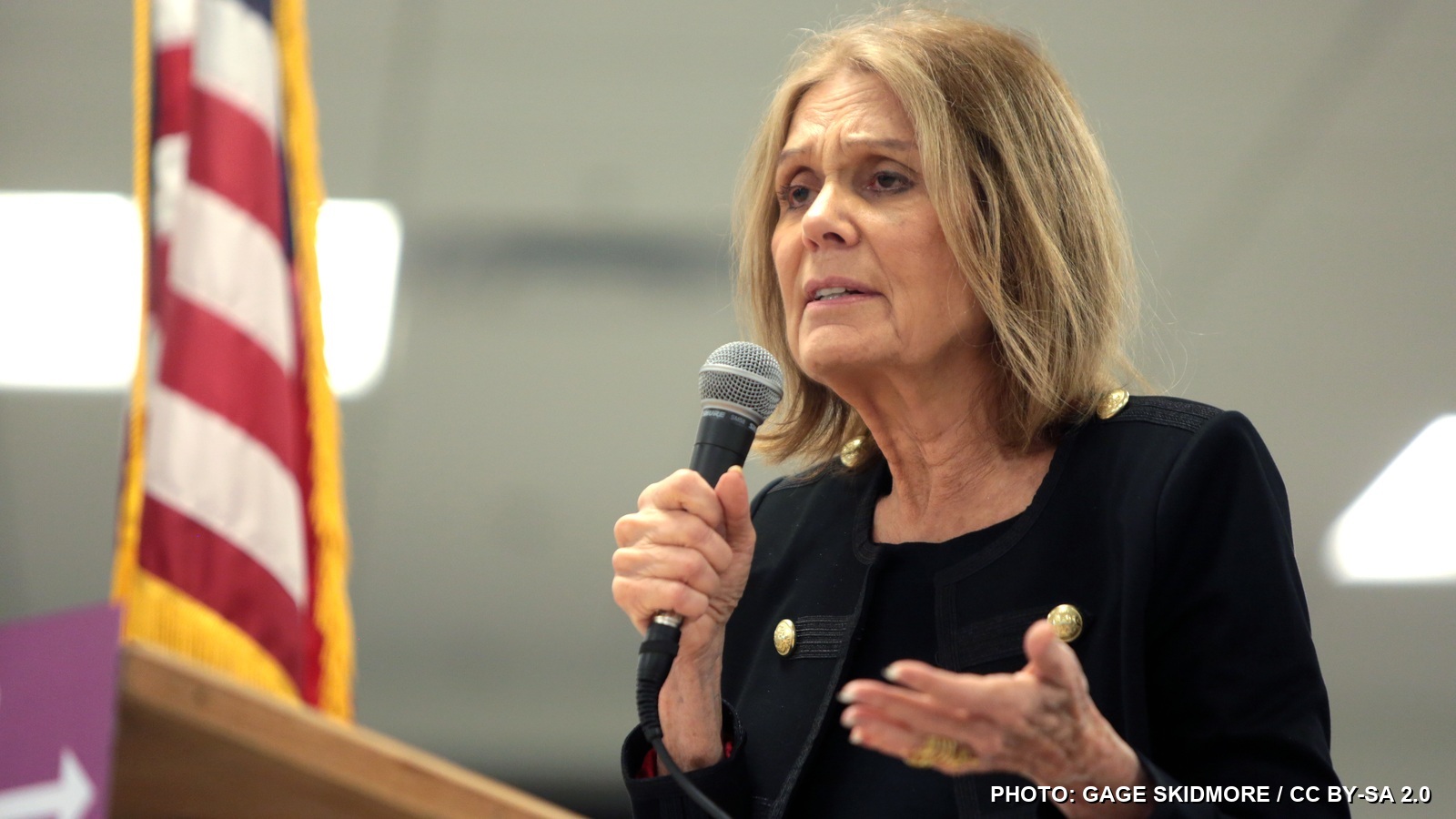
One of the most revealing scenes in Gloria Steinem’s life finds her not making a speech, but listening. In 1969, she attended an abortion speak-out in a Greenwich Village church basement as a reporter. Sitting on a windowsill, she heard women discuss experiences they had been expected to keep private. She later identified the gathering as a turning point in her feminism.
Fame can turn collective work into a solitary portrait. Behind Julia Butterfly Hill’s 738-day tree-sit, for instance, were supporters supplying her from the ground. Steinem’s story also becomes more revealing when the frame widens to include the editors, organizers and readers around her.
Steinem died at her New York City home on September 2, 2026, at 92. Her death was announced the following day. Her reporting and organizing had helped put women’s experiences at the center of American political and cultural debate.
Yet the familiar description of her as a voice for women leaves something out. Women already had voices. What many lacked were institutions willing to publish their accounts, treat their concerns as consequential and connect them with people facing similar circumstances. Building those institutions became a defining part of Steinem’s work.
Born in Toledo, Ohio, in 1934, Steinem graduated from Smith College in 1956 and spent two years in India on a fellowship. She began her journalism career in a profession where women were frequently directed toward lifestyle assignments rather than political reporting.
Her most famous early assignment exposed that contradiction. In 1963, she spent 11 days undercover at New York’s Playboy Club. The resulting investigation, “A Bunny’s Tale,” appeared in two installments in Show magazine that May and June. It examined the employment practices behind a business selling an image of glamour.
The story brought attention, but attention was not the same as respect. As NYU’s Undercover Reporting archive records, the assignment made it harder for her to obtain serious reporting work. An investigation into how women were treated became another occasion to focus on the woman doing the investigating.
Steinem later put the broader problem plainly. “In my experience, things were only taken seriously if they also happened to men,” she told New York in 1998.
Ms. offered a way to challenge that hierarchy without continually asking another editor’s permission. Its arrival happened in stages: a 40-page insert in New York on December 20, 1971; a standalone Spring 1972 preview that reached newsstands in January; then the first regular issue that July. Steinem worked with a founding group that included Patricia Carbine and Letty Cottin Pogrebin.
According to the magazine’s own history, its 300,000 preview copies sold out in eight days. Within weeks came about 26,000 subscription orders and more than 20,000 reader letters. The figures describe more than a promising launch. Readers were not simply buying something to read. Many were writing back.
In the foreword she wrote for the 2023 book 50 Years of Ms., Steinem recalled mail arriving in bags. Readers described their lives, offered encouragement and supplied ideas for coverage. The correspondence helped shape the publication rather than merely respond to it.
“A movement is a contagion of truth telling,” she wrote.
That description helps explain the magazine’s significance. An experience that seemed uniquely humiliating could look different alongside another woman’s account. The comparison did not solve the problem, but it could change the question from what was wrong with an individual to what needed to change around her.
The magazine brought domestic violence, sexual harassment and other subjects into sustained public discussion. It did not invent these experiences or organize every campaign surrounding them. It made an editorial commitment to treating them as subjects worthy of investigation, rather than matters best left behind closed doors.
The economics of publishing posed another obstacle. In her retrospective, Steinem described resisting advertisers’ expectations that magazine coverage would support their products. The tension was about more than revenue: a publication could not freely examine women’s lives if businesses selling to women helped determine which parts of those lives were fit to print.
A movement was never one woman
The people beside Steinem matter as much to this history as the platforms beneath her.
Dorothy Pitman Hughes was already doing demanding community work when Steinem came to report on her childcare center. In New York, Pitman Hughes had built a place that served children and families while responding to needs extending well beyond supervision during working hours. The center connected childcare with the wider circumstances of neighborhood life.
The women became friends and speaking partners. They also helped establish the Women’s Action Alliance. Their widely reproduced 1971 portrait, photographed by Dan Wynn with both women raising their fists, records a partnership that a Steinem-only account would obscure. Pitman Hughes was not a supporting character waiting for a famous journalist to arrive. She brought her own organizing experience, priorities and authority.
A similarly important perspective appeared in the Spring 1972 preview issue of Ms. Johnnie Tillmon’s essay “Welfare Is a Women’s Issue” considered feminism from the position of a Black mother receiving public assistance. Tillmon connected inadequate wages, unpaid caregiving and welfare rules with women’s ability to control their lives.
Her argument challenged a narrow understanding of liberation as access to better careers for women already positioned to pursue them. A magazine concerned with women’s freedom also had to consider those struggling to secure an adequate income and care for their children. Tillmon supplied that analysis in her own name, drawing on her own organizing.
Publishing such work did not settle the question of whose experiences received enough space. Alice Walker resigned from Ms. in 1986 after about 12 years as an editor and contributor, objecting to the magazine’s overwhelmingly white cover representation.
That criticism belongs in an account of Steinem’s legacy. An institution can expand public discussion while still having exclusions of its own. Recognizing both does not cancel the achievement. It makes the achievement, and its limitations, more intelligible. Listening matters most when the person speaking is challenging the institution doing the listening.
Steinem’s work also extended beyond publishing. In July 1971, she helped establish the National Women’s Political Caucus during a two-day gathering that brought together over 320 women. Principal founders included Shirley Chisholm, Bella Abzug, Betty Friedan and Fannie Lou Hamer. Its agenda included recruiting and training women for public office and building networks to support their participation in political life.
In 2005, she joined Jane Fonda and Robin Morgan in founding the Women’s Media Center. Its work includes reporting, research, training and connecting journalists with women experts. The aim was not simply to secure more attention for a handful of recognizable women, but to change who could help shape coverage.
There is a useful parallel in Jane Goodall’s work beyond research: the institute and youth programs she helped create extended participation beyond one celebrated individual. The causes differed, but both careers show why a legacy should be measured partly through the opportunities it leaves for others.
Honors followed Steinem’s decades of work, including the Presidential Medal of Freedom in 2013 and Spain’s Princess of Asturias Award for Communication and Humanities in 2021. Those distinctions recognized an influence that had traveled far beyond a magazine office.
Her final memoir is scheduled to reach readers this month. Penguin Random House lists An Unexpected Life: A Memoir for publication on September 22, 2026. The publisher describes a book connecting her early experiences and influences with the movements she helped build and the work facing later generations.
Another part of her legacy is a place rather than a publication. Gloria’s Foundation is working to preserve the three-story Manhattan home she had occupied since 1967, along with her archives. The foundation describes the apartment as a gathering space for organizers and a setting for early Ms. meetings, with plans to sustain its role in feminist work.
It is a fitting place to look beyond the familiar portrait. A microphone directs attention toward one speaker. A room where people can meet, disagree, compare experiences and begin working together offers something different. Steinem’s legacy includes her words, but it also includes the space she helped make for other people’s words to matter.



Leave a comment