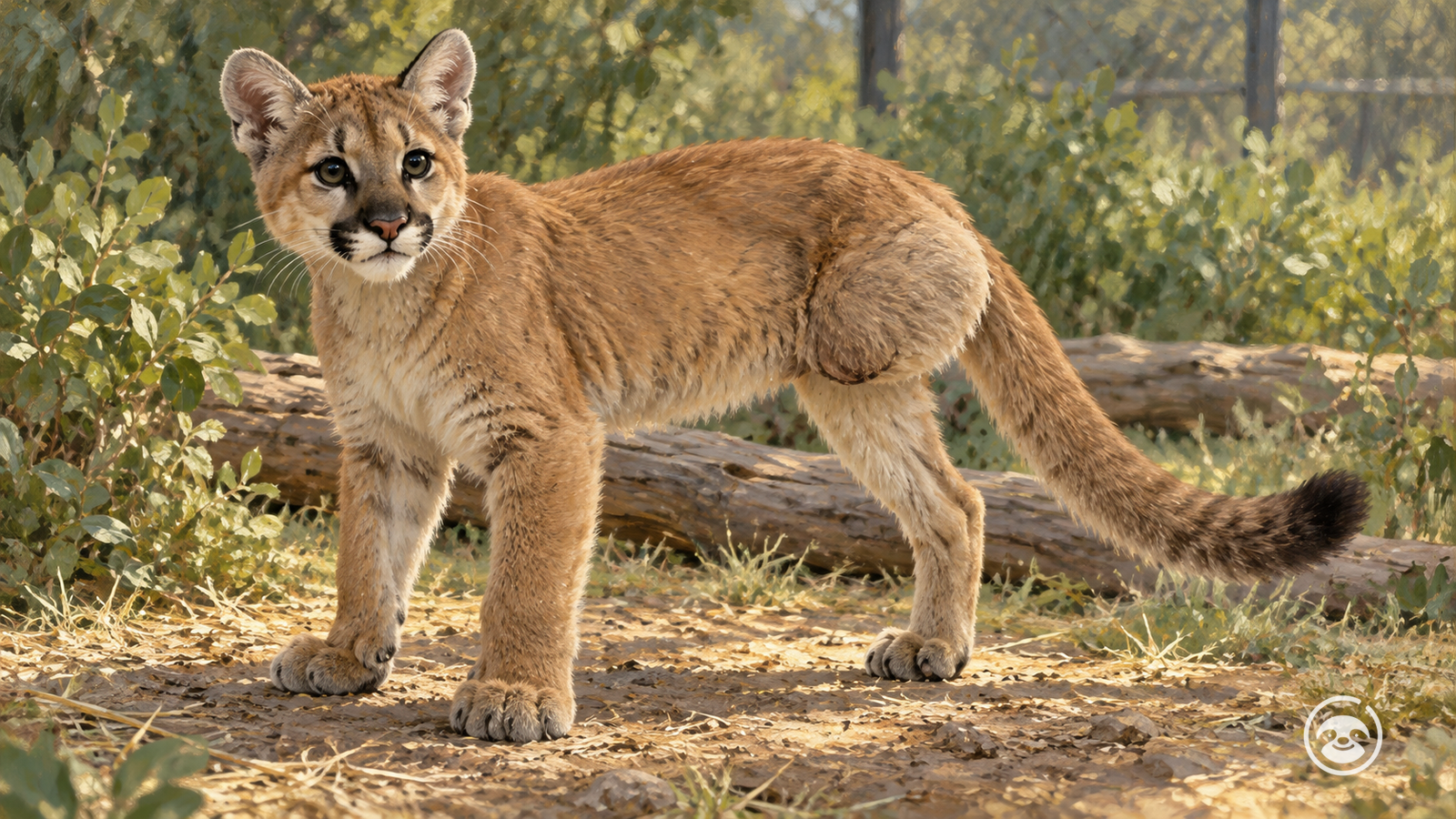
Crimson has a permanent home waiting in Arkansas. The mountain lion cub, who lost a hind leg after months of veterinary treatment, is set to move from Oakland Zoo to a wildlife refuge where he’ll receive care as he grows up.
In its October 8, 2026, announcement, Oakland Zoo named Turpentine Creek Wildlife Refuge in Eureka Springs as his destination. California wildlife officials selected the refuge, and the zoo said Crimson would travel there in the coming weeks.
His rescue began with a question that took days to answer: Was his mother still caring for him?
Crimson was roughly three weeks old when researchers became concerned about her movements in California’s Santa Monica Mountains. His mother, known to researchers as P-129, was being tracked, and the cub had been assigned the identifier P-131. Wildlife teams could follow her movements and check what was happening at his den.
Mother mountain lions leave young cubs behind while they hunt, returning to nurse them. Finding a cub alone calls for patience and careful observation. In Crimson’s case, teams used location data, remote cameras and repeated checks to assess whether his mother was returning.
As the monitoring continued, the cub weakened. Oakland Zoo says he lost 10% of his body weight over two days and was calling frequently. After several days of observation, officials concluded that he’d been abandoned and authorized a rescue.
He reached the Los Angeles Zoo on March 25. Two days later, Flying Tails Animal Rescue flew him north for treatment at Oakland Zoo. There, caring for such a young cat meant bottle feeds every three hours, including overnight.
Crimson had already lost toes on a hind foot before his rescue.
Veterinarians tried bandages and braces and consulted specialists over the following months. But Crimson’s body and behavior were changing: he was getting bigger and more active. The team eventually judged that removing the leg offered him a better chance of lasting comfort and mobility.
Growing up on three legs
An August 14 update from the zoo announced the successful amputation. Dr. Kim Tong, a veterinary surgeon, performed the operation.
The zoo soon described a cub returning to his usual curiosity and energy. In August, ABC7 reported on video showing him running after the surgery. His early recovery encouraged his caretakers, who said habitat design and specialized care could help him manage possible limits in speed or climbing.
That recovery won’t lead to a release into the wild. California wildlife officials had already determined in March that Crimson would need permanent care, citing his young age and the lasting injury to his foot.
A wild cub has a long apprenticeship ahead of it. Oakland Zoo says mountain lions normally spend 12 to 18 months with their mothers learning the skills they’ll need to survive. Crimson lost that care when he was still small enough to need regular milk feeds.
At Turpentine Creek, daily care includes watching each animal for health changes, providing meals suited to its needs and offering enrichment that encourages natural behavior.
The refuge also has an onsite veterinary hospital for blood tests, X-rays and surgery. Its recovery area has heated floors and cameras that allow animals to be monitored around the clock.
Featured image: AI-generated illustration inspired by Crimson’s recovery.
Leave a comment