William Chapman’s death at Yorkshire Wildlife Park has become the latest case in a disturbing history of people entering big-cat enclosures. Discvr’s initial report on the Yorkshire Wildlife Park tiger enclosure death established what authorities confirmed that weekend. The most important unanswered question is what the physical layout, contemporaneous records and applicable safety rules can establish about how Chapman reached a tiger.
The BBC identified Chapman as the man who entered the enclosure near Doncaster on October 10, 2026. South Yorkshire Police said officers were called at 1:35 p.m. and that he died at the scene after the tiger attacked him. The park was evacuated, while the animal remained inside the enclosure.
Those are the narrow facts authorities have confirmed. Investigators haven’t established why Chapman entered, published his exact route through the exhibit or found that a barrier failed. Witness accounts reported that he scaled a viewing barrier and dropped into the enclosure, but those descriptions aren’t substitutes for CCTV, enclosure plans or an official reconstruction.
City of Doncaster Council, the park’s licensing authority, has opened a health and safety investigation. Police are conducting their own inquiries. Neither authority has published the scope of its work, so questions about licensing conditions, risk assessments, physical safeguards and the park’s response remain open.
A tiger enclosure relies on more than one boundary. The primary structure keeps the animal contained. A stand-off barrier keeps visitors away from that structure and from any point where direct contact might be possible. Gates, service corridors, viewing platforms, warning signs, surveillance and staff procedures form additional layers.
That distinction matters because the tiger didn’t escape. Chapman entered the animal’s space. The available evidence therefore raises two separate questions: how the enclosure kept the tiger contained, and how a visitor crossed the human-facing layers. Authorities haven’t said whether the second possibility had been assessed before the incident.
The legal framework begins with the Zoo Licensing Act 1981. Local authorities license and inspect zoos, while government standards guide decisions about license conditions and modern practice. The government’s zoo-practice standards page confirms that the 2012 standards remain in effect through May 23, 2027. A stricter replacement has been published, but it won’t take effect until May 24, 2027.
That timing prevents an easy mistake. The future rules can show where regulation is heading, but they can’t be used retrospectively to declare that a zoo violated requirements that weren’t yet operative.
Under the 2012 standards, tigers are Category 1 hazardous animals. Contact with them is considered likely to cause serious injury or threaten life. The standards make non-contact separation the default and require a suitably designed barrier between these animals and the public. They also call for stand-off barriers where needed to prevent direct contact, and they say safety barriers should stop children from getting through, under or over them while discouraging visitors from sitting on them.
Those provisions don’t guarantee that no determined adult can ever cross a boundary. They create a framework for identifying danger and reducing it. The crucial evidence will be site-specific: the height and spacing of each barrier, possible footholds, the distance to the enclosure edge, signs, locks, staffing, cameras, previous incidents and any recommendations from inspectors.
Yorkshire Wildlife Park says its stand-off barriers are at least 1,100 millimeters high, or about 3.6 feet. That park-wide statement doesn’t establish which barrier Chapman crossed, its precise dimensions or its condition on October 10. Treating a general accessibility description as proof would get ahead of the investigation.
What the investigation still has to establish
The first task is to reconstruct the route. Investigators will need to identify every boundary Chapman crossed and determine whether he climbed, opened or bypassed it. A visitor rail, a stand-off barrier, a keeper gate and the tiger’s containment structure serve different purposes. Reporting that collapses them into a single “fence” risks obscuring how the system was supposed to work.
The contemporaneous record comes next. CCTV may show when Chapman first approached a boundary and how long staff had to react. Radio traffic, incident logs and emergency calls may establish when the alarm was raised. Inspection reports, maintenance records and earlier risk assessments may show what hazards the park had identified before October 10. Those records haven’t been released publicly.
Investigators can then compare that evidence with the operative rules. The relevant questions include whether the public and a Category 1 animal were separated as required, whether the stand-off arrangement was suitable for the location and whether gates, locks and warning systems functioned as intended. The fatal result alone doesn’t answer any of them.
The current evidence also places clear limits on what can be inferred. There’s no published finding that a barrier was defective, that a gate was open, that staff missed a warning or that Chapman’s entry was impossible to prevent. There’s also no complete public timeline showing the first visible breach, the alarm, the response and the point at which medical personnel could enter safely.
If investigators identify a correctable weakness, the council can consider changes to license conditions, barriers or operating procedures. If the evidence shows that Chapman overcame functioning safeguards, the findings may instead clarify the practical limits of visitor controls. Either conclusion requires the site records rather than assumptions drawn from the footage.
Born Free, which campaigns against keeping wild animals in zoos, has asked whether standards do enough to keep people out as well as animals in. The British and Irish Association of Zoos and Aquariums has cautioned against treating the incident as proof that the wider safety system failed before the inquiry is complete. Those positions frame the debate, but neither determines what happened at this exhibit.
The response after entry deserves separate scrutiny. Emergency action can include evacuating visitors, securing the area, calling emergency services and using trained staff to manage the animal. Police said the tiger was uninjured and remained in the enclosure. The park identified him as Altai and said he wouldn’t be euthanized. Officials haven’t publicly explained the loud sounds witnesses reported or released a complete response timeline. Those gaps shouldn’t be filled with assumptions about gunfire or the tiger’s treatment.
South Yorkshire Police has asked people not to share the graphic footage. Beyond the harm to Chapman’s family and witnesses, the videos don’t answer the regulatory questions. They show part of the encounter after he was already inside. They don’t reveal the full route, staff communications, earlier observations or the condition of each barrier.
Altai arrived from Norway in February 2025 through the European Endangered Species Programme. Yorkshire Wildlife Park’s introduction to the Amur tiger described him as a three-year-old male intended to join the park’s conservation breeding work. The park later said he was safe and wouldn’t be euthanized after the attack. Discvr has separately explained why Altai won’t be euthanized.
That decision keeps responsibility where the evidence points. Altai didn’t leave his enclosure or choose the circumstances. He responded as a powerful wild predator when a person entered his space. Describing him as guilty, innocent or vengeful would impose a human moral framework that doesn’t explain animal behavior.
The harder judgment concerns the system around him. The investigation may determine whether changes to barriers, monitoring or emergency procedures are needed. Until authorities publish that evidence, the honest conclusion isn’t that the safeguards failed or that the death was unavoidable. It’s that the line between a visitor and a dangerous animal must be examined one layer at a time.
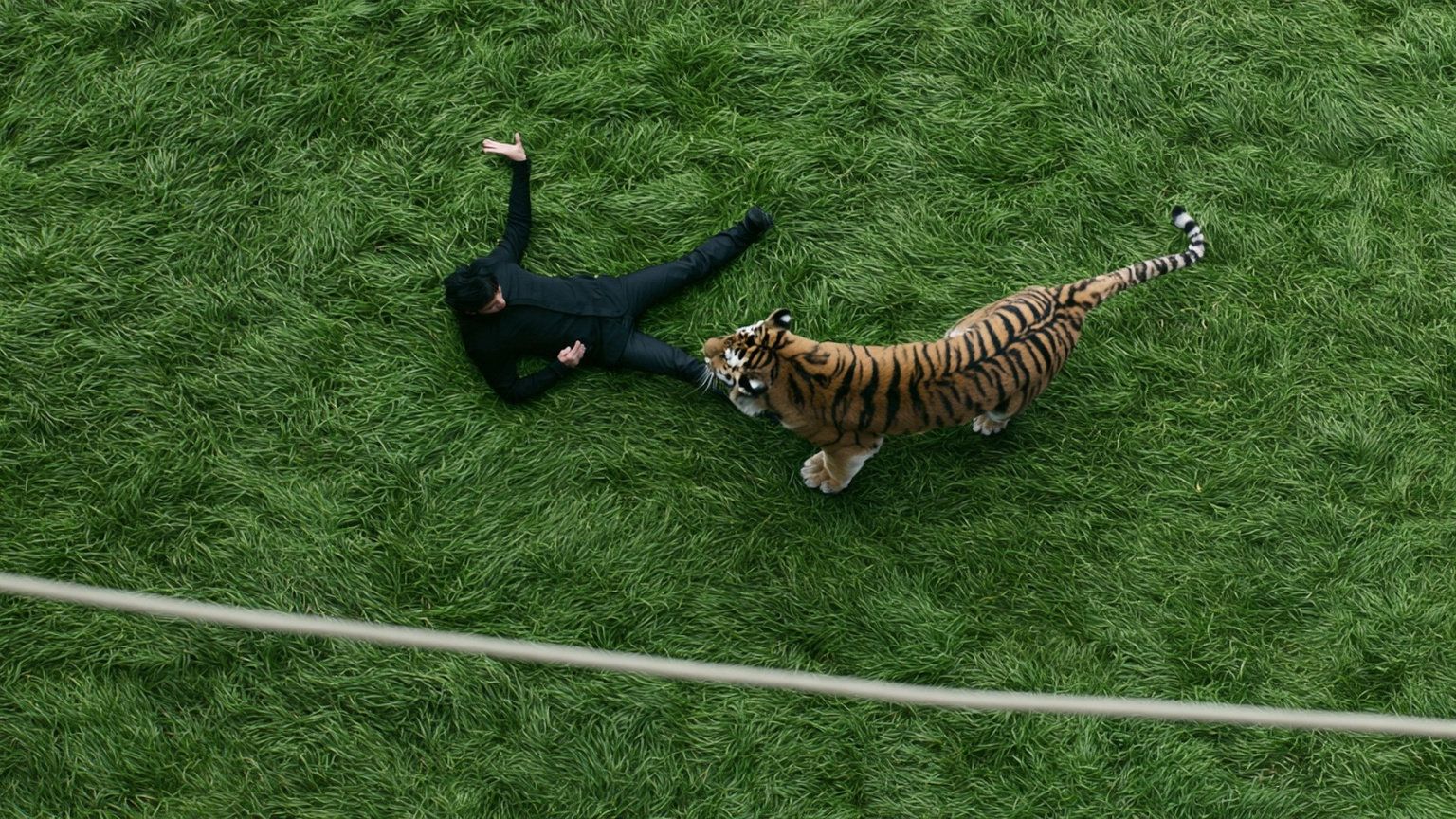
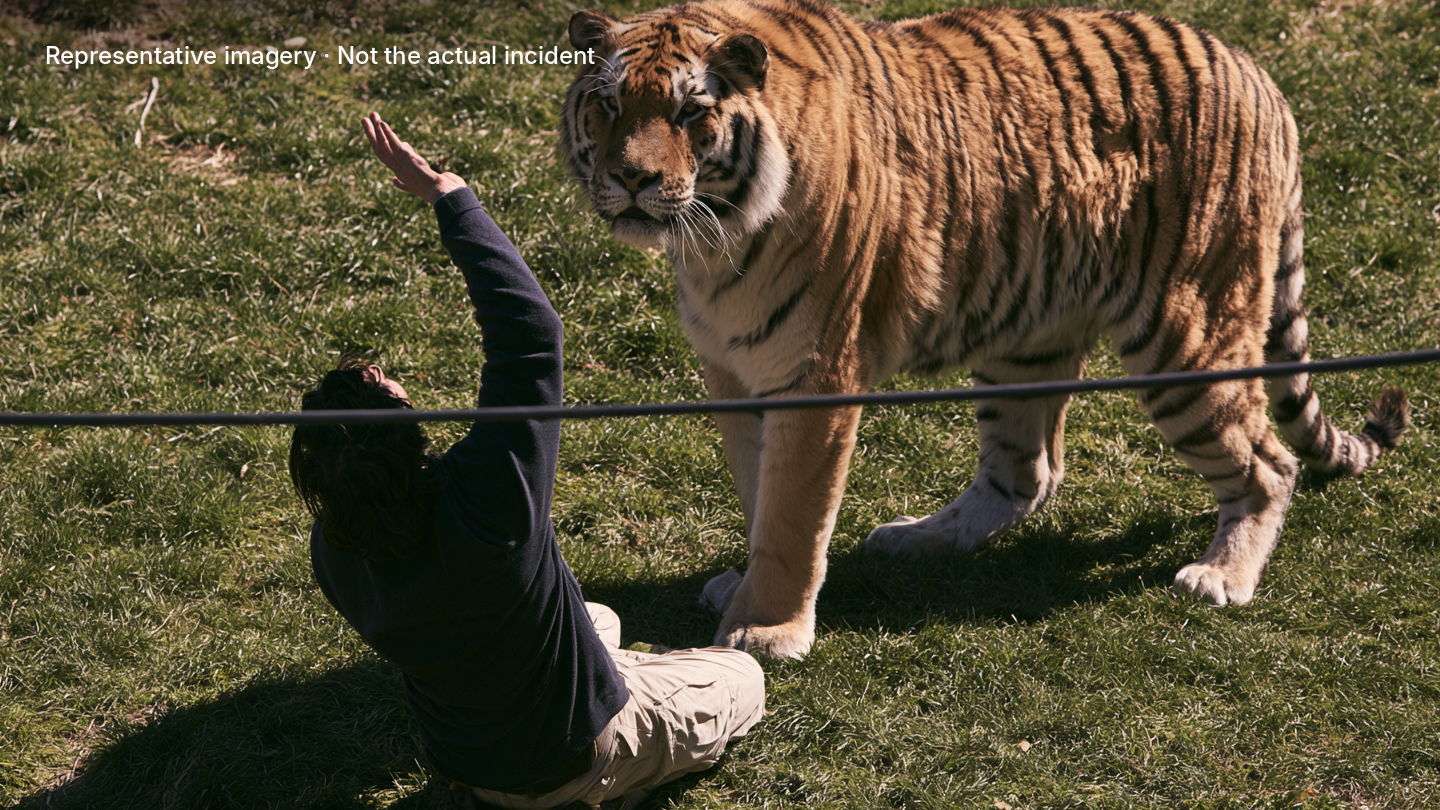
The featured image is a representative reconstruction. It doesn’t depict the October 10 incident, William Chapman, Altai or Yorkshire Wildlife Park.
Leave a comment