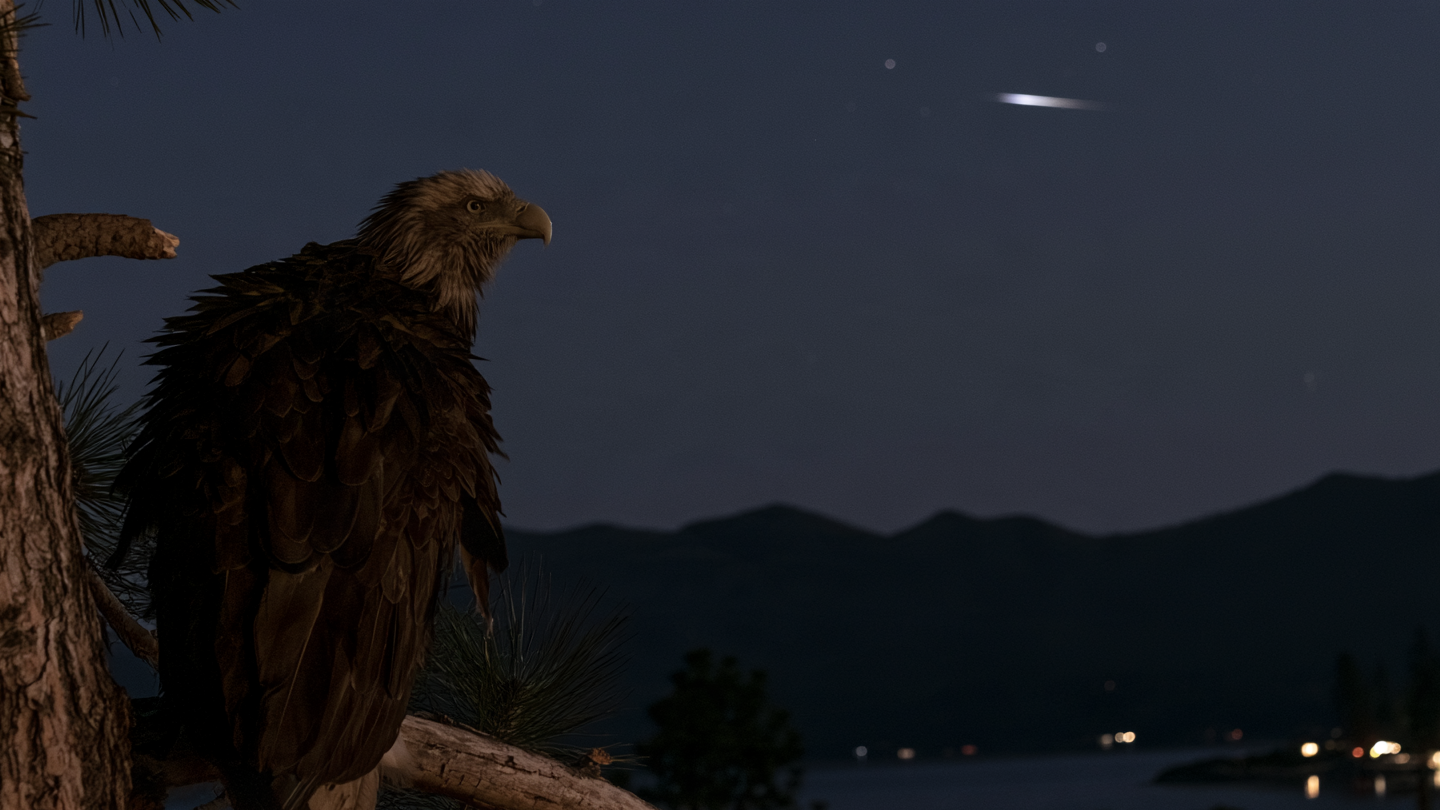
A meteor flashed through the nighttime view of Big Bear’s eagle cameras at about 1 a.m. on October 6, 2026. The brief streak was captured by Friends of Big Bear Valley, the nonprofit that operates the Southern California livestreams.
The same camera system lets viewers follow Shadow and Kaydee’s movements around the valley. The recording added an astronomical event to a stream designed to document eagles and their habitat.
FOBBV installed its first nest camera in October 2015. A second camera, added in 2021, widened the view to include more of the surrounding territory. Both streams are available free to the public around the clock.
The live view below shows the nest as it is now, rather than replaying the October 6 sighting.
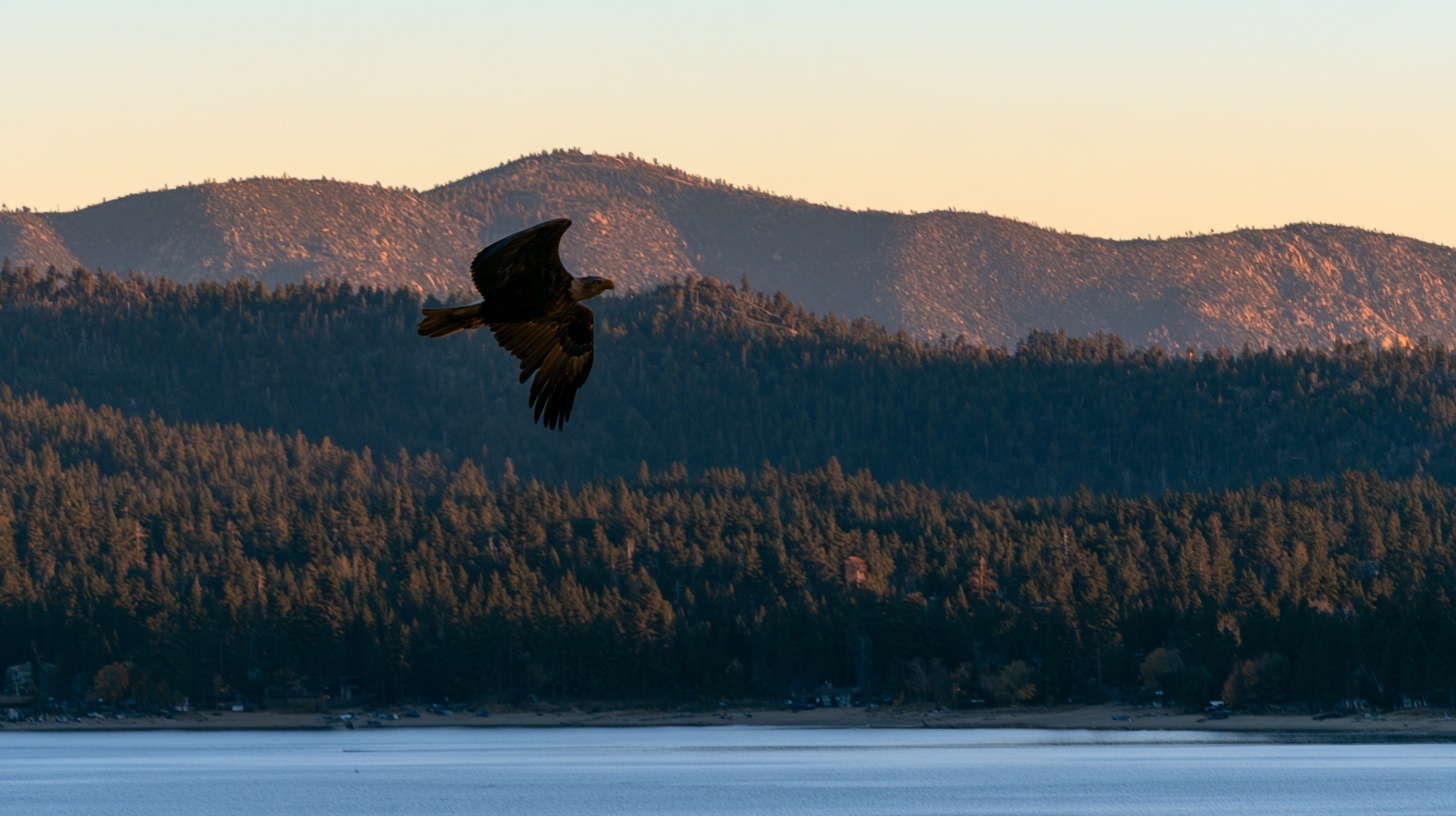
That wider perspective is useful for following the banded eagle known as Kaydee beyond the nest. A nest visit and a sighting elsewhere in the habitat aren’t the same thing. An eagle may leave the nest without disappearing from the cameras entirely.
A team of FOBBV observers also monitors the livestreams 24 hours a day, maintaining a live recap with identifications and observations. Their work helps turn fleeting appearances into a record viewers can revisit.
What the meteor’s bright streak can tell us
The flash raises a question that the recording alone can’t settle: did any material reach the ground?
NASA uses different terms for the stages of the event. A meteoroid is natural material in space. When it enters an atmosphere at high speed and produces a luminous streak, the visible phenomenon is a meteor. Any material that survives to reach the surface is a meteorite.
That distinction matters in Big Bear. A streak in the eagle camera’s view isn’t evidence that a rock landed beside the nest or elsewhere nearby.
An especially bright meteor is called a fireball. The American Meteor Society generally applies that term to meteors brighter than magnitude minus four, roughly comparable to Venus. The label describes brightness; it doesn’t confirm that fragments reached the ground.
The calendar doesn’t establish where the meteor came from, either. Meteor showers occur when Earth encounters streams of debris, but meteors also appear outside those showers. An October date alone isn’t enough to identify this sighting as a Draconid, Orionid or Taurid.
The camera’s location presents a similar limitation. Something that appears above a tree line in a picture hasn’t necessarily passed directly over those trees. The view records an alignment, not a complete flight path.
To work out that path, additional observations can help. The American Meteor Society gathers reports from different locations and, when sightings can be matched to the same event, can sometimes determine the object’s trajectory.
For the Big Bear meteor, another recording with a reliable time and viewing location could provide a useful second perspective. The eagle camera caught the flash. Another view might help explain where it traveled.


Leave a comment