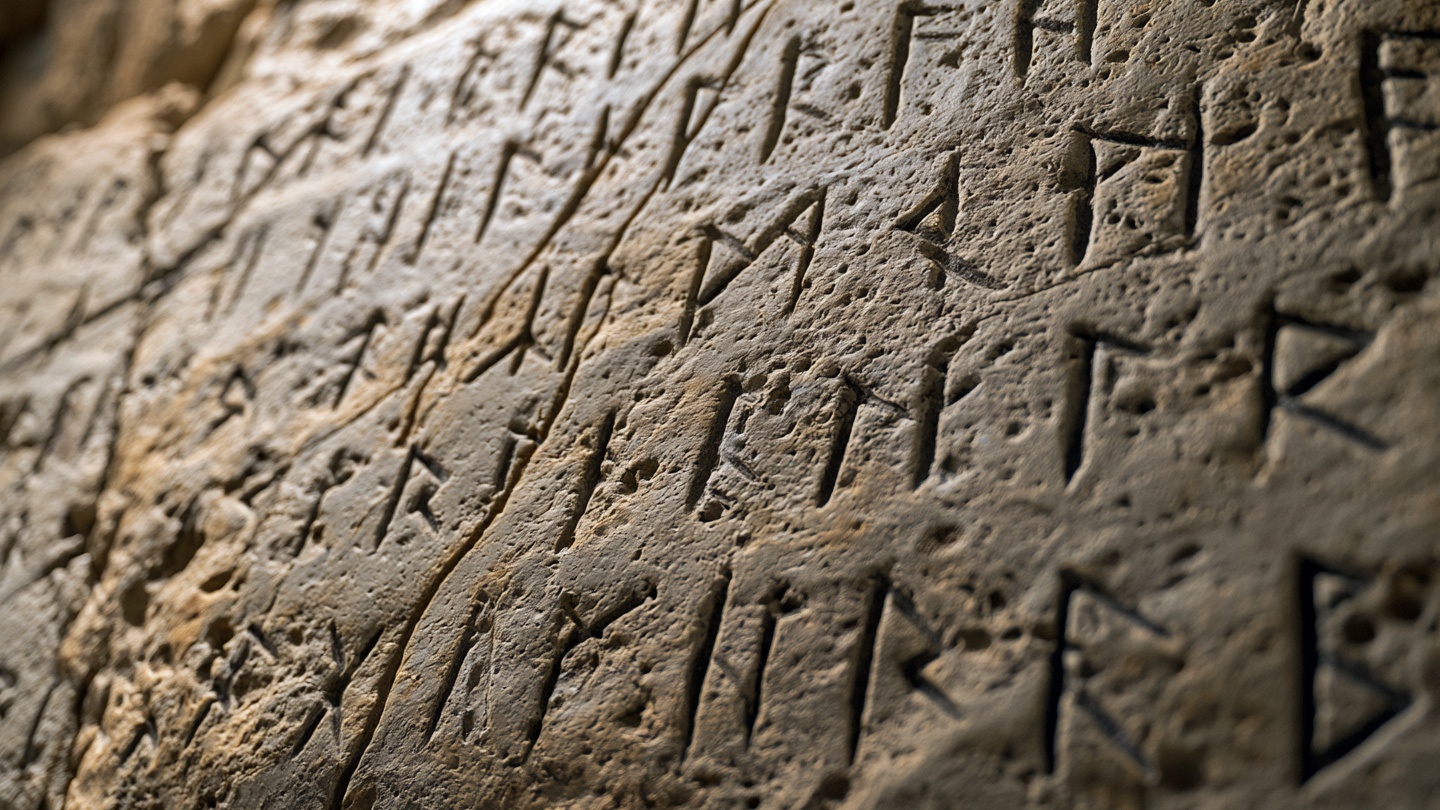
Avelino Pablo Cruz was on a break from work in 2017 when he noticed markings on exposed bedrock near Wawa, Ontario. A fallen tree had disturbed the ground above them. As soil was removed, an inscription emerged: a Swedish version of the Lord’s Prayer, written in runes.
The text covers a patch of rock about 5 feet 7 inches tall and 4 feet 6 inches wide. Its 255 characters fill 15 lines. Whoever carved them left a substantial piece of work in the forest near Lake Superior, but no known account explaining who made it.
Local historian Johanna Rowe contacted OCARE, the Ontario Centre for Archaeological Research and Education, in 2018. In October 2019, Swedish runologist Henrik Williams visited to examine the lettering. He worked beneath a tarp with a flashlight, then returned before dawn the next day to check parts of his reading against a text he’d identified overnight.
The carving drew widespread coverage in June 2025, nearly six years after Williams had read it. Its maker and carving date remained uncertain.

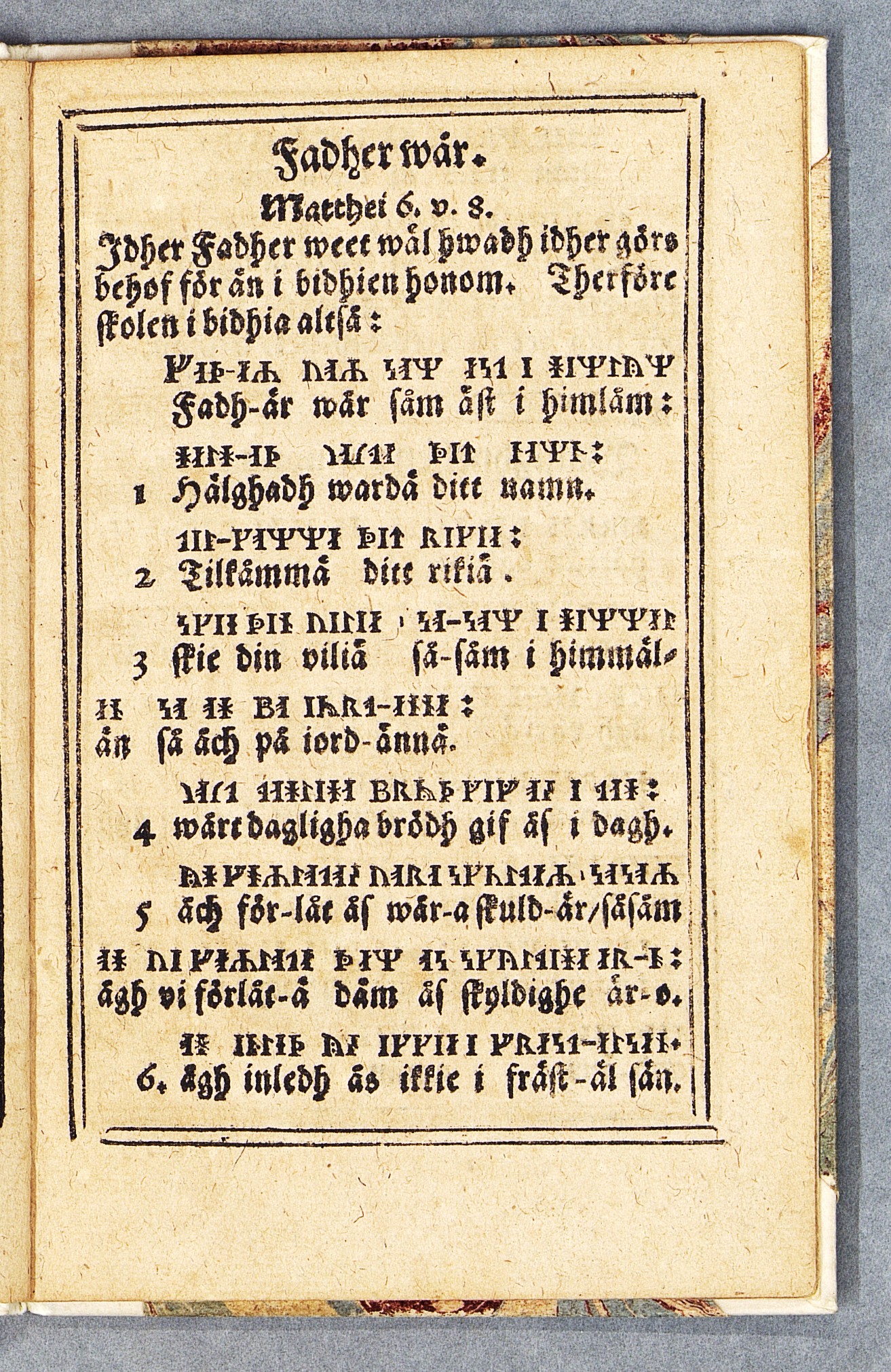
Williams traced the wording to rune primers published by the Swedish scholar Johannes Bureus beginning in 1611. Among the editions he compared, the 1624 printing came closest to the Ontario inscription. The prayer also appeared in multilingual collections published in the 1700s.
That printed history gives the carving an earliest possible date. It can’t be older than the version it follows, which rules out a Viking-age origin. Runes remained available to later readers through books, and their presence alone doesn’t date an inscription.
In his runological report, Williams favors the 1800s. He also leaves room for an earlier carving or one made in the 1900s. A firm age has yet to be established.
None of the printed versions Williams examined matches the carving exactly. An unusual combination of runic characters suggests that the carver either knew enough to adapt the lettering or worked from a version researchers haven’t found. Identifying that immediate source could narrow the date further.
Swedish workers offer a possible lead
The search for a carver has drawn researchers toward the Hudson’s Bay Company post at Michipicoten. Archaeologists David Gadzala and Ryan Primrose consider Scandinavian employees working there during the mid-to-late 1850s the strongest candidates.
There’s documentary evidence for their presence. Historian Gwynneth C. D. Jones’s 2015 study of Métis communities north of Lake Superior draws on the post’s surviving journals. One entry from August 1858 describes an employee named Larsen as Swedish. Another, from May 1859, records two Swedish employees helping to build a chimney for the men’s house.
The records show Swedish employees doing building work at the post. Gadzala and Primrose also point to the employees’ knowledge of the surrounding terrain, access to tools and attendance at religious services. Together, these details make the post a reasonable place to investigate. They haven’t identified a worker who carved the prayer.

The journals describe the Scandinavian employees working alongside Métis families and other Europeans, while Ojibwe people traded, traveled and supplied the post. These records preserve details of a busy community, down to cooking arrangements and repairs to its buildings.
OCARE’s interpretation allows for either an individual act of religious devotion or a place where a group gathered to worship. The prayer supplies the religious context; the surviving evidence doesn’t establish how the site was used. Archaeological searches have found no objects directly connecting the inscription to its maker.
A second carved panel adds another unresolved detail. About 10 feet from the prayer is a boat carrying 16 humanlike figures, with 14 X-shaped marks nearby. The figures and marks are visible features of the carving, but their intended meaning remains unknown.
Protecting the exposed rock has become a practical concern. Williams observed crumbling areas when he examined it, and OCARE has planned a shelter to guard the carvings against weather and vandalism.
Opening the site has taken longer than initially hoped. Wawa’s heritage committee recorded in April 2026 that public access depended on protection against weather and vandalism. At a June 29, 2026, tourism committee meeting, Rowe described delays involving limited resources, funding and the work needed for parking, trails and signs. Those municipal minutes describe a project still being prepared for visitors.
The planned walkway would keep visitors close enough to see the lettering while protecting it from being trampled.




Leave a comment