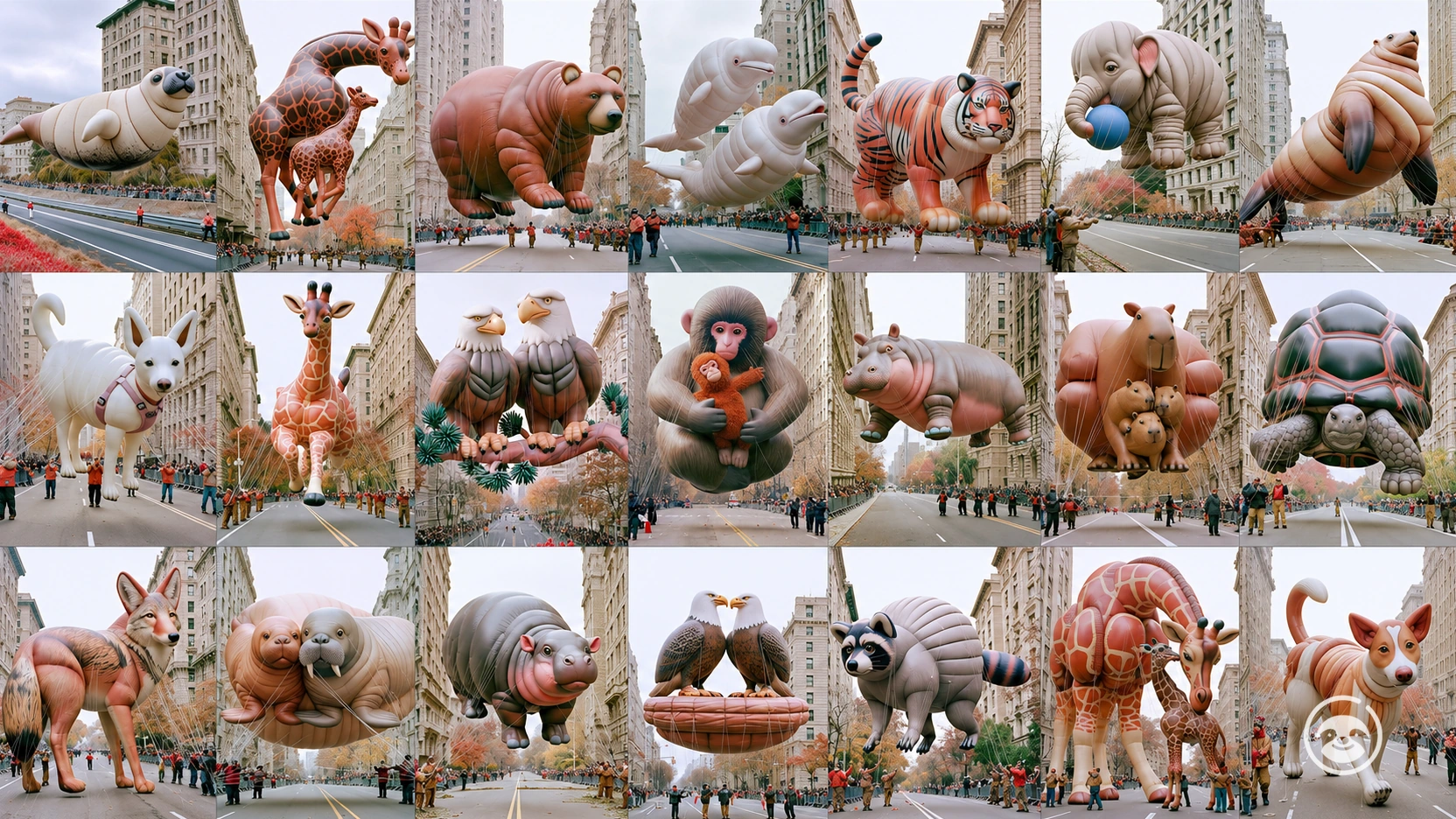
What would Thanksgiving look like if the animals in our feeds got their own parade? Punch would bring his orange companion. Neil the Seal would need a generous stretch of sky. Edinburgh’s capybaras would arrive with an expanding family.
We’ve imagined giant balloons for the animals and animal families whose stories we follow at Discvr, from a newborn giraffe to a tortoise approaching two centuries of life. Every balloon in this gallery is a fictional design for our Thanksgiving parade. Alongside the spectacle are real updates on the animals behind it, checked through November 25, 2026.
There are new beginnings here, hard-won reunions and stories that remain uncertain. There is also room to remember animals whose lives have ended. They all have a place in this procession.
Jump to an animal
Punch brings his familiar companion
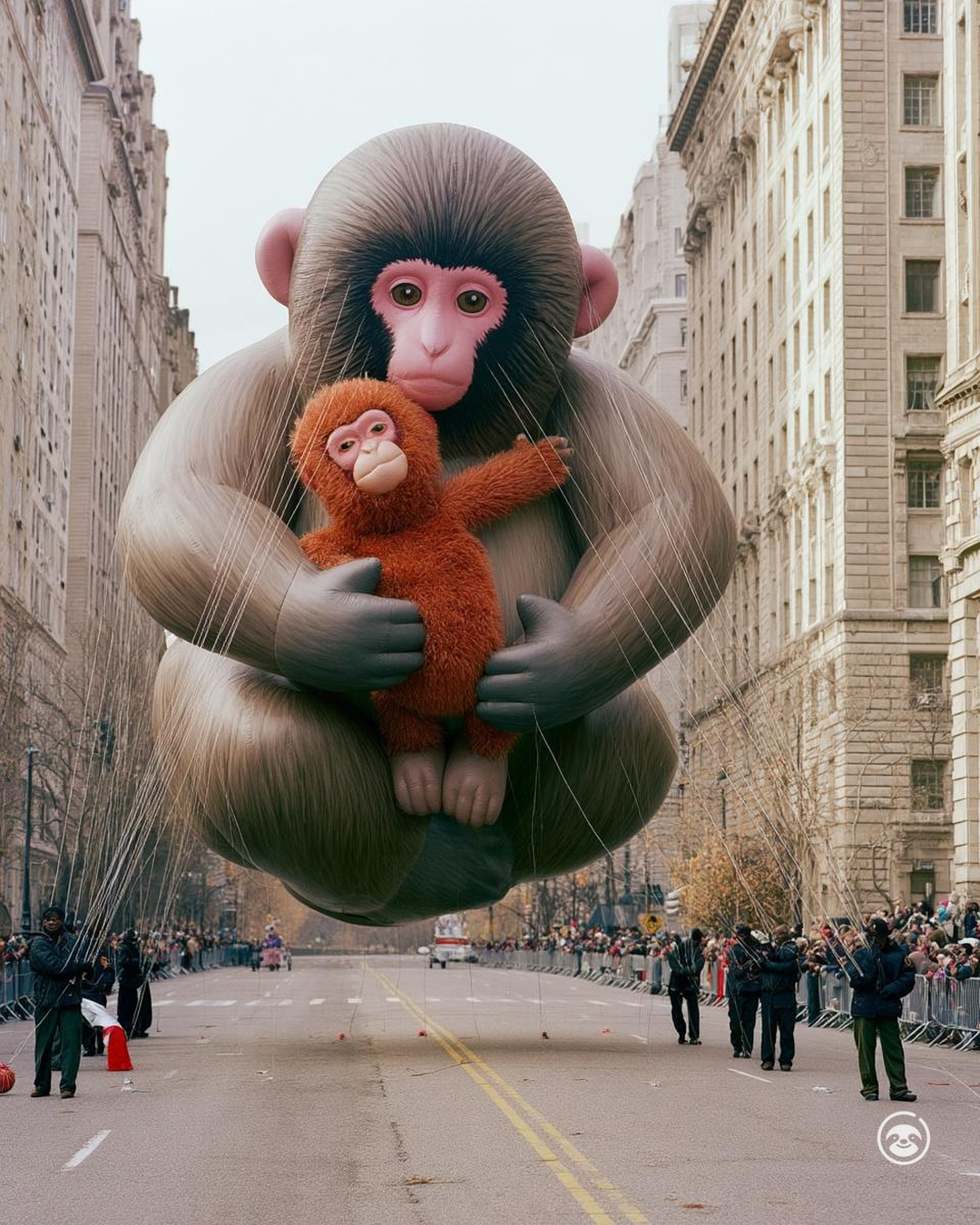
Punch arrives with the orange orangutan plush tucked against his chest, a nod to the companion from his early months at Ichikawa City Zoo in Japan. The young Japanese macaque was raised by keepers before joining troop life on January 19, 2026.
His story has kept moving. In a November 23 update, the zoo described Punch playing despite the cold and said play between males was often observed. It also noted that his relationships with individual troop members varied. Our imagined balloon holds onto the recognizable toy while celebrating the chapter beyond it: a young macaque continuing to grow within a group.
Jackie and Shadow: together in tribute
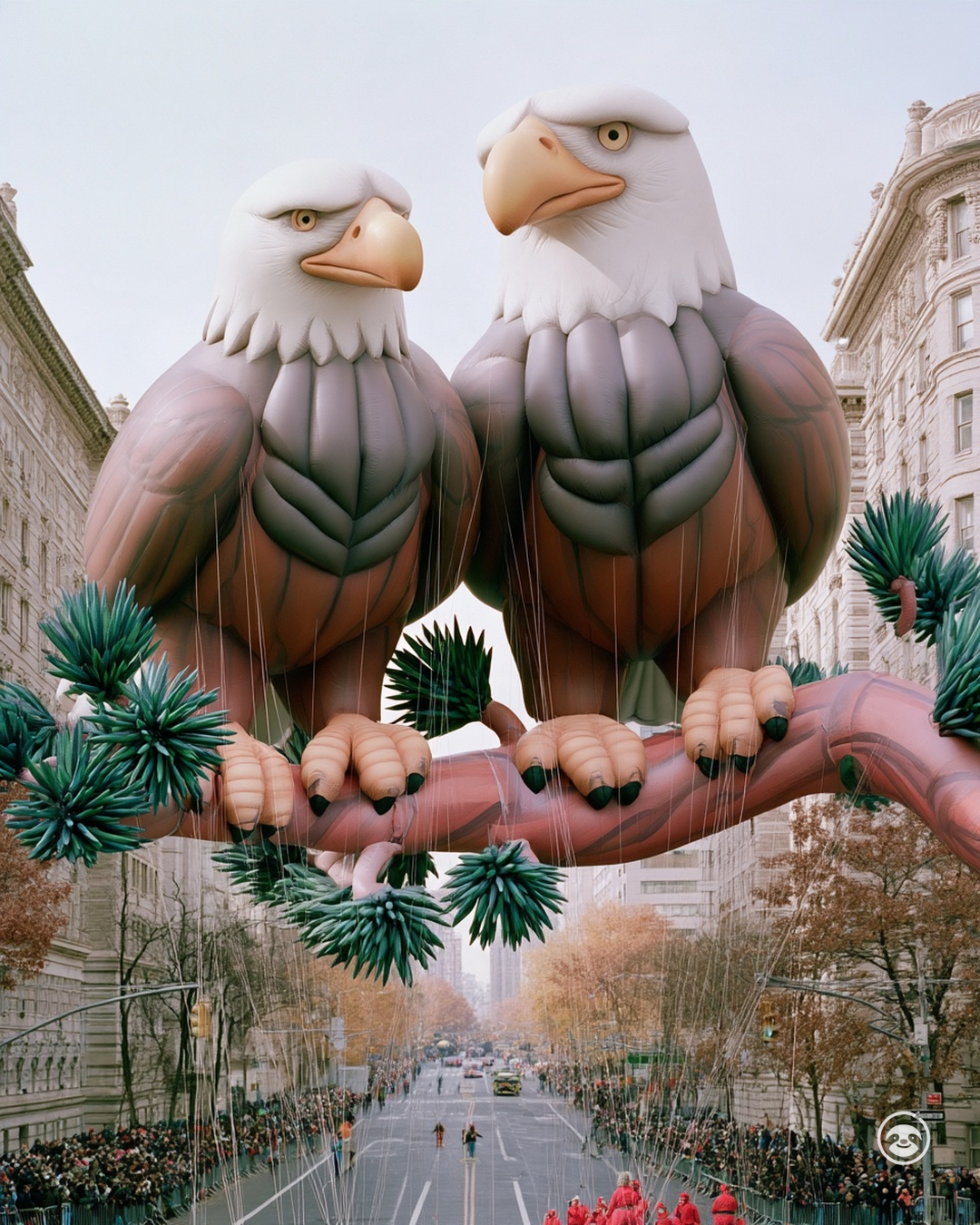
Jackie and Shadow turned a wild bald eagle nest above Big Bear Lake, California, into a window on family life. Friends of Big Bear Valley’s cameras followed their nesting, storms and eaglets. Our imagined balloon places them together on a pine branch, celebrating the pair and remembering Jackie.
Jackie died in August 2026. On October 14, California wildlife officials reported that highly pathogenic avian influenza was the primary underlying cause of her decline. Shadow remains in Big Bear. FOBBV’s November updates document his nest visits and interactions with other eagles, while leaving his next breeding partnership uncertain.
Neil the Seal gets a whole stretch of sky
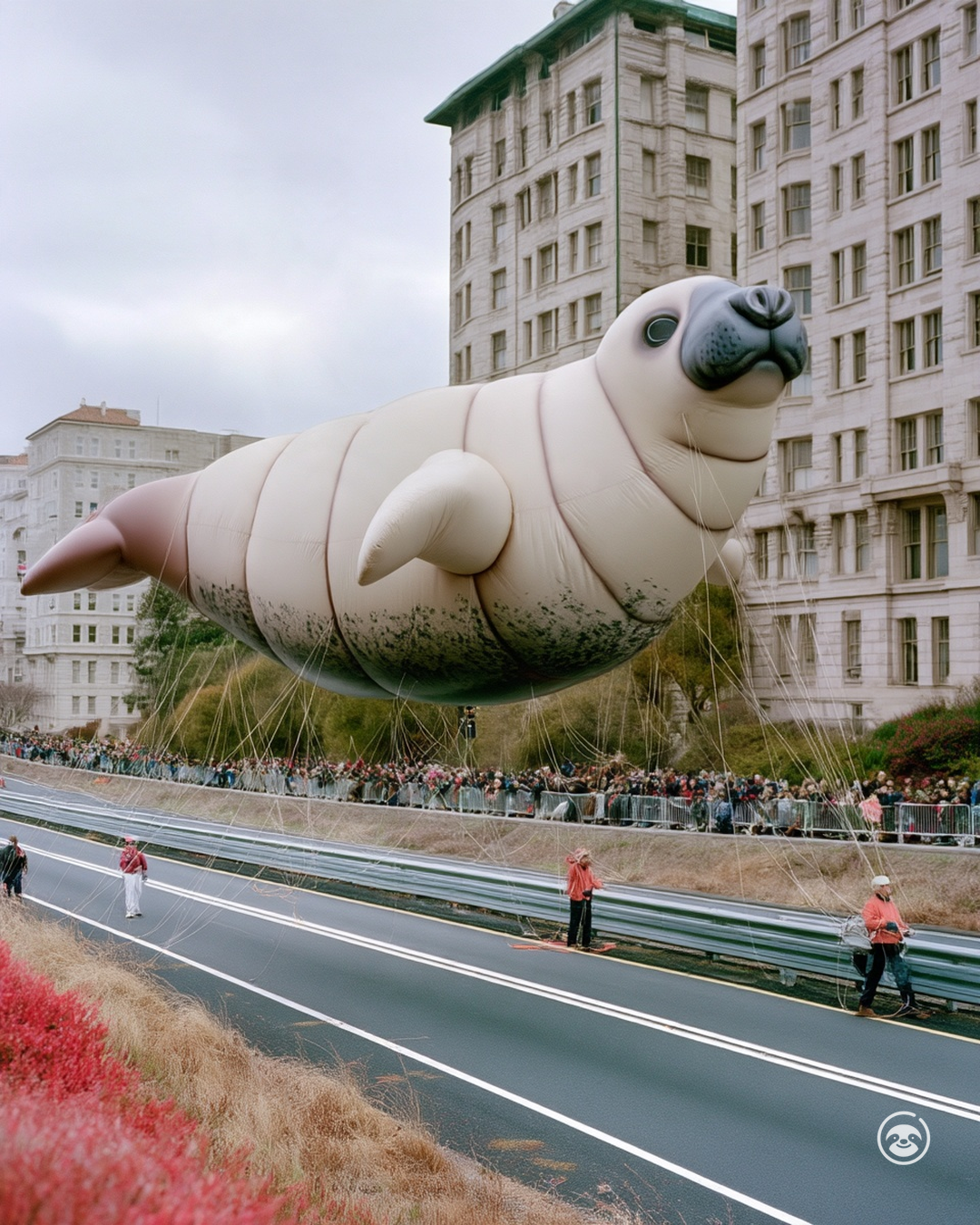
Neil has made himself hard to miss around southern Tasmania’s coastal communities. The wild male southern elephant seal, born there in October 2020, brings an ocean-going animal into an unusually human setting when he hauls out to rest.
On November 15, 2026, Tasmania released an updated management plan that includes a commissioned enrichment device intended to redirect his attention away from people, vehicles and infrastructure. Its effectiveness remains to be seen. Our balloon gives his long, pale-and-charcoal body room to drift above the street. In his real life, the government’s message is to give him room to rest, too.
Tessa and her daughter make an entrance
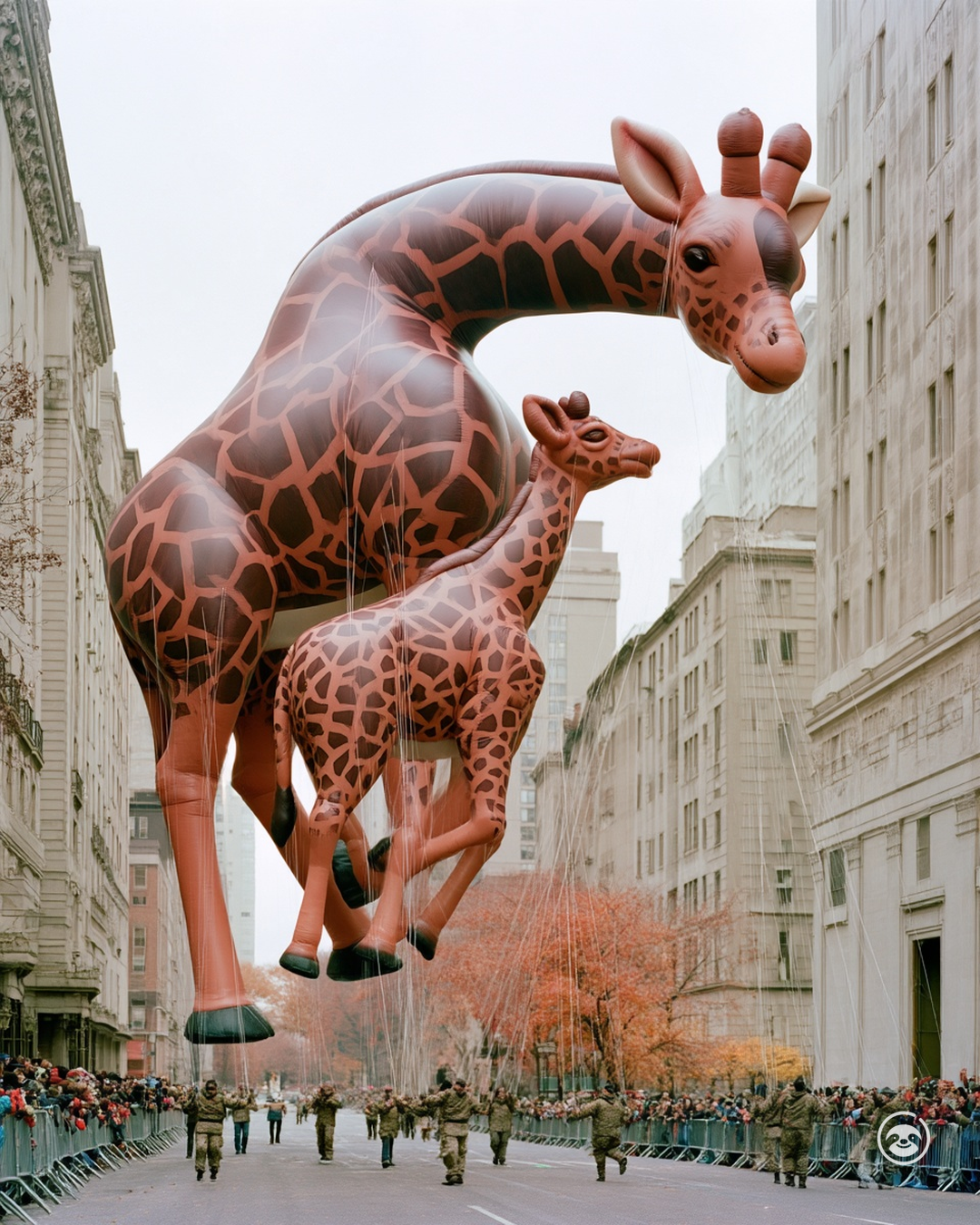
Some parade stars arrive with a whole generation watching. Tessa, a Masai giraffe at Cincinnati Zoo, gave birth to her fifth calf late on November 16, 2026, while nearly 8,000 people watched the zoo’s livestream.
Two days later, the zoo confirmed that the baby is female and said mother and daughter were doing well behind the scenes. The family also includes the calf’s father, Zeke, and her half-brother Fennessy. For our imagined parade, Tessa’s long neck curves toward a smaller daughter, keeping the mother-and-calf pose at the center. Their first days together have already supplied the real-life scene worth celebrating.
For a little giraffe family at home, Schleich’s female giraffe and calf figures make a playful pairing. (Paid links)

Schleich female giraffe

Schleich giraffe calf
Backpack brings his championship silhouette
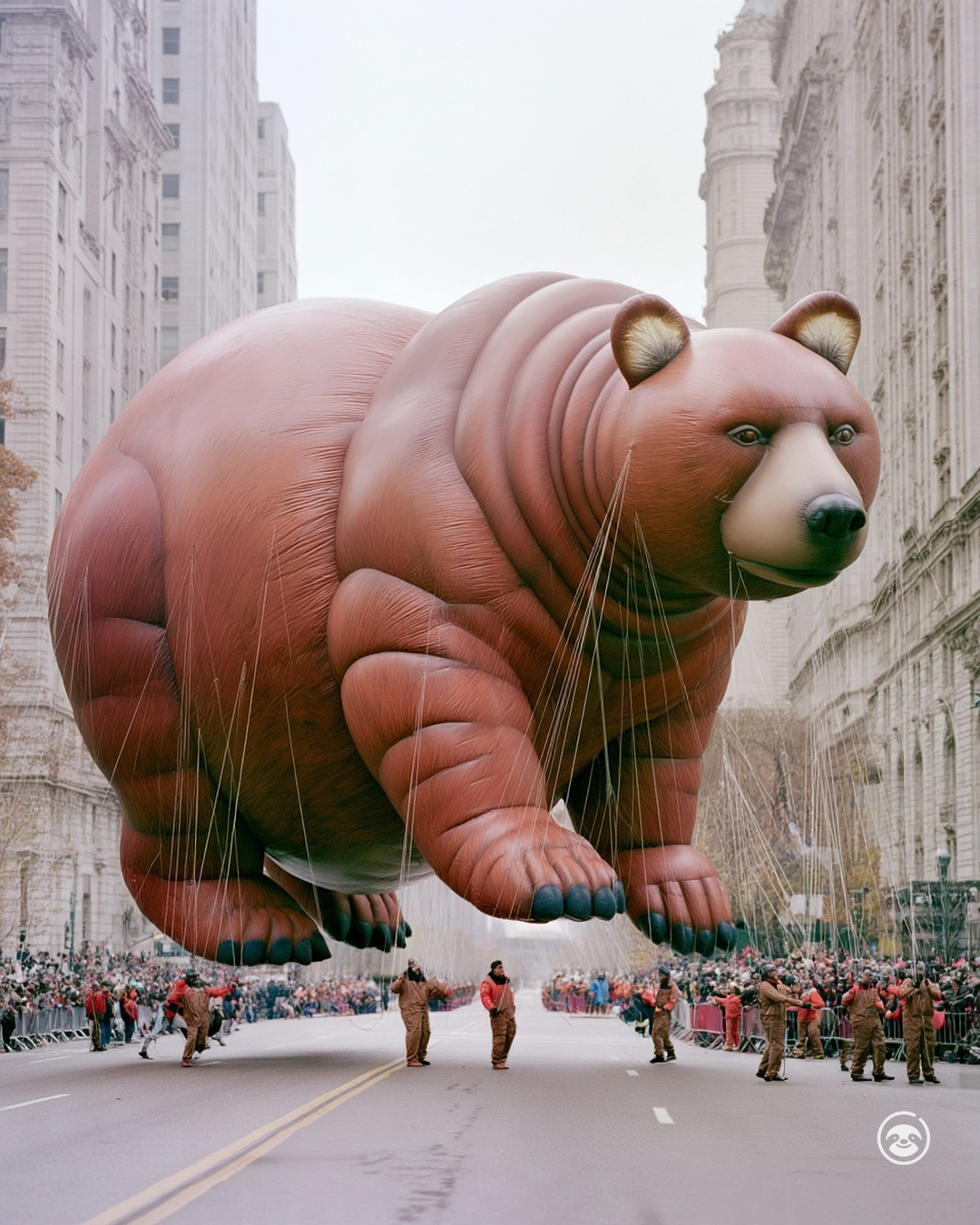
This parade already has a champion. Bear 89 Backpack won Katmai’s 2026 Fat Bear Week on September 29, following his mother, 435 Holly, into the event’s hall of champions. She won in 2019.
The National Park Service identifies the adult male brown bear by his dished muzzle and a coat that darkens as the feeding season progresses. His nickname recalls a cub who often rode on his mother’s back. Our balloon turns his broad autumn silhouette into smooth, inflated fabric. Behind the contest is a serious seasonal task: Katmai’s bears build the reserves that carry them through winter, supported by the park’s salmon-rich ecosystem.
Chonkers towers over the sea-lion crowd
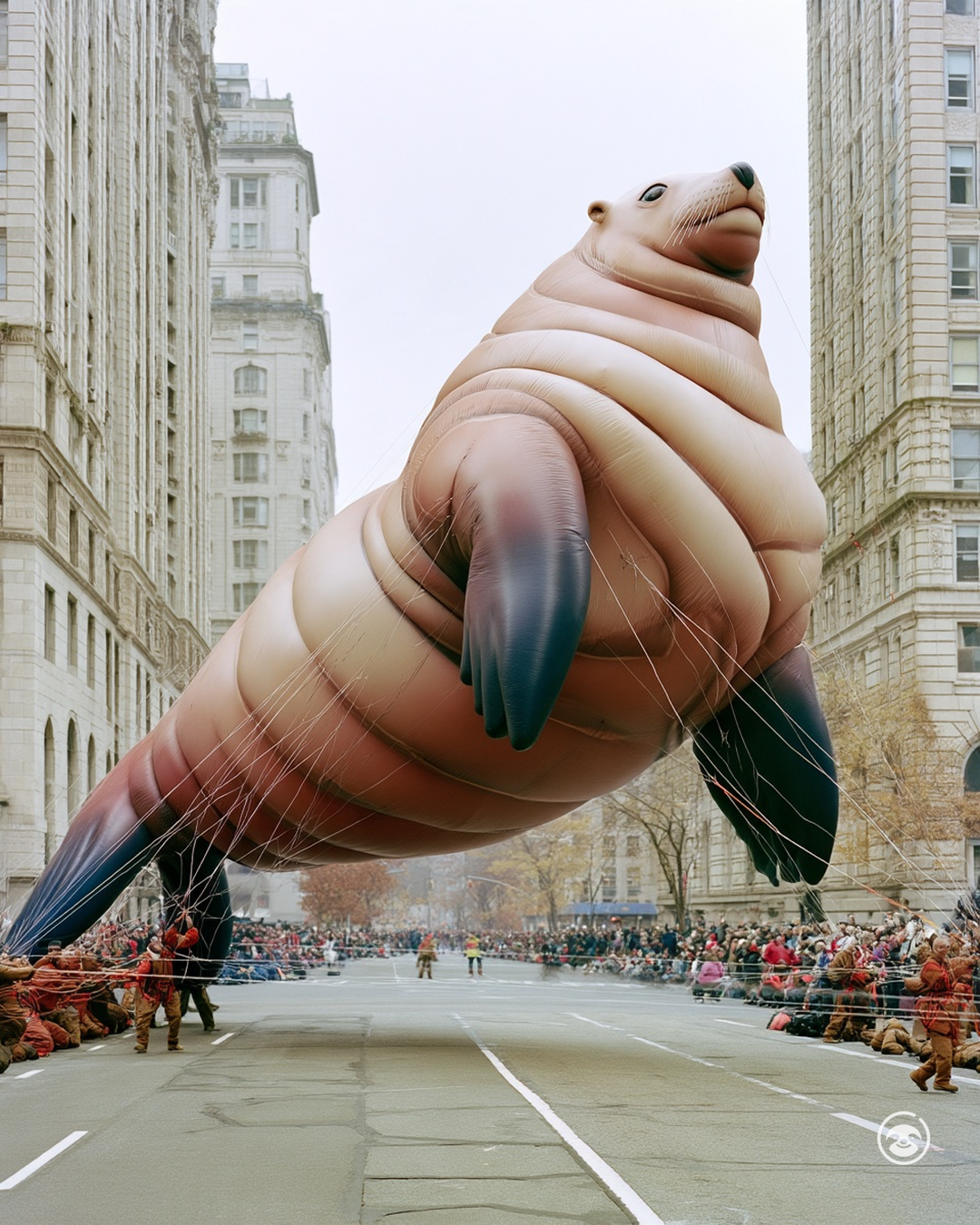
At San Francisco’s Pier 39, Chonkers stood out even among sea lions. The male Steller sea lion drew attention after arriving in March 2026, dwarfing many of the California sea lions that usually gather on the docks.
An enormous, pale, broad-chested balloon captures what made him stand out on the docks. His latest chapter needs a qualification: when another large sea lion appeared in November, a Pier 39 official told The San Francisco Standard on November 23 that it did not appear to be the animal seen in spring. Chonkers is the inspiration here; the recent visitor’s identity remains separate from his confirmed story.
Jonathan carries nearly two centuries of history

Jonathan would bring nearly two centuries of history to the avenue. The male Seychelles giant tortoise lives at Plantation House on St Helena and is believed to have hatched around 1832. His age is estimated; Guinness recognizes him as the oldest known living land animal.
In an October 7, 2026, Science Advances study, researchers compared Jonathan’s DNA and the chemical markers that regulate his genes with those of younger giant tortoises. The findings offer possible clues to longevity; the small comparison cannot establish why he has lived so long. Our version gives his deeply domed shell a broad, charcoal-colored balloon shape, with a small gray head surveying an unfamiliar view from above.
Edinburgh’s capybaras bring the family

Edinburgh Zoo’s capybaras come with a growing cast list: sisters Luna and Cali, male Rodney, and Bru, the pup born in May who became Scotland’s first capybara arrival in 18 years.
Then came three more. Keepers discovered Luna and Rodney’s triplets on October 28 after an overnight birth. On November 9, the zoo announced the names chosen by public vote: Tattie, Tunnock and Toddy. Tattie is female; her brothers are male. Our imagined family balloon places three smaller pups beside Luna, with blunt muzzles, tiny ears and rounded brown bodies. There is plenty of room for capybara calm above the street.
Milani gets a little extra headroom
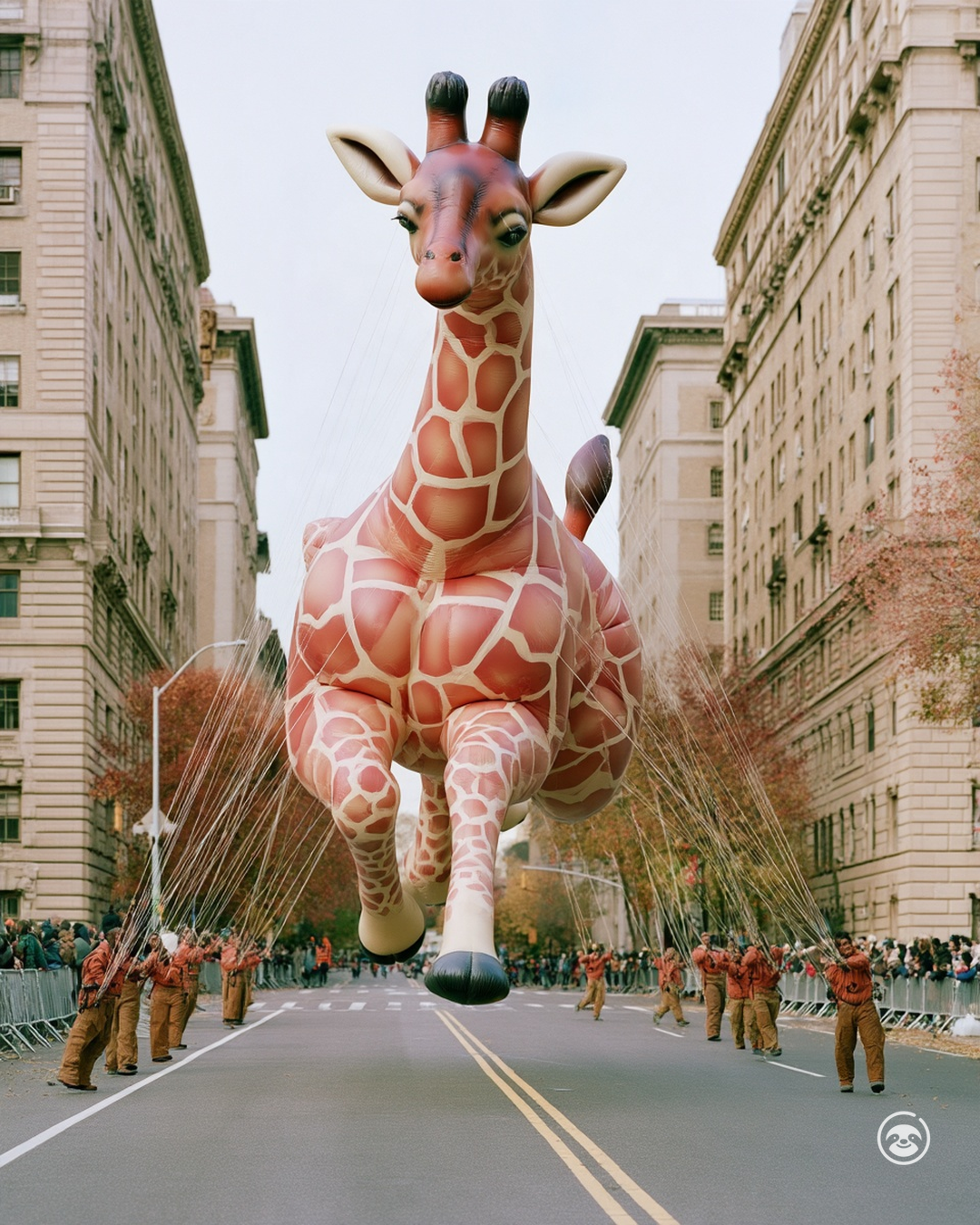
Milani’s balloon would need extra headroom. The reticulated giraffe at Tanganyika Wildlife Park in Kansas was born prematurely on July 11, 2026, through an emergency C-section after her mother, Virtue, became gravely ill. The park believes she is the first known giraffe calf to survive that procedure.
After intensive care, including donated giraffe plasma, Milani joined the herd on October 8 and ran with a young companion named Dee. A November 13 park update describes her new bottle-feeding routine with visitors. Her long legs and upright neck give our balloon its shape, while cream lines trace the warm brown patches of her coat.
Tula-Tu brings her favorite blue ball
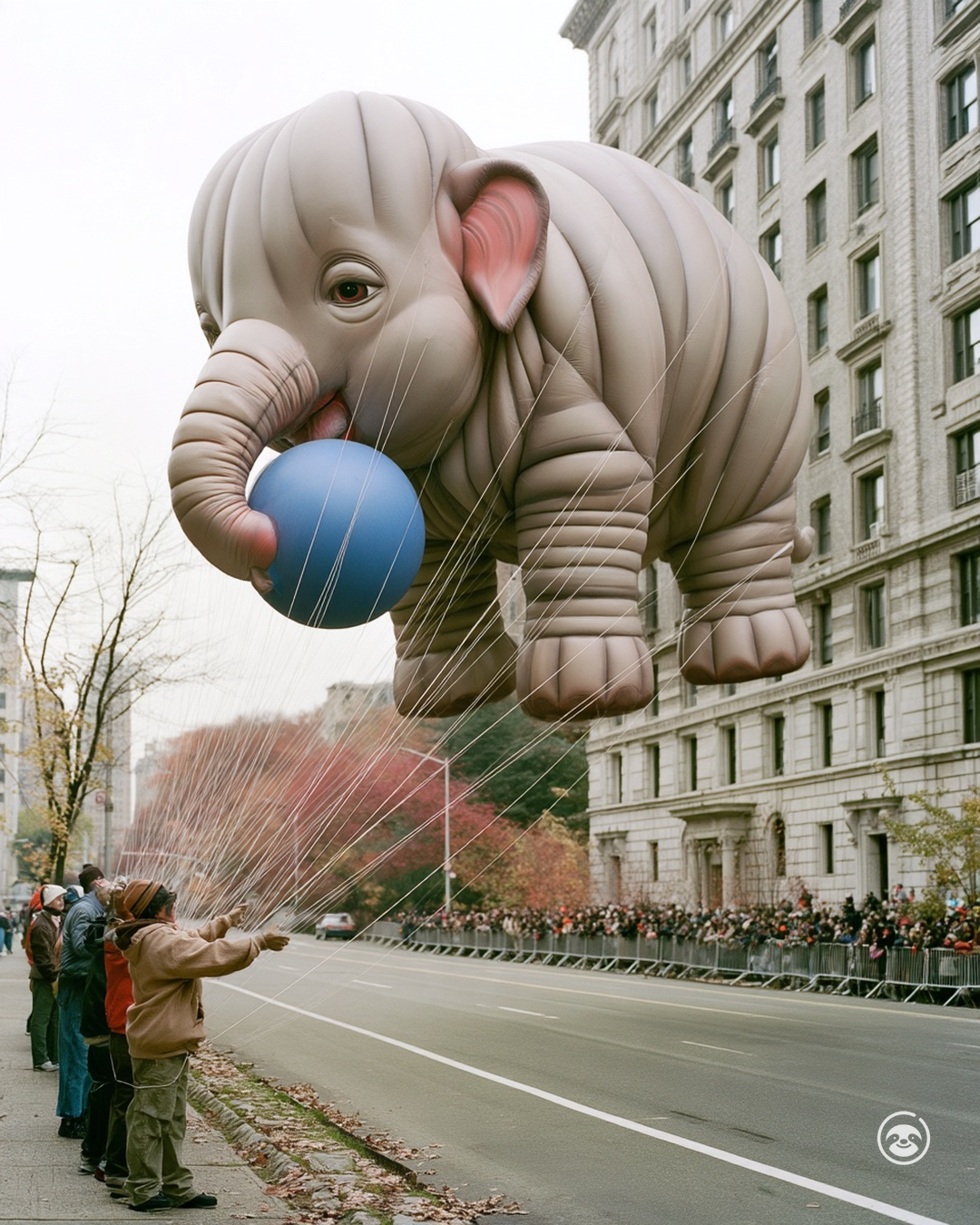
Tula-Tu’s balloon comes with a meaningful accessory: the large blue ball that once belonged to her mother, Rose-Tu. Born at Oregon Zoo on February 1, 2025, the young Asian elephant has grown up with her father, Samson, brother Samudra, and herd companions Sung-Surin and Chendra.
This fall brought a difficult chapter when she needed treatment for elephant endotheliotropic herpesvirus, or EEHV. On November 16, the zoo reported that she was eating well, active and no longer needed treatment, although monitoring continued because the virus remained detectable. Small rounded ears, a curled trunk and that blue toy give our imagined balloon a recognizable, playful shape.
For younger elephant fans, Aurora’s Miyoni Asian elephant offers a plush companion for imaginary adventures. (Paid link)

Aurora Miyoni Asian elephant plush
Annautaq and Uki make a whiskered pair
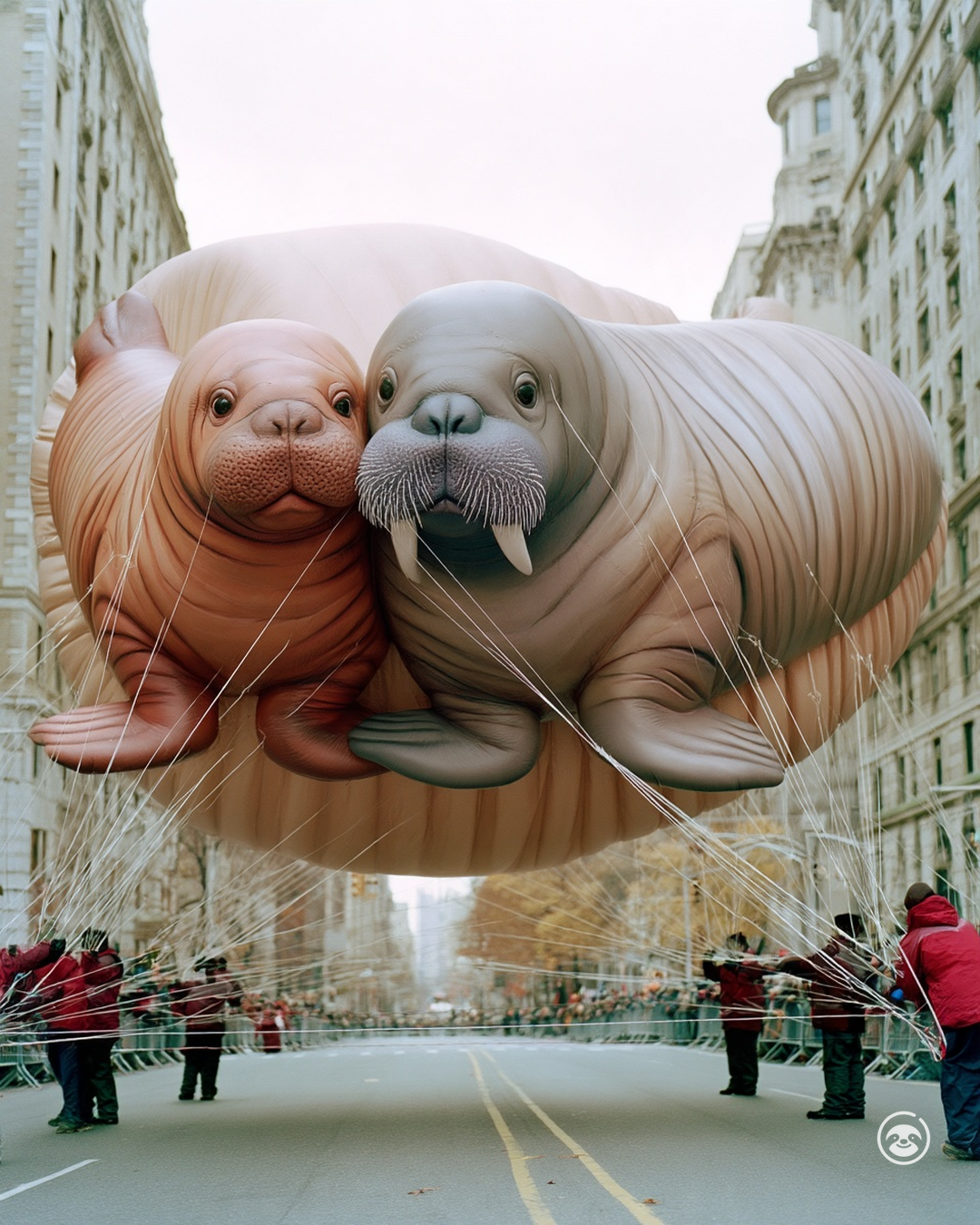
Two walruses, two rescue stories, one wonderfully whiskered balloon. Annautaq was found alone near Point Lay, Alaska, in September 2026 and received care at the Alaska SeaLife Center before moving to SeaWorld Orlando. Uki, also called Ukiaq, was rescued in Alaska as a female calf in 2024.
On November 20, SeaWorld reported that they had completed two successful interactions, with time together in a deeper pool planned next. Their wider family’s story also includes loss: adult female Kaboodle died in October, before meeting Annautaq. Our design focuses on the young pair, with Annautaq smaller and Uki’s short tusks visible beneath her whiskers.
M15 and F26 share the sky

Two bald eagles share a nest-shaped balloon in our imaginary parade. M15, the long-followed male of the Southwest Florida Eagle Cam, now has a new mate: F26, short for Female 2026.
Cam operators confirmed the pairing after observing mating attempts and the birds carrying sticks to an alternative nest site. In November, the cam’s founder described construction on a nearby cell tower. F23, M15’s previous mate, belongs to the family’s history: she disappeared earlier in 2026 and was presumed dead by cam operators. The paired balloon features M15 and F26 together, with white heads, dark wings and yellow beaks.
Related reading: David Allen Sibley’s What It’s Like to Be a Bird explores bird behavior beyond the nest camera. (Paid link)

What It’s Like to Be a Bird
Altai takes a dignified place in the procession
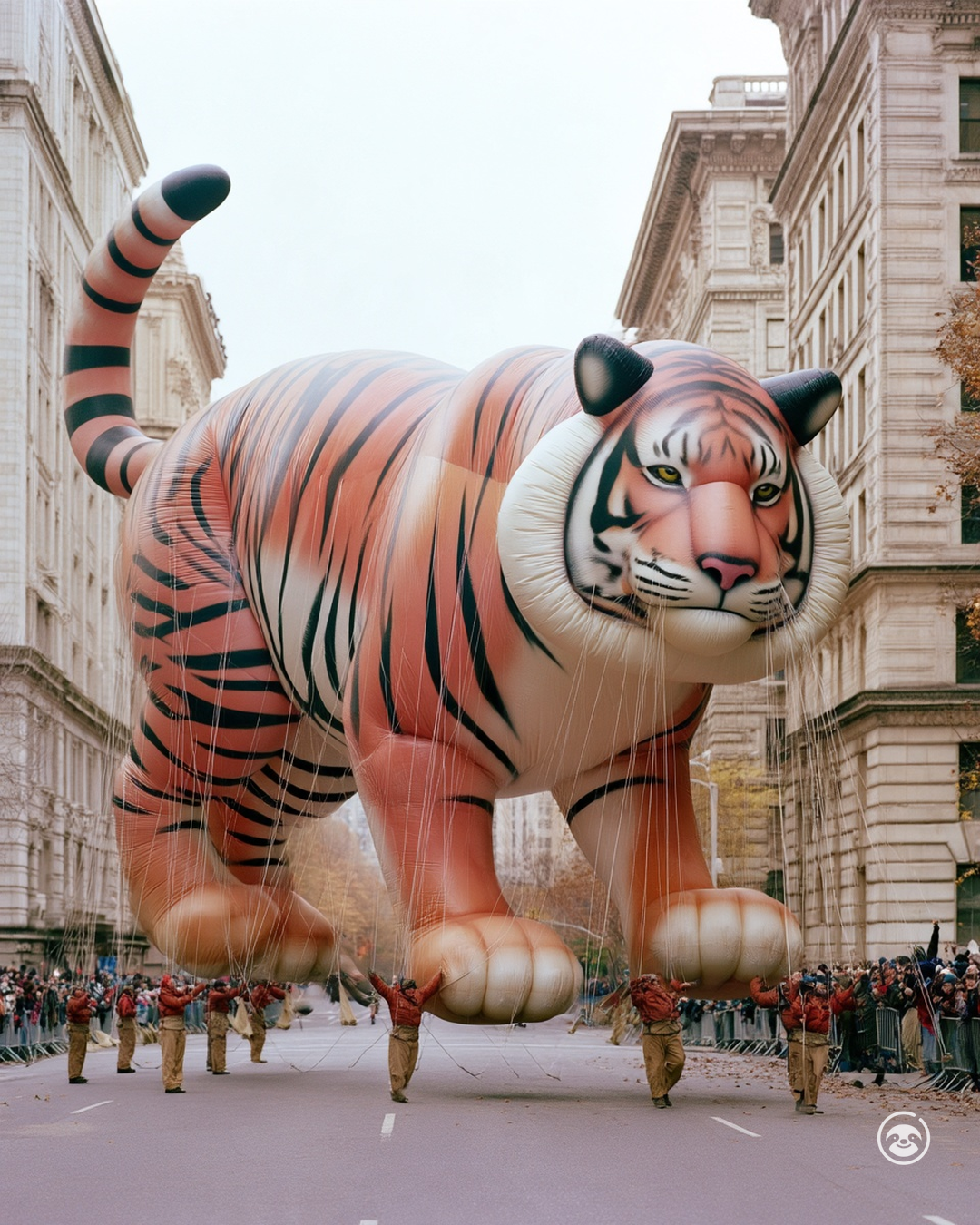
Altai’s bold stripes would carry across a parade block. The male Amur tiger arrived at Yorkshire Wildlife Park from Norway’s Dyreparken on February 27, 2025. His keepers described a calm, curious animal who particularly enjoys water.
His latest major update followed a fatal incident at the park in which a man lost his life. On October 15, 2026, the park said Altai was safe and well and would not be euthanized; inquiries into the circumstances were ongoing. Our imagined balloon gives him a quiet, dignified place in the procession, with a broad white cheek ruff, dark stripes and a gently curved tail.
Luna gets a larger-than-life reunion
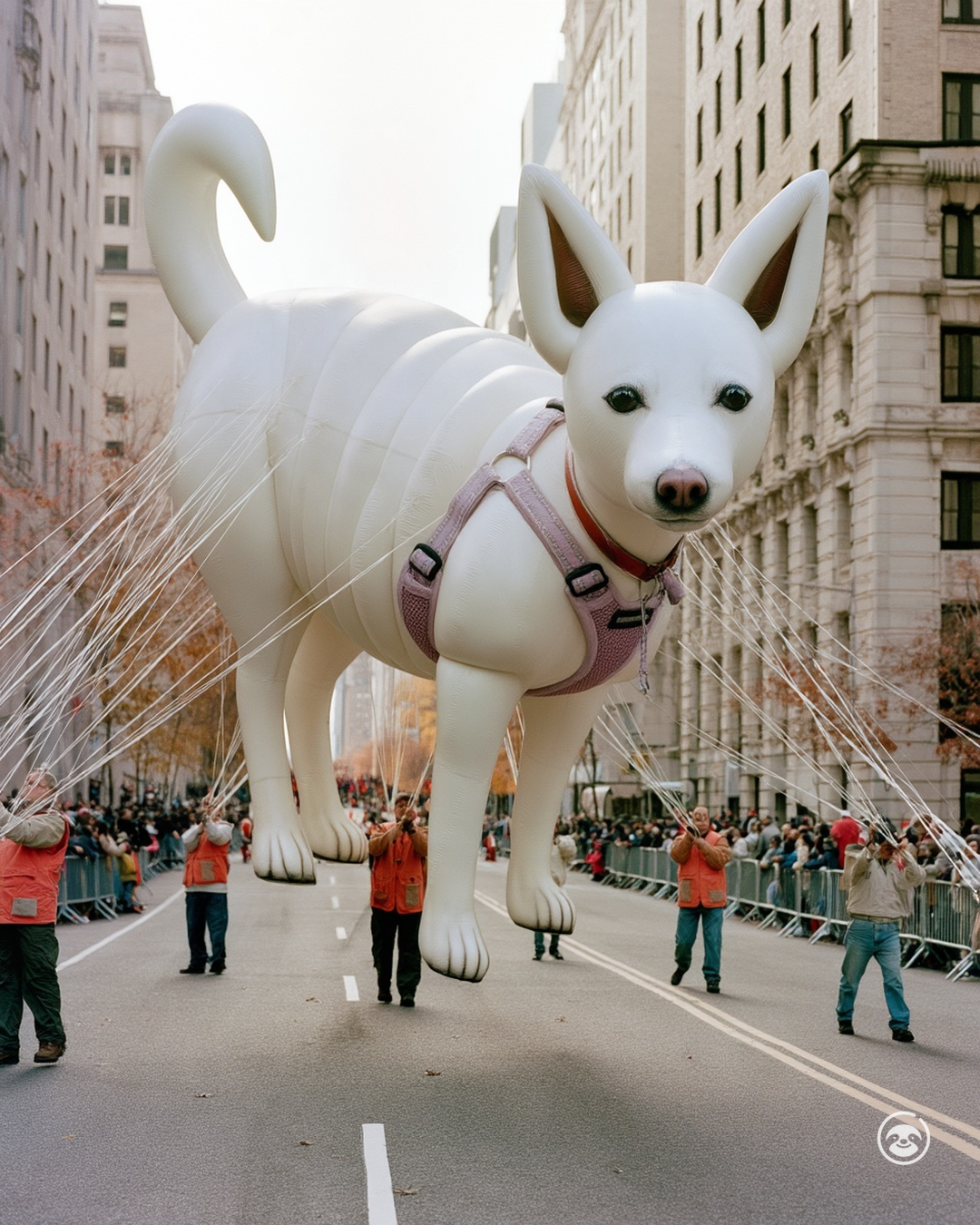
Luna’s balloon carries the story of a much smaller dog. The white Jack Russell terrier and Chihuahua mix disappeared from her family’s Yellowstone lodging on September 10, 2026. Volunteers and park staff spent more than a month trying to bring her to safety.
On October 14, Yellowstone confirmed that she had been captured alive. An owner reunited with her before a veterinary check; an October 15 report said she remained under veterinary supervision and was expected to recover. Our balloon preserves the details in the family’s handout photograph: pointed ears, an upward-curled tail and a pale lavender harness. The moment it celebrates is the reunion.
The belugas’ story continues in new homes
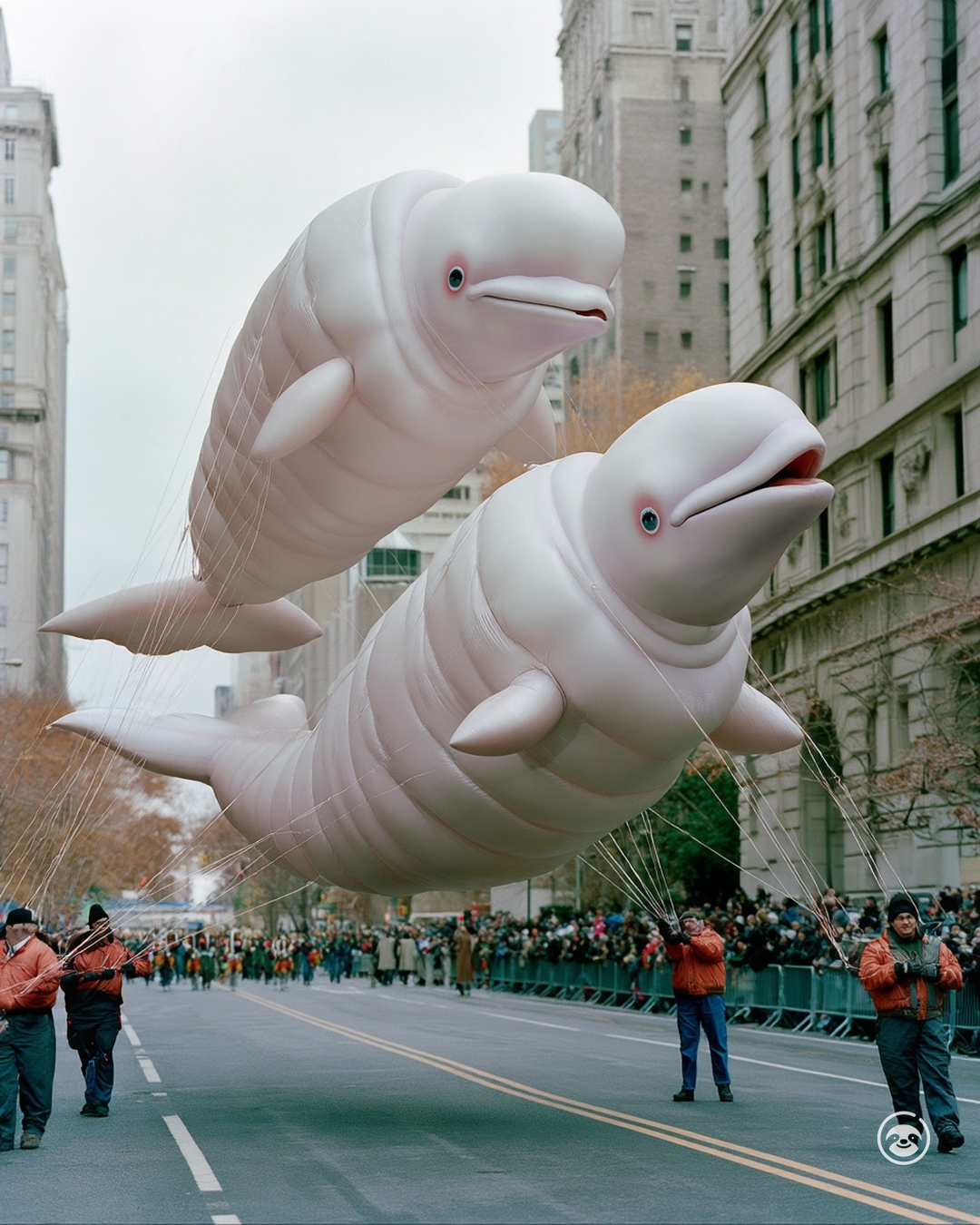
A formation of white beluga balloons brings the marine world overhead. The animals behind it came from Marineland of Canada, whose remaining 30 belugas were relocated to aquariums in the United States and Spain in 2026.
The outcomes have been mixed. On November 2, Chicago’s Shedd Aquarium reported that six surviving arrivals were eating consistently and spending more time together under continuing care. Four of its ten arrivals had died. Our imagined formation represents the broader group, while leaving room for those different outcomes. Rounded foreheads, paddle-shaped flippers and lifted tail flukes give the balloons their shape; the real story is still unfolding.
Aloka takes one more gentle step
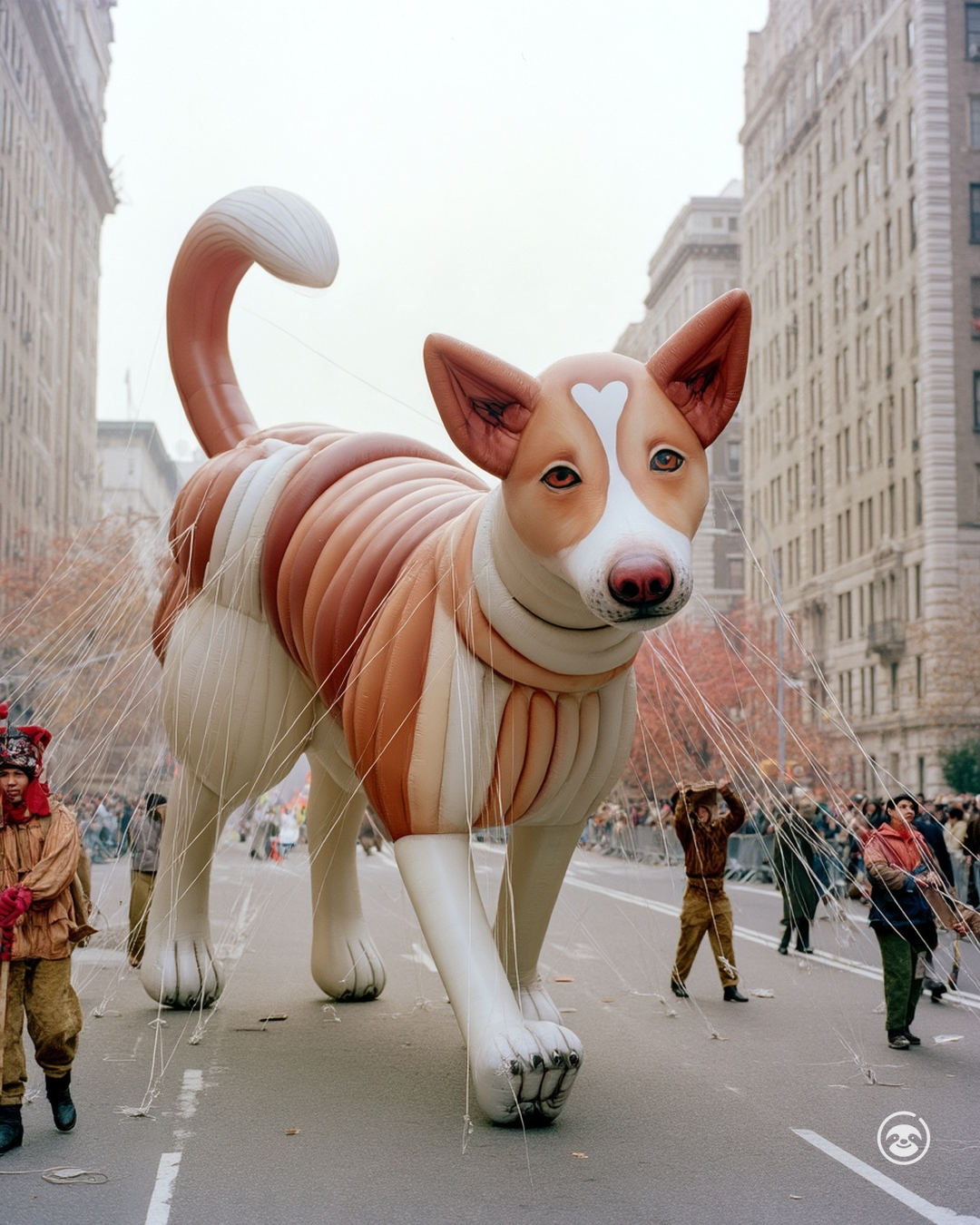
Aloka’s balloon looks as though it is taking one more gentle step. The tan-and-white dog joined Buddhist monks in Kolkata during their 2022–23 pilgrimage, according to the temple’s account. He later became a familiar companion of the Walk for Peace from Fort Worth to Washington, D.C.
His year included surgery in January. A November 7 temple update shared a different milestone: copies of Aloka’s storybook were being given to friends in Bhutan, with a paw-print he had added before the monk’s departure. Our design keeps his white forehead blaze, tan patches and curved tail, the familiar outline of a dog whose companionship became part of the walk.
Brötchen, Berlin’s little bread roll

Brötchen already has a memorable name: the German word for a little bread roll. Zoo Berlin’s female pygmy hippo was born on May 9, 2026, to Debbie and Toby, making her Toni’s younger sister.
By June, the zoo was introducing her name and reporting her first adventures outdoors. A Berlin bakery created a namesake roll in July, with a contribution from each sale supporting pygmy hippo conservation. The zoo continues to feature Brötchen on its visitor homepage this November. Her compact body, tiny ears, broad muzzle and pinkish lower cheeks make a distinctive balloon, with all the rounded charm already supplied by the animal herself.
Jimothy brings a recognizable Seattle silhouette

Videos of Jimothy, the compact-bodied Seattle raccoon, spread widely in July 2026. The unusually short torso and long-looking legs prompted experts to discuss possible short-spine syndrome, but a confirmed clinical diagnosis has not been established. Older sightings may also involve more than one animal.
The newest chapter is a proposed tribute. On November 24, My Ballard reported plans for an illuminated Jimothy sculpture for late 2027, with the city budget still awaiting mayoral approval. Our imaginary balloon preserves the distinctive proportions without exaggerating them: a rounded gray body, black facial mask and slender legs. It recognizes a familiar piece of urban wildlife while leaving unresolved questions open.
April and Tajiri revisit the birth watch
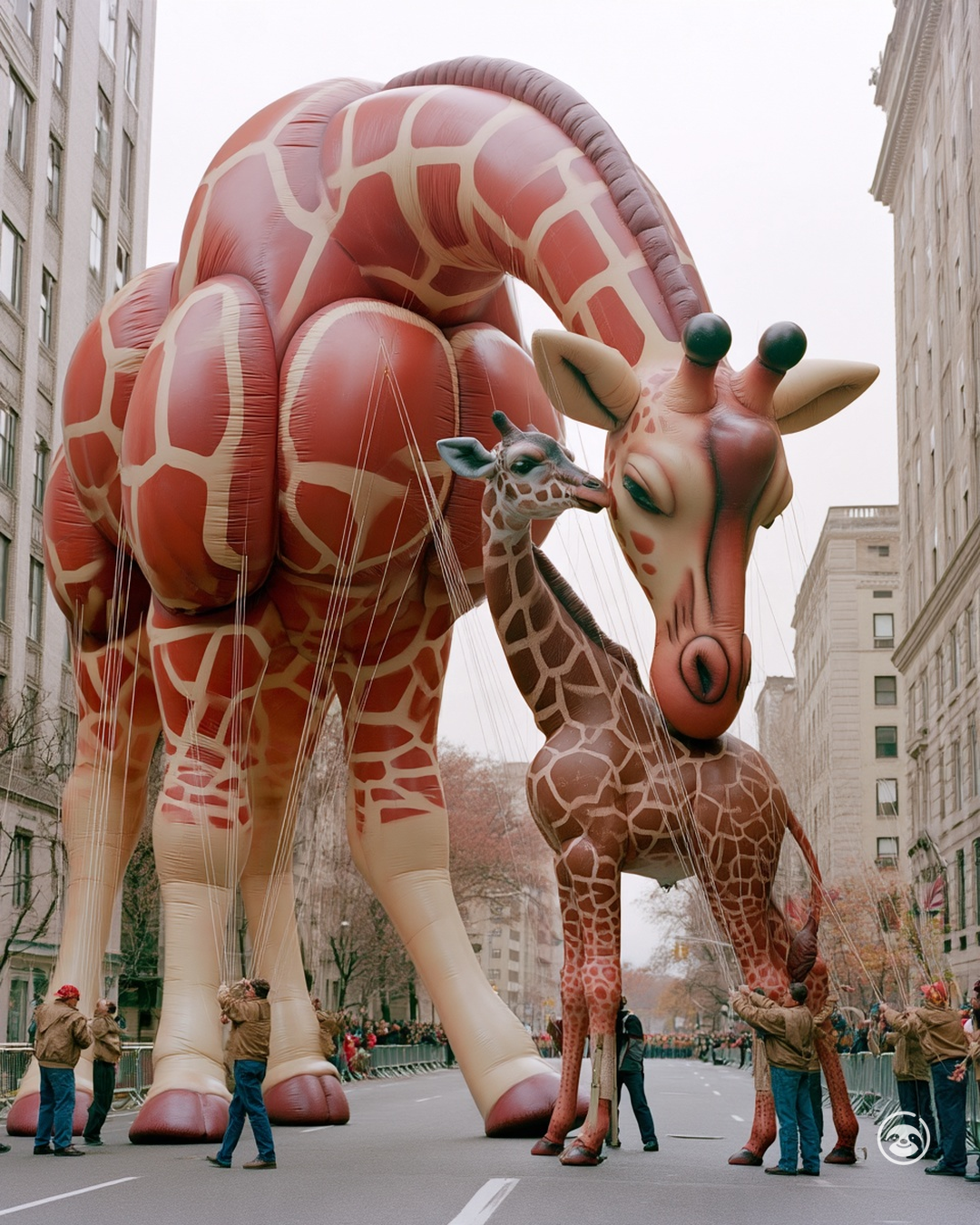
April’s place in this parade is a tribute. The reticulated giraffe became an internet star when viewers followed her 2017 pregnancy and Tajiri’s birth at Animal Adventure Park in New York. April died on April 2, 2021, after worsening arthritis.
Tajiri is now an adult featured in the park’s current offerings. Our mother-and-calf balloon revisits the pairing that introduced so many people to them, so the smaller Tajiri represents 2017. The wider herd has faced another loss: November 2026 reporting documented Kimara’s death and said a necropsy was underway. This imagined family portrait returns to April and Tajiri’s beginning, with their place in time kept clear.
A quieter tribute to Wendy
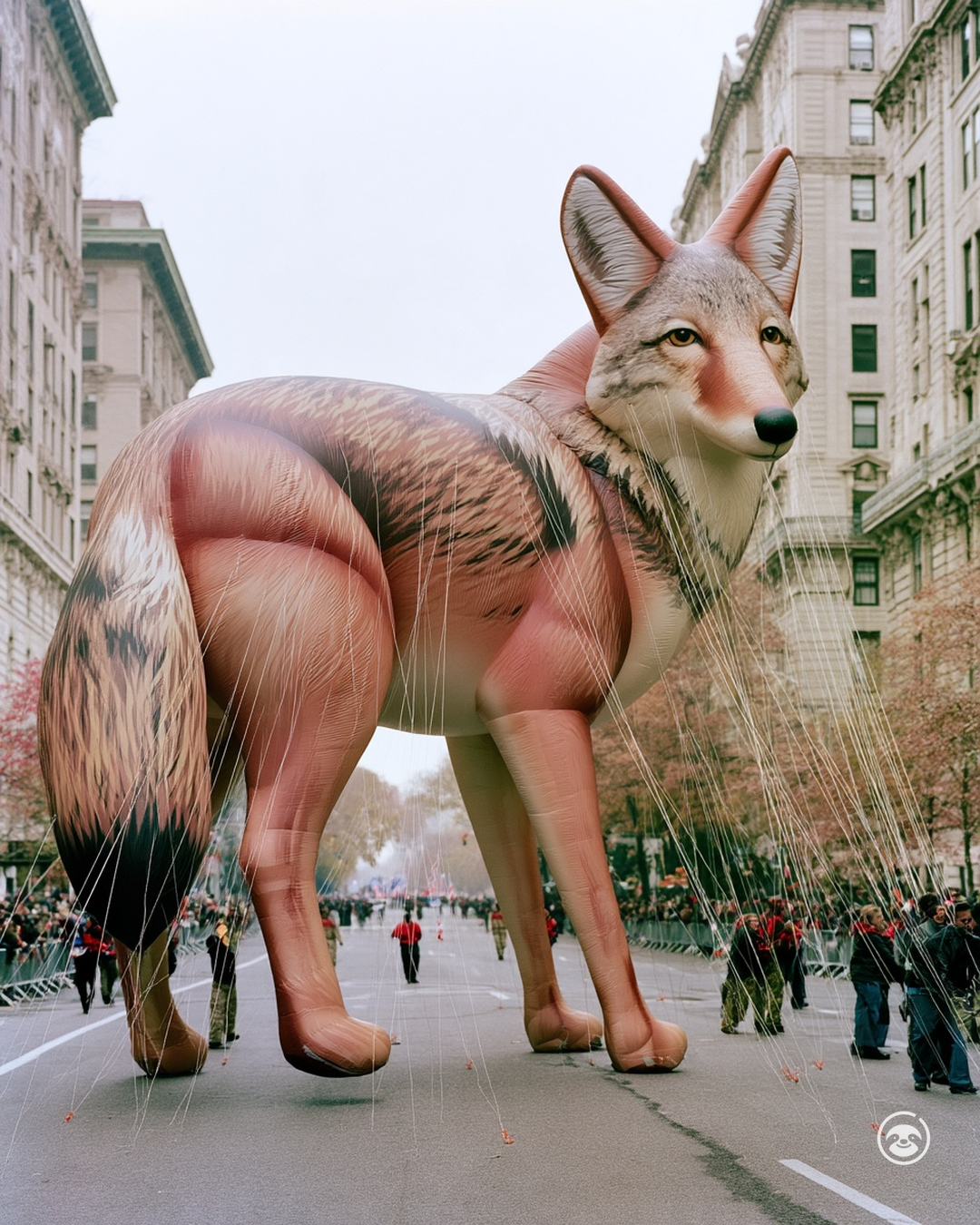
Wendy’s balloon is a remembrance. The female coyote became known around Studio City, California, while living with a severe facial injury. After she was captured, veterinarians found damage that could not be repaired. She was euthanized on September 8, 2026.
Her story now connects to the Wendy’s Law campaign. Wildlife Care of Southern California petitioned for a controlled process allowing qualified rehabilitators to capture injured or diseased wildlife for treatment. California Fish and Game Commission materials discussed that request in October; they do not establish an enacted law. A warm brown coyote balloon, with alert ears and a sweeping tail, offers a symbolic tribute.
A place of remembrance for Fiona
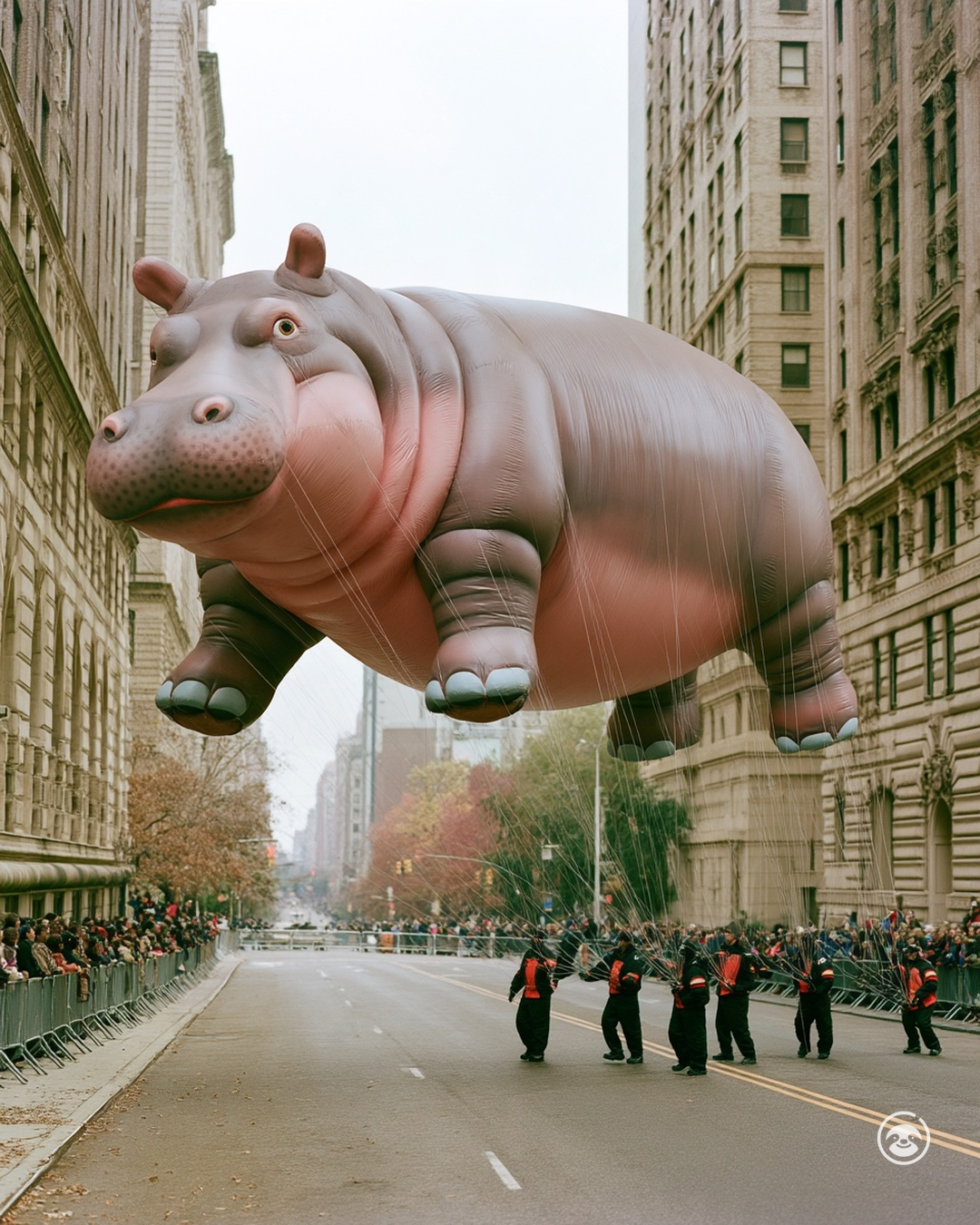
Fiona closes our imagined parade with a quiet thank-you. Born six weeks early in 2017, the Cincinnati Zoo hippo became a familiar presence far beyond Hippo Cove. The zoo announced her death on November 19, 2026.
Its November 24 update looks toward a lasting tribute: a physical memorial is planned, most likely a statue, with the hippo care team involved. The final form has yet to be announced. Our gray hippo balloon is a separate, imagined gesture of remembrance. It honors the life she lived and the people who helped her grow, leaving room this Thanksgiving to feel grateful for that life and to miss her.
After the last balloon
A parade can make an animal seem larger than life. The stories behind these balloons bring the scale back down: a keeper noticing a change in a calf, a rescue team waiting for a dog, a family checking a nest, a community remembering an animal it came to know.
That is what this imagined Thanksgiving procession celebrates. The familiar faces matter, and so do the patient work, attention and care surrounding them. Some stories will bring another update tomorrow. Others will stay with us as memories. Which of these balloons would you stop the parade to watch?
Further reading for animal lovers
For a shared read with a child, Richard Cowdrey’s Fiona the Hippo (paid link) is a whimsical picture book inspired by her early life.
This article contains paid links. As an Amazon Associate I earn from qualifying purchases.
Leave a comment