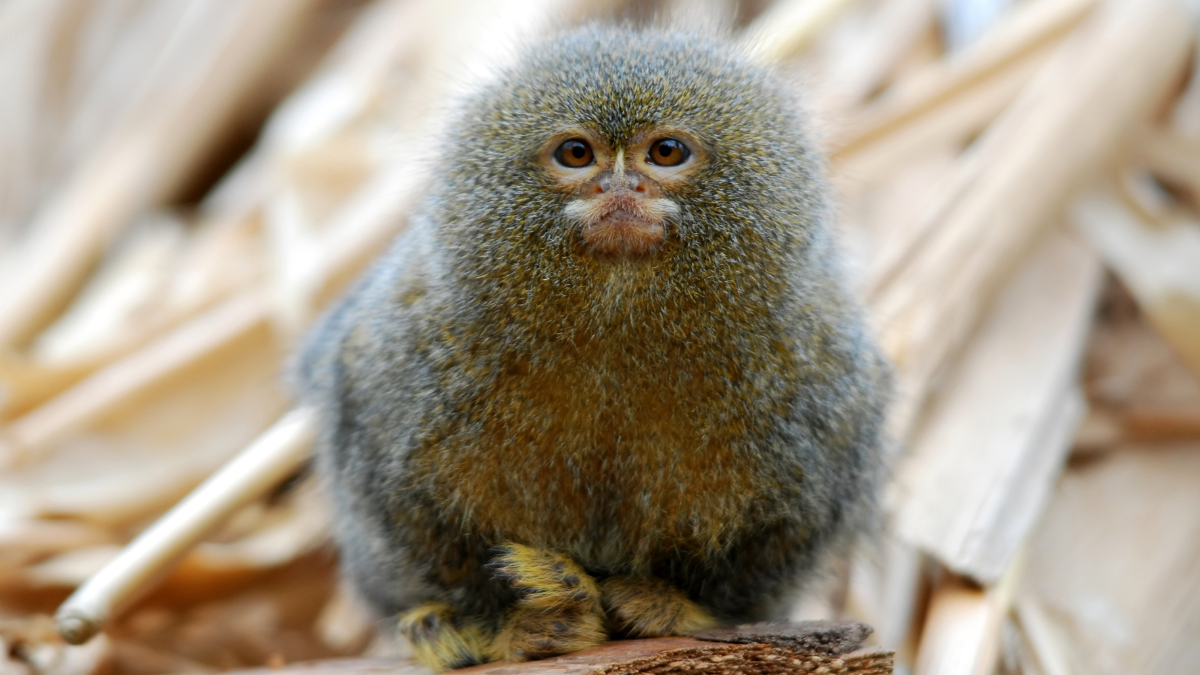
The pygmy marmoset may be small enough to fit in a human hand, but its life is anything but simple. Weighing as little as 3.5 ounces, it is the smallest monkey on Earth and one of the most specialized primates in existence.
Found in the river-edge forests of the western Amazon, these tiny animals survive on a diet dominated by tree sap and gum, making them miniature engineers of their environment.
Their adaptations are remarkable. Sharp, chisel-like incisors allow them to gouge tree bark, and claw-like nails help them cling vertically to trunks while feeding. An enlarged cecum in their digestive tract houses microbes that break down complex plant gums.
Agile and light, pygmy marmosets can leap more than 15 feet between branches, an essential skill for evading predators in the dense forest canopy.

These monkeys are social specialists, living in close-knit family groups of up to nine. A typical group consists of a breeding pair and their offspring, with older siblings helping to carry and feed new infants.
Communication is constant, with high-pitched trills and whistles that keep the group coordinated while foraging. Each family has its own vocal “dialect” shaped by daily interactions.
While they may seem plentiful in some areas, both recognized species — the western and eastern pygmy marmosets — are now considered vulnerable. Vast rivers like the Amazon and the Marañón divide their ranges, and both species face the same escalating threats: deforestation, habitat fragmentation, and capture for the pet trade.
A growing threat from humans
In parts of Ecuador and Peru, clearing riverbank forests for agriculture and plantations has reduced populations dramatically. Even in protected areas such as Yasuní National Park, researchers have recorded steep declines.
When trees that produce gum are cut, local marmoset families may have no way to survive or relocate.

The illegal pet trade is perhaps the most pressing danger. The marmoset’s small size and “cute” appearance make it a target for traffickers supplying exotic pet markets worldwide.
In Peru, studies show it is among the most trafficked primate species. Many die before reaching buyers due to stress, dehydration, or poor conditions during transport. Those that survive rarely thrive in captivity, as their social and dietary needs are nearly impossible to meet.
For Indigenous communities in the Amazon, pygmy marmosets are more than wildlife. Among the Secoya people of Ecuador, a creation story tells of two reclusive beings transformed by the creator into the first marmosets so they could live apart from others.
Protecting the species is tied to preserving cultural heritage. In Secoya territory, community forest guardians patrol to safeguard both land and wildlife.
Conservationists are working with local schools to integrate marmoset ecology into lessons, using games and activities to build awareness in younger generations. Rescue and rehabilitation programs in South America are also attempting to return confiscated animals to the wild when possible.

Pygmy marmosets fill a niche that few other animals can. By tapping trees for sap, they create feeding sites for other species such as tamarins, birds, and insects, linking them to a chain of life far larger than themselves.
These gum wells become micro-habitats, drawing in pollinators and prey that sustain other forest residents. Their survival depends on continuous stretches of suitable habitat and the presence of specific tree species, making them a living indicator of ecosystem health.
Losing them would mean more than losing a curious primate — it would disrupt a delicate ecological role honed over millions of years.
Protecting these monkeys will require both stronger enforcement against trafficking and long-term habitat preservation.
As small as they are, pygmy marmosets carry an outsized importance for the health of the Amazon. Their future rests on the choices made today by governments, local communities, and all who value the living diversity of the rainforest.
Leave a comment