Every July, more than 50,000 tennis balls are thwacked, sliced, and spun across the pristine grass courts of Wimbledon. But once the final trophy is lifted, a quiet second act begins, one that has nothing to do with tennis and everything to do with conservation.
Enter the harvest mouse, Britain’s smallest rodent. Weighing less than a sheet of paper and barely longer than your thumb, this nimble creature once wove tiny spherical nests from blades of grass, hidden in the hedgerows and reed beds of the countryside. But as farmland expanded and habitats shrank, its numbers declined. Today, the harvest mouse is listed as a priority species under the UK’s biodiversity plan.
So what does a tennis tournament have to do with it?

From Centre Court to countryside
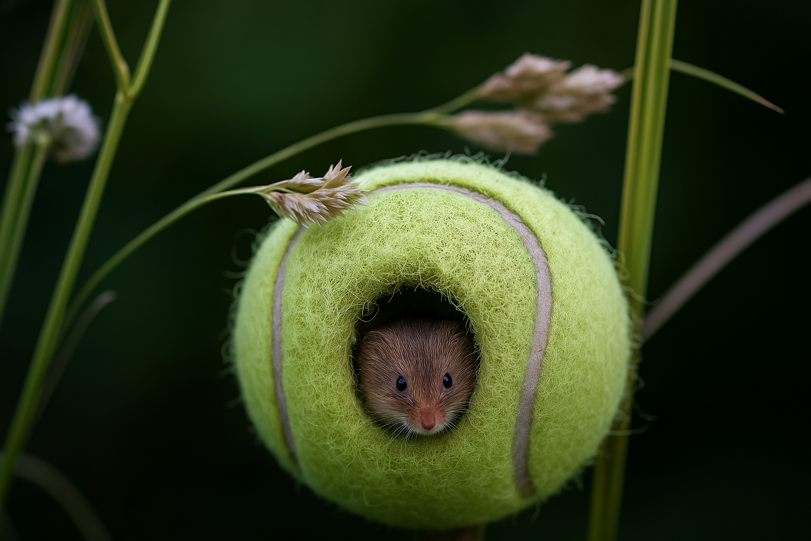
In 2001, Wimbledon donated 36,000 used tennis balls to The Wildlife Trusts, who had an idea: cut small holes in the balls and mount them on wooden poles about three feet high. The result? Instant, weatherproof shelters that mimicked the harvest mouse’s natural nest: round, elevated, and hidden from predators.
It worked. Mice moved in. Some even raised litters inside.
The story resurfaced in 2011 when Lakes Aquarium in Cumbria revived the idea for its own harvest mice exhibit. A staff member wrote to Wimbledon, asking for used balls. The tournament obliged, and soon the mice were zipping through their new homes, sometimes curling up inside, sometimes treating them like personal zorbs.
Though Wimbledon no longer donates balls for this specific purpose, the idea has taken root across the UK. Local tennis clubs now donate used balls to conservation groups, which continue to cut, mount, and place them in fields and hedgerows. Wildlife Trusts in Avon, Glamorgan, and Northumberland have all joined in. One post-flood effort in Leicestershire even used hundreds of tennis balls to rehouse displaced mice after their nests were washed away.
Not every ball gets used. Some mice are picky. But for those that do move in, the benefits are clear: warmth, safety, and a fighting chance at survival.
And yes, they fit comfortably. Harvest mice are tiny, often weighing less than a nickel and about the size of a ping pong ball themselves. A single tennis ball can shelter an adult mouse or even a mother and her litter, with space to spare. Conservationists typically mount the balls securely to prevent bouncing or shifting, and they monitor the shelters to ensure they don’t deteriorate or become hazards.
The initiative isn’t a silver bullet. Harvest mice still face threats from pesticides, mechanized farming, and habitat loss. But the repurposed tennis ball, a symbol of elite sport, has become an unlikely refuge for a species clinging to the tall grass margins of Britain.
And that’s the point. Conservation doesn’t always require grand gestures. Sometimes, it’s just a matter of seeing a fuzzy yellow sphere not as sports waste, but as a home in waiting.


Leave a comment