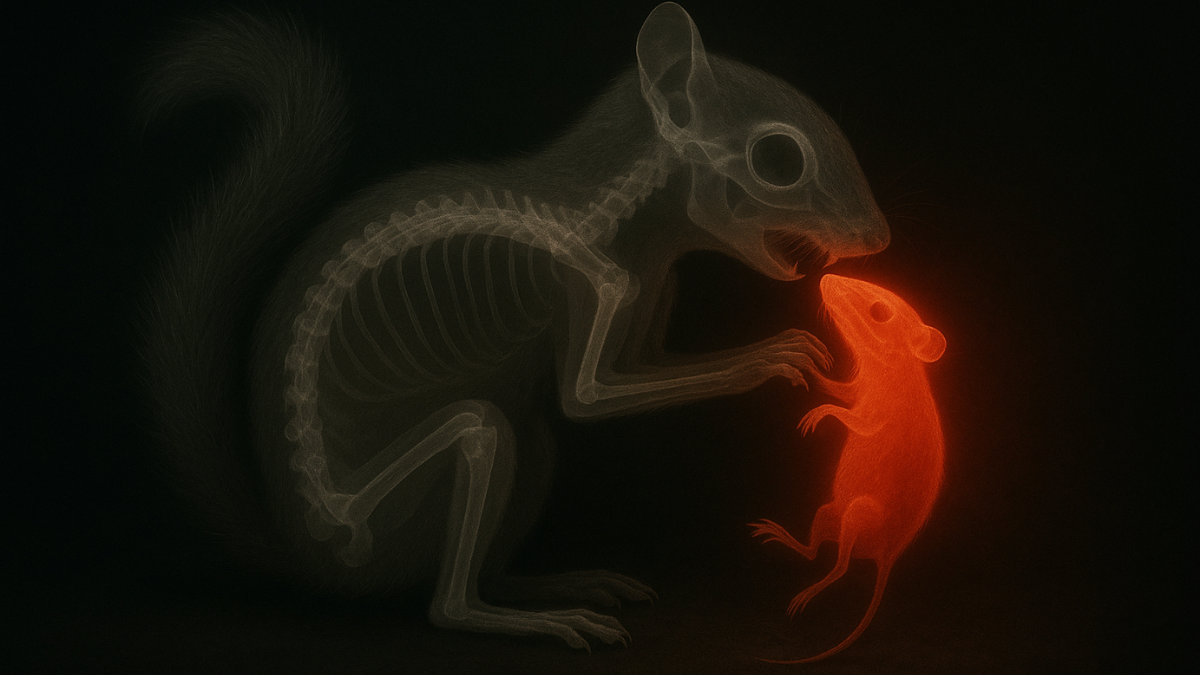
California’s ground squirrels have always seemed like familiar backyard creatures, cheeks stuffed with acorns or seeds. But new research from UC Davis and the University of Wisconsin–Eau Claire has revealed a startling shift: these squirrels are now hunting live prey.
Documented during the twelfth year of a long-term study at Briones Regional Park in Contra Costa County, scientists witnessed ground squirrels chasing, killing, and consuming voles. Between June and July 2024, researchers recorded 74 squirrel–vole interactions. In 42 percent of those, the squirrels acted as predators, stalking through grasses, pouncing, and delivering decisive bites to dispatch their quarry. On more than one occasion, the animals were seen stripping fur and competing with one another over vole carcasses.
For lead author Jennifer E. Smith, who has studied these squirrels for over a decade, the revelation was profound. “This was shocking,” she said. “At first, we questioned what was going on… But seeing the videos was astounding and shifted my perspective on a species that I have spent the last 12 years of my life studying.” Fellow researcher Sonja Wild described her own disbelief: “I could barely believe my eyes. From then, we saw that behavior almost every day.”
Dietary flexibility in a changing world
The surge in predation coincided with a vole population explosion, nearly seven times the decade-long average according to citizen science reports. Ecologists believe this sudden abundance triggered the squirrels’ opportunism. As Smith explained, “What is most striking and incredible is the speed at which they shifted their behavior to this local surge in vole abundance.”
The implications extend beyond Briones Park. Scientists have long categorized California ground squirrels as primarily herbivorous with some omnivorous leanings. This study offers the first documented proof that they can behave as regular predators when conditions allow. “The fact that California ground squirrels are behaviorally flexible and can respond to changes in food availability might help them persist in environments rapidly changing due to the presence of humans,” said Wild.
Other experts note that such flexibility is common in the animal kingdom. Deer have been filmed eating live birds, cows caught swallowing chickens, and even giant tortoises observed hunting seabird chicks. The lesson is the same: when food webs shift, supposedly strict herbivores may reveal hidden carnivorous streaks.
At Briones, the ecological ripple effects could be significant. By preying on voles, squirrels not only gained a new protein source but also altered their relationship with a competitor for seeds and grasses. They briefly acted as both prey and predator in the park’s food chain. Future monitoring will determine whether this diet shift boosts their survival or reproduction, and whether the behavior resurfaces in future vole booms.
For now, the discovery reminds researchers that even familiar wildlife still holds surprises. As Smith put it, “Squirrels are one of the most familiar animals to people… Yet here’s this never-before-seen behavior that sheds light on the fact that there’s so much more to learn about the natural history of the world around us.”
Leave a comment