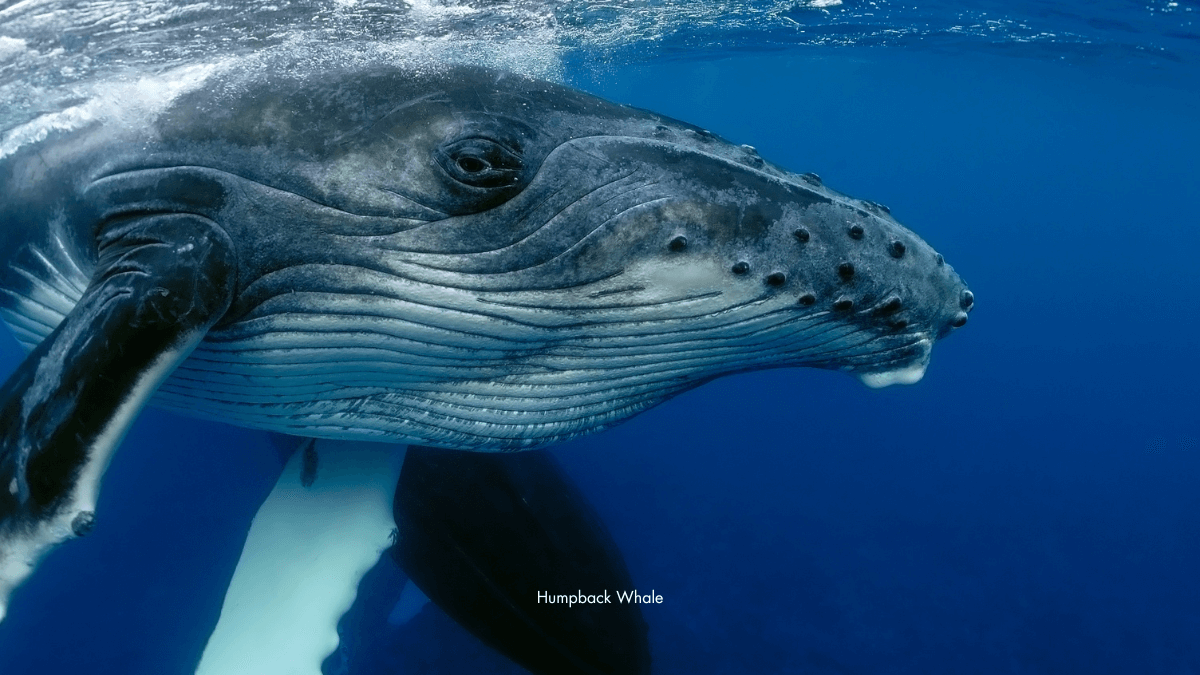
Humpback whales in the open ocean deliver haunting tunes that have fascinated researchers for decades. Scientists have long known these songs travel incredible distances, but fresh insights reveal something even more intriguing: these melodies show patterns similar to human language. That doesn’t mean the whales are chatting about their day, but it does point to complex rules guiding each rising and falling note.
Their music is surprisingly structured. Shorter, more frequent sounds often appear in ways resembling how humans rely on common words such as “a” or “the.” This alignment with something called “Zipfian distribution” appears in every human language studied so far. It’s a statistical principle indicating that more frequently used units, whether words or whale sounds, also tend to be shorter. That’s one reason babies, or baby whales, can quickly pick up new vocal elements.

Only male humpbacks sing, and those songs often change by the season. Some themes fade while new ones arrive, weaving fresh phrases into the whale community’s repertoire. Dr. Jenny Allen, who analyzed eight years of whale recordings, said, “Human language and whale song are both culturally learned, that’s why all the whales in one population will be singing the same song.” This shared learning highlights how members of a group seem to adopt new “lyrics” as they circulate through distant waters.
Researchers discovered that whale songs follow certain rules of predictability. By tracking how one sound transitions to the next, they found patterns akin to how infants recognize word boundaries. Professor Simon Kirby, who collaborated on this study, explained, “These findings challenge long-held assumptions about the uniqueness of human language.” Yet there’s no sign that humpback whales use these motifs to convey details about dinner or directions. Instead, experts compare them to musical melodies, where structure is present, but literal meaning remains hidden from our understanding.

Cultural transmission adds another layer. Whales appear to teach new songs as one group crosses paths with another. Dr. Emma Carroll, a marine biologist, told Afternoons’ Jesse Mulligan, “I’ve always been fascinated by the kind of complex cultural behaviors that whales show, and particularly how that influenced their recovery from whaling.” For many researchers, that cultural element pushes whales one step closer to humans, at least in the way they pass down learned traditions.
Echoes of Language at Sea
Despite these parallels, scientists caution that humpbacks aren’t speaking in a language like ours. The songs share statistical traits with human speech, but nobody claims they convey the same depth of meaning. Even so, these patterns matter. They reveal that communication, whether below the waves or among city streets, often follows certain timeless laws.
Furthermore, male humpbacks repeat their songs for hours, or even days. Thanks to the ocean’s acoustic properties, those melodies can travel hundreds of miles. And with rising noise pollution, their need for clear, efficient signals may be stronger than ever. Researchers hope that understanding this intricate behavior will help guide conservation efforts, reminding us that these ocean giants rely on communal songs to sustain their bonds.
The parallels between a whale’s call and our own spoken words suggest a universal drive to communicate efficiently. We may not speak “whale” yet. Still, these echoes of shared structure draw us closer to understanding how life forms, separated by vast oceans and millions of years of evolution, can converge on the same timeless blueprint for passing messages along.



Leave a comment