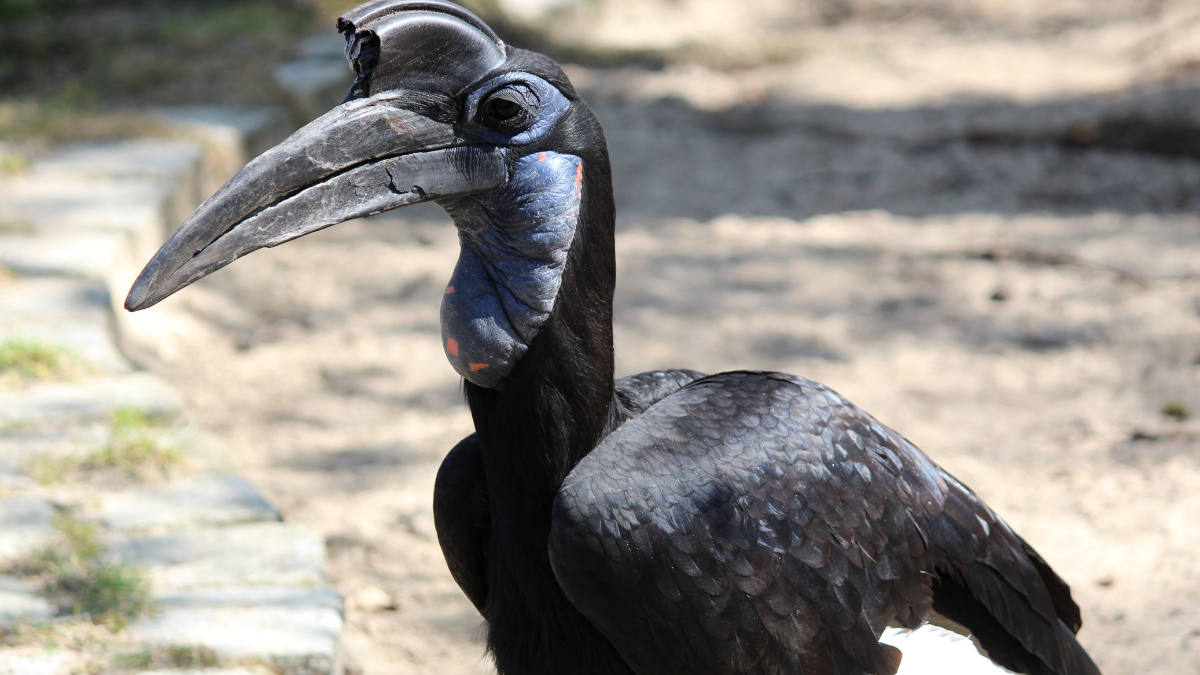
The Abyssinian ground hornbill is a bird built for the ground, not the skies. With eyelashes that look like they belong on a runway model and a booming call that echoes like a drumbeat across the African savanna, this striking species is part performer, part predator, and part ecological barometer.
It’s also in trouble.
One of only two ground-dwelling hornbills on Earth, the Abyssinian ground hornbill (Bucorvus abyssinicus) is native to the open grasslands and sub-desert scrub of north-central Africa. It ranges from Ethiopia and Sudan to Senegal and northern Kenya, striding through the brush on long, muscular legs like a feathered sentinel.
Males are unmistakable: jet-black bodies, vivid blue-and-red inflatable throat sacs, and casque-topped bills that make them look like ancient warriors. Females, while similar in size, lack the red coloration on the throat and are generally less vocal.
This bird is a predator first and foremost. It preys on reptiles, rodents, insects, and even other birds, stalking through the landscape in pairs or small family groups. Unlike most hornbills that nest high in the treetops, the Abyssinian ground hornbill prefers tree cavities closer to the ground, often reusing the same site for years. Its wings are strong, but it flies only when it must. The ground is where it hunts, breeds, and thrives.

A slow, deliberate life tied to the land
Reproduction is slow. The species is monogamous, and pairs typically raise just one chick every few years. That chick then stays with the family for an extended period, often up to three years, helping raise the next sibling like an avian apprentice. In this way, the hornbill resembles a multigenerational household: parents, a fledgling, and a teenage helper all working together.
This prolonged dependency makes the species especially vulnerable to habitat loss. Chicks require old trees for nesting, and those are increasingly scarce. Add in threats like hunting and the illegal pet trade, and the future of this charismatic bird starts to dim.

According to the Mabula Ground Hornbill Project and the IUCN Hornbill Specialist Group, recent conservation efforts have focused on population surveys, nest box installations, and community education in key parts of its range. The hope is that better data and more habitat protections can slow the species’ decline before it slips into more serious danger.
Still, many people have never heard of the Abyssinian ground hornbill, let alone seen one. In a way, it’s become a symbol of a vanishing wild: an odd, oversized bird that lives in slow motion, bound to the land and to the rhythms of a landscape that itself is under threat.
The eyelashes may grab your attention. But it’s the family dynamics, the deliberate pace of life, and the fragile ties to place that make this bird truly unforgettable.
Leave a comment