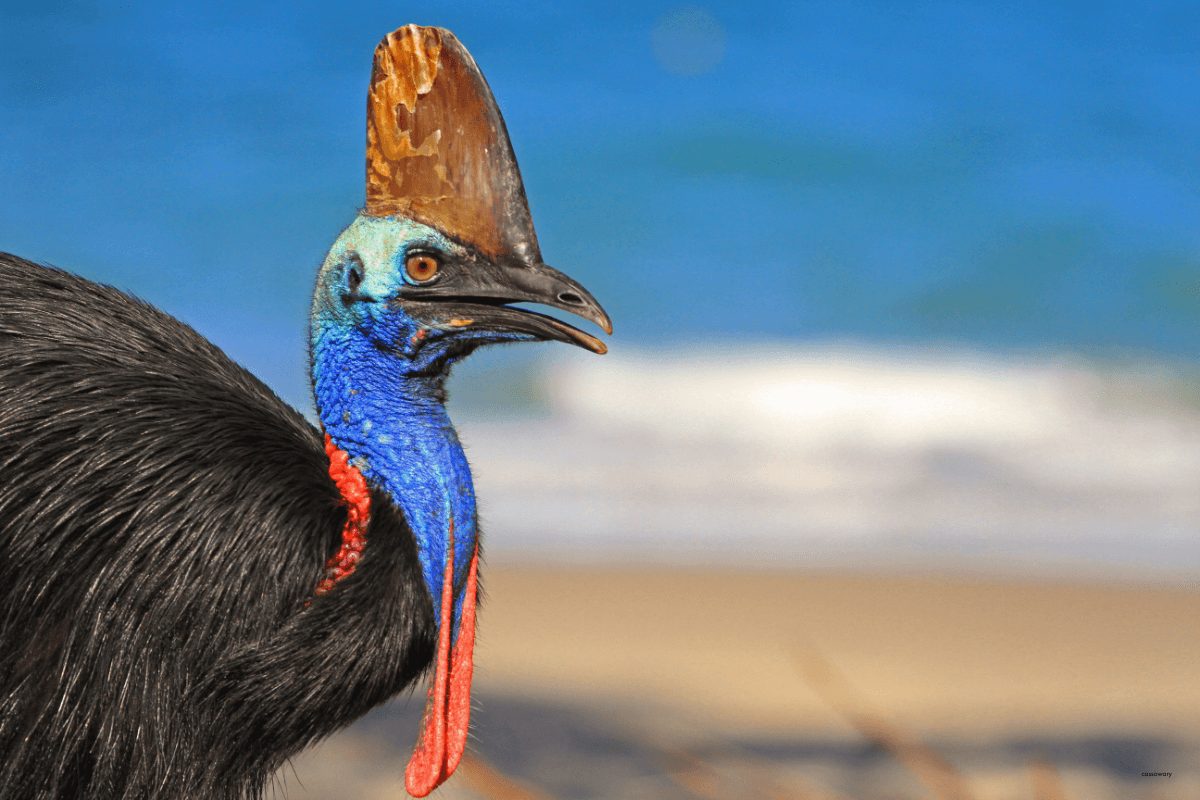
Cassowaries stand almost as tall as a person, with deep blue necks, bright wattles, and a prehistoric casque on their heads. They roam the shadowy understory of Far North Queensland’s tropical rainforests, scouring the leaf litter for fallen fruit. Their appearance can be startling, but these birds are a cornerstone of rainforest ecosystems.

“Cassowaries are considered a ‘keystone’ species in their rain forest habitat,” says Nicolaas Webb, senior avian care specialist at the San Diego Zoo Safari Park. That’s because they devour hundreds of fruiting plant species and then redistribute the seeds in their droppings, which act as a natural fertilizer. Large-fruited rainforest trees, some of which rely almost entirely on these birds for survival, would dwindle without their help. When a cassowary passes through the forest, it’s not just wandering aimlessly. It’s carrying the seeds of the next generation of trees in its belly.
Guardians of the Forest
Cassowaries have thrived in these forests for millions of years, yet their numbers are now dropping. The primary threats are habitat fragmentation, dog attacks, vehicle collisions, and extreme weather events. Once continuous and lush, their range has been carved by roads, agriculture, and development. A single adult needs a home range of around 100 hectares. Birds must traverse open spaces and roads when forests shrink into scattered patches. That’s often where fatal accidents happen.

Locals and conservation groups have worked to install roadside signs and lower speed limits in known cassowary corridors. The hope is to reduce collisions and remind drivers to watch for these endangered birds. “Speed limits and road signs are not a big ask to save such an iconic species from imminent extinction,” says conservation advocate Andrew Picone. Community projects also encourage everyone to report sightings and plant native fruit-bearing trees. More trees mean more food options and safer habitat for breeding pairs and their chicks.
Small green shoots have emerged from recent land buy-back efforts. Several organizations purchase fragmented rainforest parcels and restore them with cassowary-friendly species like the cassowary plum. By knitting these patches back together, they create corridors that can guide birds away from roads and back into protective foliage. Bit by bit, these measures help these large, cautious creatures continue their age-old role as forest gardeners.
A Path Forward
True success, however, demands ongoing education and engagement. In some regions, residents still feed wild cassowaries to lure them closer for pictures. This can lead to dangerous encounters, where birds grow used to human food and become aggressive if they don’t get it. Conservation experts warn that feeding wild cassowaries is illegal in many places and can ultimately harm them. Securing pet dogs and keeping residential areas free of enticing garbage are equally important steps.

Programs that rescue and rehabilitate injured or orphaned cassowaries also play a critical role. At facilities near the Wet Tropics, veterinarians and wildlife officers treat birds that have suffered collisions or cyclone damage. Many are released once they’re fully healed, and each successful release adds hope for a species that’s seen its habitat whittled away.
Under those towering canopies, a single cassowary can distribute thousands of seeds in a year, sustaining an entire network of plants and animals. Saving them isn’t just about preserving one remarkable bird. It’s about keeping these forests intact and ensuring that new life will continue to sprout, decade after decade, beneath the dim light of the rainforest floor.
How to support Cassowary habitat preservation
Below are a few reputable links to learn more, donate, or volunteer to support cassowary habitat preservation. These organizations and initiatives focus on everything from rescue and rehabilitation to land buy-back and community awareness. (Availability and regional access may vary, so check each site for specific opportunities.)
1. Cassowary Recovery Team
A central resource for cassowary conservation in Australia, featuring updates on current projects, sightings, and how to get involved.
2. Rainforest Rescue
Works on rainforest buy-back and tree planting to secure and restore critical cassowary corridors.
3. Kuranda Conservation
• Report a Cassowary or Learn About Local Efforts
Emphasizes community-driven conservation and offers ways to help protect cassowaries in Far North Queensland.
4. Queensland Government – Report a Cassowary
• Department of Environment and Science
Allows the public to report sightings or incidents, helping track and protect cassowaries across Queensland.
5. Wet Tropics Management Authority
Provides details about cassowary-related research and strategies, plus broader information on managing and safeguarding the Wet Tropics World Heritage Area.


Leave a comment