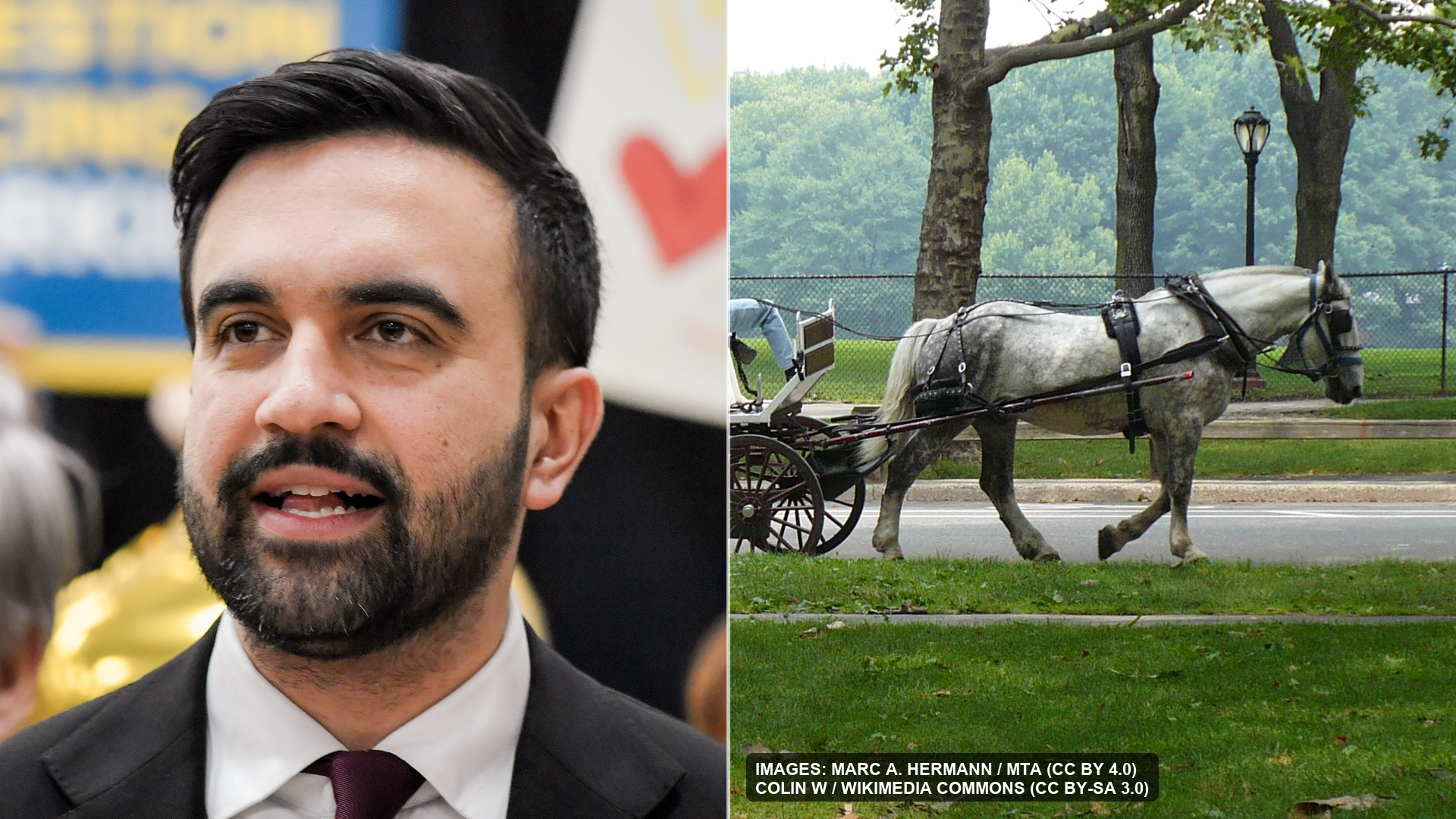
A horse’s last carriage ride wouldn’t settle where it spends the rest of its life. Someone would still have to provide a home, arrange veterinary care and pay the bills. For the person who drove that carriage, the question would be how to replace an income without necessarily leaving behind a vocation.
Questions about responsibility after a transfer also ran through Discvr’s reporting on what happens after wild horses are sold. New York’s carriage horses belong to a different legal system. But the distinction between leaving one situation and arriving somewhere secure helps explain the response to the city’s proposed phaseout.
In a review of roughly 20 comments posted directly beneath Discvr’s recent Facebook post—not replies to other commenters—readers repeatedly paired support for ending the rides with requests for safe retirement and alternatives that could preserve jobs. Some suggested electric carriages; others favored bicycle-powered rides. The sample wasn’t a poll of New Yorkers. It did identify questions that a simple announcement about a ban wouldn’t answer.
New York City’s proposed ban isn’t law. As of September 16, 2026, Int. 0943-2026 remained in committee following a July 15 hearing. It proposes ending horse-drawn cab operations throughout the city on June 1, 2028, not immediately moving them out of Central Park.
An earlier bill helps explain the confusion. Int. 0967-2024 set out a proposed shutdown for June 1, 2026. The Health Committee rejected it on November 14, 2025, so that deadline never took effect. Old headlines about the proposal can make a promised change sound like something that already happened.
Concern about conditions for the horses also needs to be separated from what the existing rules require. NYC limits carriage horses to nine working hours within 24 hours, including their required breaks. A two-hour work period must be followed by a break lasting at least 15 minutes. The annual furlough requirement is five weeks at a facility where horses can use a paddock or pasture each day.
Temperature restrictions already apply. Work is prohibited at 90 degrees Fahrenheit or above, and at 80 degrees or above when the equine heat index reaches 150. That index adds the temperature in Fahrenheit to relative humidity. Rain alone doesn’t automatically prohibit a ride, although dangerous weather requires a horse’s return to the stable, and cold, wet conditions trigger blanket requirements.
Those protections don’t settle the disagreement over whether the work is appropriate. The American Association of Equine Practitioners supports urban horse work when welfare is prioritized and applicable protections are followed. Its 2025 position calls for locally appropriate standards and funded oversight. The New York City Bar Association’s Animal Law Committee, by contrast, argues that regulatory changes can’t adequately address the industry’s welfare and safety problems and supports a ban.

For horses leaving the industry, the proposal would require owners to give at least five days’ notice before a transfer, identify the intended recipient and certify that the transfer wouldn’t serve a prohibited purpose. Transfers for slaughter or another horse-drawn cab business would be prohibited. City outreach would help owners identify potential recipients.
New York already has a separate state law against slaughtering horses for human or animal consumption. Agriculture and Markets Law Section 385 also prohibits transactions and transport undertaken with that intent. The city proposal would add carriage-specific safeguards, rather than introduce the state’s first protection against slaughter.
Neither a prohibition nor a transfer form tells readers whether a particular horse has a place waiting. The bill doesn’t itself assign every horse a home or specify a funded lifetime-care package for each animal.
The word sanctuary also needs care. The Global Federation of Animal Sanctuaries distinguishes facilities offering lifetime care from rescue and transition centers that provide temporary care before adoption or another placement. A rescue organization can be an important intermediary without becoming a horse’s permanent home.
Some retirement routes already exist. Rosemary Farm Sanctuary, in the western Catskills, says it has welcomed four former NYC carriage horses and invites owners to discuss retiring others. Its records list Kevin as retired in 2019 and adopted in 2020, illustrating how a sanctuary can help arrange a home rather than remain the final destination.
The Coalition for Responsible Carriage Horse Retirement says it’s assembling screened sanctuaries and private homes, with lifelong tracking among its commitments. These are the coalition’s stated plans. Its application explains that offering a home doesn’t guarantee a placement or oblige an applicant to take a horse.
For anyone assessing a retirement arrangement, that makes the details more useful than the label. Does the recipient have suitable space? Who pays for transport, feed, hoof care and treatment as the horse ages? Can the horse change hands again, and who would learn about that transfer? What happens if the recipient can no longer provide care?
A list of organizations willing to help would be a starting point. Confirmed spaces, care commitments and follow-up arrangements would show what that help means for individual animals. The available documents describe routes to retirement, not a completed placement for every horse.

A replacement ride isn’t automatically a replacement livelihood
The proposal would establish employment-transition assistance for drivers and other carriage-industry workers through the city’s consumer protection and workforce offices. The program’s proposed start is 90 days after enactment, with a June 1, 2030 end date. It doesn’t promise everyone a job at their previous earnings.
Mayor Zohran Mamdani has supported ending the industry, but his position on the legislation includes a reservation. On July 14, he said the administration supported its overall aim while criticizing the insufficiency of its worker protections. Council Speaker Julie Menin has pointed to hospitality and tourism opportunities as part of a transition.
For some drivers, the proposed change is about more than finding another vacancy. In the union’s account of the July hearing, carriage driver and chief shop steward Christina Hansen objected to the suggestion that hotel work could substitute for her relationship with her horse and her occupation.
“I don’t need to be told to go work in a hotel, I’m a horse person,” she said.
Transport Workers Union Local 100 opposes the ban and favors measures including stronger training, periodic retraining, hitching posts and enforcement. Those objections sit outside the broadly supportive tone of Discvr’s small comment sample, but they’re central to understanding what workers themselves are asking for.
A transition plan would therefore have to address different situations. A driver seeking another paid position wouldn’t necessarily need the same assistance as a stable employee or an owner with money invested in a business. Relevant comparisons would include take-home earnings, working hours, training costs and any gap between the old income and the new one.
Electric carriages offer one way to retain a guided sightseeing ride without an animal pulling it. Brussels provides a working example. Brussels’ official tourism listing describes a guided E-Carriage Tour for up to five passengers, starting at the Grand-Place.
The appeal is understandable for readers who feel attached to the experience but question the use of horses. Urban transport has changed its source of power before, as the history of London’s horse-drawn omnibus services illustrates. A visitor can value the pace, conversation and shared seat without necessarily valuing every part of the original machinery.
Still, Brussels’ tourism listing establishes that a ride is available. It doesn’t establish that former workers all retained equivalent earnings, or demonstrate what an electric-carriage business would cost to operate in Manhattan. Those would require separate evidence.

Pedicabs are another suggestion, but switching to them isn’t simply a matter of buying a bicycle. NYC requires business and driver licensing, insurance, vehicle inspection and a registration plate. Citywide registrations have to fall below 840 before new plates can be issued; transfers and lotteries provide routes into the system.
A separate proposal introduced on September 10 makes the discussion more timely. Int. 1063-2026, sponsored by Council Members Carl Wilson and Gale Brewer, would allow a motor rated below 750 watts to assist a pedicab driver while pedaling. Assistance would stop at 15 mph, unless the transportation department set another limit.
That measure also remains a proposal. It’s distinct from the horse-carriage bill, and it doesn’t reserve jobs or licenses for carriage workers. An electric-assist pedicab, which still requires pedaling, is also different from a fully motor-powered carriage.
For workers considering either option, ownership would matter alongside the vehicle’s design. Would they receive help buying or leasing equipment? Could they obtain the necessary permission to operate? Would existing drivers get priority, or would new operators enter the market? Physical demands, accessibility, insurance and operating expenses would also affect who could realistically make the switch.
An electric carriage could offer visitors another way to see the park. Whether the person driving it would be a former carriage worker, an employee of a new company or an owner of their own business would depend on decisions about the transition, not simply on what powers the vehicle.



Leave a comment