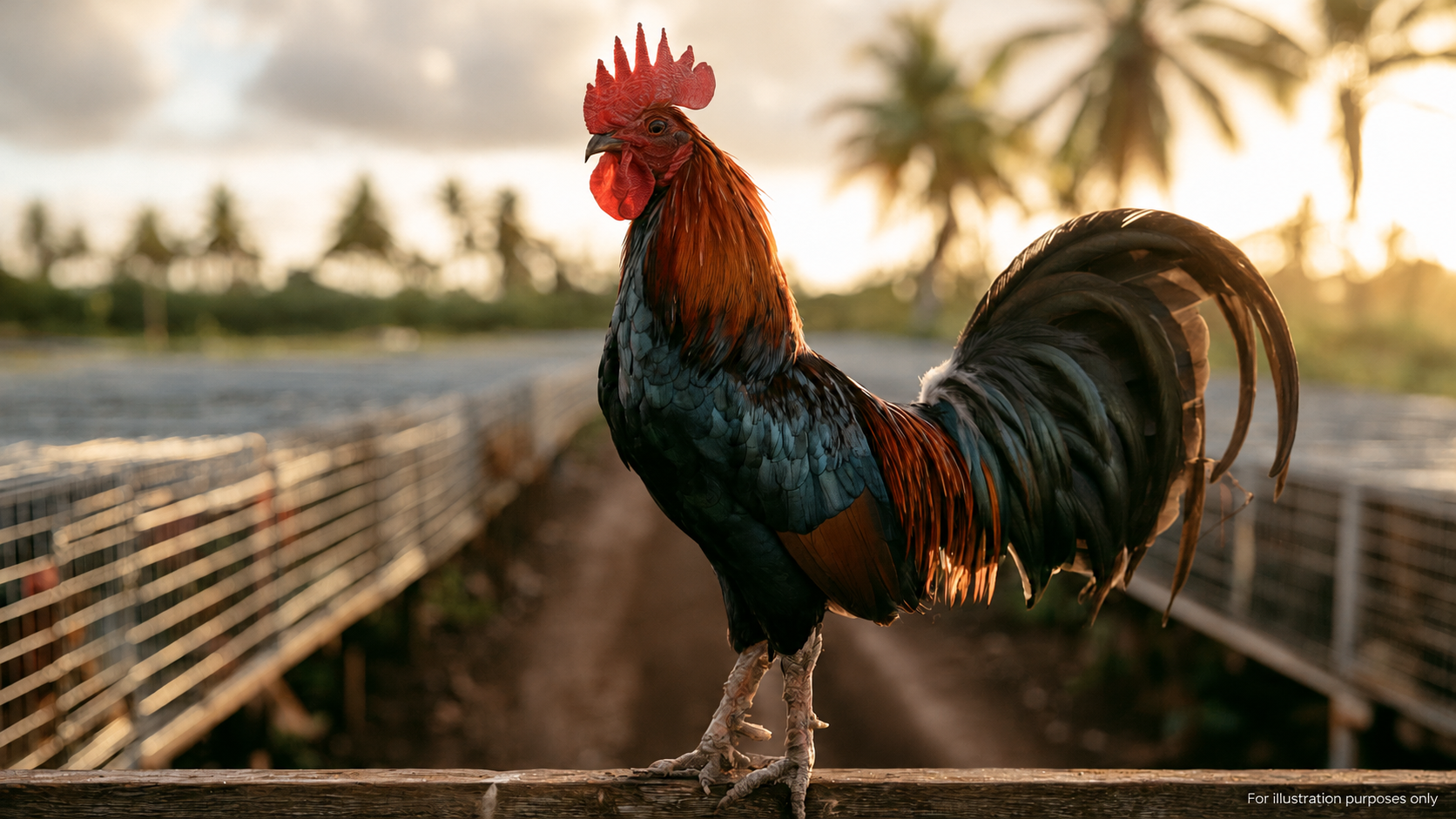
Thousands of roosters were found on a 10-acre property in southwest Miami-Dade, where investigators documented cages, suspected training rings and equipment associated with cockfighting. Days later, another number emerged: Miami-Dade Animal Services had euthanized 3,110 roosters, according to a sheriff’s arrest report cited by NBC 6 South Florida.
Some other animals removed from the property entered veterinary care. Goats, ponies and chickens were receiving treatment, and rescuers were looking for places where survivors could live. As in other large-scale animal cruelty rescues, removing animals from harmful conditions is only the beginning. What followed for the roosters raises a different question: how was their fate decided?
The investigation began on October 3, when FBI agents searching the property for a separate matter spotted what appeared to be a cockfighting operation. Miami-Dade sheriff’s detectives subsequently searched the site and reported finding several thousand gamefowl, enclosed training rings, syringes, medications and other equipment they associated with animal fighting. Authorities arrested Carlos Rafael Lezcano, 52, Sergio Ruiz-Osorio, 54, and property owner Marcie Rochell Newmark, 70, on animal-cruelty or animal-fighting-related charges. The allegations haven’t been adjudicated.
Investigators also described serious neglect beyond the rows of roosters. There were ponies in poor condition, goats that appeared severely ill and at least one dead goat. South Florida SPCA rescuers described emaciation, respiratory illness and animals needing intensive treatment. One goat died while being transported for care, and another was euthanized because of its condition.
Over three days, the South Florida SPCA said it took in nearly 800 animals, including goats, sheep, ponies, rabbits, turtles and birds. Its rescue director, Laurie Waggoner, described chickens receiving treatment for respiratory problems and parasites. Some animals were being considered for permanent sanctuary placements. That organizational tally shouldn’t simply be added to the 3,110 roosters: the reporting reviewed here doesn’t establish whether the counts overlap or how every animal was classified.
It is particularly important that the SPCA described living roosters and chickens receiving care. Reports of thousands of euthanized birds don’t mean that every bird discovered anywhere on the property had the same outcome. They do establish the extraordinary scale of the county’s decision about the 3,110 roosters in its reported tally. The records and accounts verified for this article don’t establish what medical assessments, disease testing or written authorizations supported the disposition of those 3,110 birds.
What determines a fighting bird’s fate?
Florida’s Animal Fighting Act allows courts to order the seizure of animals used in suspected fighting offenses and provide for humane care or disposition. It also permits veterinary euthanasia before a legal case ends when injury or disease is so severe that the animal cannot be cared for humanely while the proceedings continue. The law doesn’t say that every rooster seized in a fighting investigation must automatically be euthanized. That distinction doesn’t establish wrongdoing in Miami-Dade; the relevant medical findings, orders and legal basis for this particular disposition haven’t been independently reviewed here.
Fighting birds can present difficult challenges for rescuers. Some have injuries or infections. Gamefowl may have been selectively bred and conditioned to fight, which can make placement in ordinary flocks unsafe. Housing large numbers separately requires specialized facilities, trained people and money. Bird movement can also create biosecurity risks. But a general concern about avian disease isn’t evidence that these Miami-Dade roosters tested positive for a particular infection.
In Kansas in February 2025, Humane World for Animals assisted with the seizure of more than 400 roosters and hens from a suspected cockfighting property. Veterinarians euthanized those birds on-site. The organization cited the risk of infectious disease and the shortage of appropriate placements as reasons birds from such operations are often not adopted. Those were its stated concerns in a separate case, not a medical finding about the Miami-Dade flock.
A rescue in Pennsylvania reached a different outcome. After roughly 300 chickens were seized in 2025, volunteers with Good Sprout Rescue and Sanctuary tended the birds for six months and worked with other organizations to find homes for nearly all of them. Farm Sanctuary documented transporting nine of the birds to placements across the country. That effort required sustained care, volunteers, money and coordination. It showed that at least some birds associated with cockfighting can be successfully rehomed, though it didn’t establish that thousands can be accommodated in every case.
The question of scale isn’t new. In 2014, the ASPCA helped seize as many as 3,000 fighting roosters and hens in New York and created temporary shelter space while their legal disposition remained unresolved. Temporary housing isn’t the same as a guarantee of lifelong homes, but it shows that large-scale care has been organized under some circumstances.
Deciding to euthanize an animal requires a different judgment from deciding that it should be taken out of someone’s custody. The distinction resembles other difficult decisions about animal euthanasia, although the risks and options for thousands of poultry are very different from those for one captive animal. For the Miami-Dade birds, the crucial unanswered details are concrete: what veterinarians found, whether disease testing or quarantine was considered, what housing or sanctuary capacity was available, and which authority approved the final disposition.
The cockfighting investigation can establish who, if anyone, is criminally responsible for conditions at the property. It cannot, on its own, explain why 3,110 seized roosters were euthanized. The available reporting raises questions about veterinary assessments and possible alternatives, but an independently verified, case-specific record is still needed to judge the decision fairly.


Leave a comment