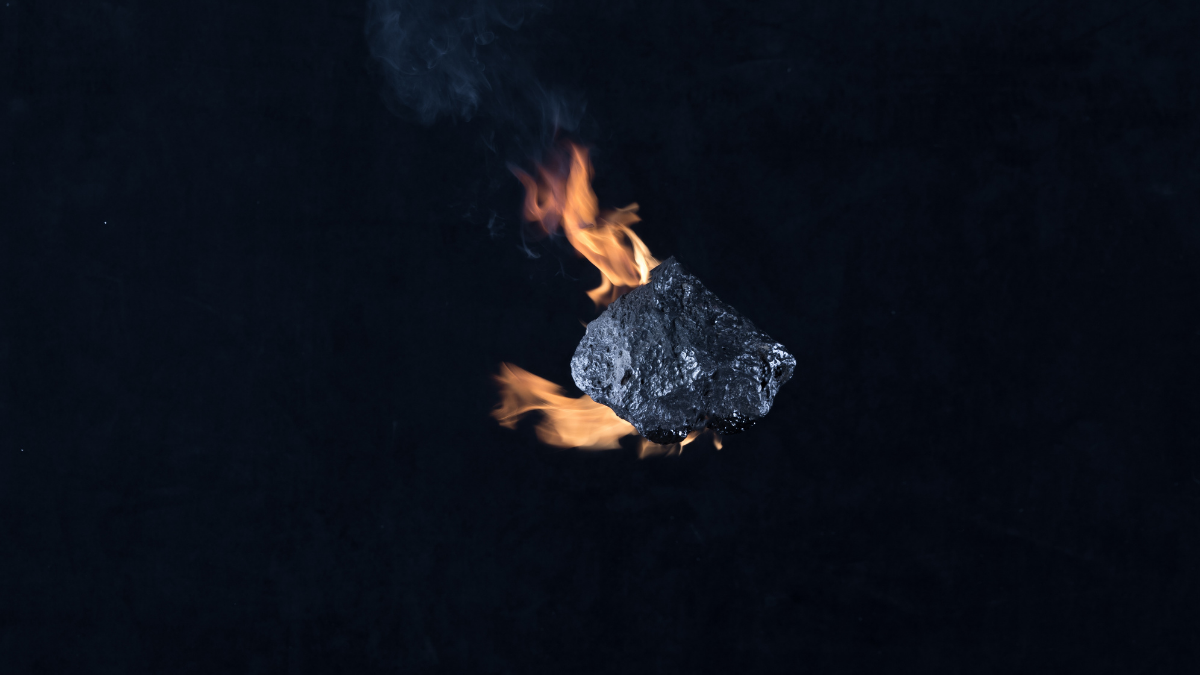
On June 26, 2025, a brilliant fireball tore across the Georgia sky in broad daylight. Drivers on highways pulled over, startled by a sudden white flash. A cannon-like boom rippled through neighborhoods, rattling windows and shaking floors.
In McDonough, a suburban family’s day turned surreal when a rock from space punched through their roof, ripped through ductwork, and dented the floor. No one was hurt, but their home had just been struck by something older than Earth itself.
Scientists quickly confirmed the rock was an ordinary chondrite, a stony meteorite low in metal and rich in silicates. More precisely, it was an L chondrite, thought to come from a catastrophic collision in the asteroid belt about 470 million years ago.
Laboratory tests at the University of Georgia revealed its astonishing age: 4.56 billion years, roughly 20 million years older than our planet.
“This rock has been on a 4½-billion-year journey – and only at the very end did it find its way to a suburban Georgia home,” said planetary geologist Scott Harris, who examined the specimen.

Harris estimated the recovered fragment weighed about 23 grams, the size of a cherry tomato. But when it arrived, it was moving at a kilometer per second — double the size of a .50-caliber shell and crossing ten football fields in one second.
“I suspect that he heard three simultaneous things,” Harris added. “One was the collision with his roof, one was a tiny cone of a sonic boom, and a third was it impacting the floor all in the same moment.”
A rare and well-documented fall
NASA’s Meteoroid Environments Office pieced together its path using satellites, radar, and infrasound sensors. The meteoroid was about three feet wide, over a ton in mass, and traveling near 30,000 miles per hour before breaking apart 17 to 20 miles above Georgia.
The explosion released energy equal to about 20 tons of TNT. Radar picked up debris falling, guiding scientists to the impact site.
Daylight fireballs are rare. Fewer still leave behind a recoverable fragment that strikes private property.
If approved by the Meteoritical Society, this will be officially named the McDonough meteorite, the 27th recovered in Georgia and only the sixth whose fall was witnessed.
Events like this help planetary defense scientists refine models of meteoroid breakup and debris fall patterns. While tiny compared to the Chelyabinsk blast in 2013, which injured over a thousand people, the McDonough meteorite adds valuable data.
Its detection in daylight challenges existing tracking systems, highlighting the need for expanded monitoring to catch small objects.
For the homeowners, it’s a conversation piece and a fragment of deep time, a tangible connection to the solar system’s dawn.
For scientists, it’s a pristine sample from space, holding clues to how planets like ours formed.
And for everyone who heard the boom or saw the flash, it’s a reminder that Earth’s skies are busy, and sometimes, the cosmos comes calling.



Leave a comment