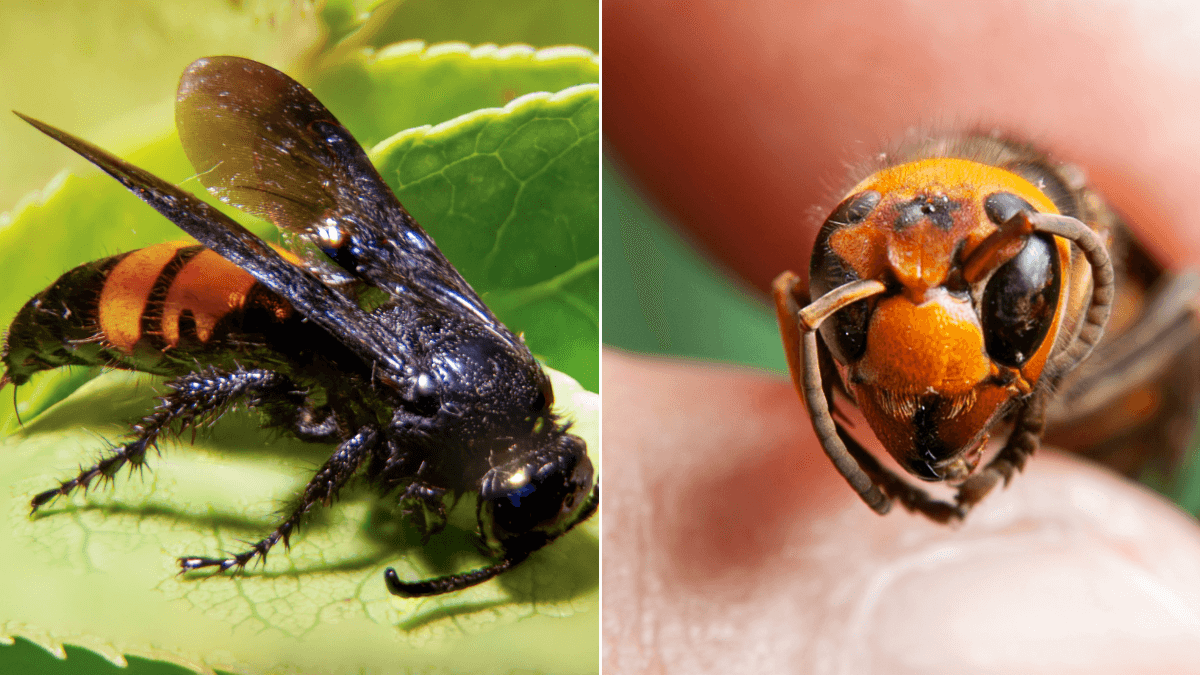
The Japanese Giant Hornet, known scientifically as Vespa mandarinia, wields one of nature’s most formidable weapons: its stinger.
Measuring up to 6mm, this stinger delivers venom that can cause excruciating pain and severe health risks, particularly for those with allergies to insect stings.
Entomologists are drawn to the hornet’s striking black and orange coloration, which helps identify it. More than just a visual threat, its sting is powerful enough to harm larger animals, including hummingbirds and small mammals. In regions like Washington, where this species has been detected, the hornet poses a significant risk to both local ecosystems and agriculture.
In addition to their danger in the wild, these hornets can create problems in urban areas, as they are often attracted to sugar products and alcoholic beverages. Managing their spread has become a priority for ecological balance and public safety. While Japan has established control methods, regions like North America and Europe still grapple with large-scale efforts to contain their population.
What makes the Japanese Giant Hornet so fearsome?
Aside from its imposing size—up to 2 inches long—it’s the venom that strikes the greatest fear. Containing toxins that destroy red blood cells and damage cell membranes, this venom causes more than just pain. With a wingspan of up to 3 inches, these hornets are swift and agile hunters, capable of covering large distances in pursuit of prey. Their strong mandibles allow them to decapitate honeybees, making them a significant threat to bee colonies.
Nicknamed “Murder Hornets” for their ability to decimate honeybee populations, these invaders could wreak havoc on ecosystems outside their native range. Unlike their European cousins, Japanese Giant Hornets have evolved thick armor, making them nearly invulnerable to bee stings—a feature that complicates bees’ efforts to defend their hives.
The pain from their sting is another level of agony. Enzymes and neurotoxins in the venom destroy tissue and nerves, with the cytolytic peptide responsible for breaking down cell membranes. With a barbless stinger, these hornets can sting repeatedly without losing their weapon. Entomologist Masato Ono once described the sensation as “like a hot nail being driven into one’s leg,” with pain radiating outwards, often causing dizziness and nausea.
Multiple stings increase the risk of anaphylactic shock, and these hornets release a pheromone that can summon others to join in the attack, making them even more dangerous. For anyone caught in their path, the Japanese Giant Hornet is a menace that’s not easily forgotten.


Leave a comment