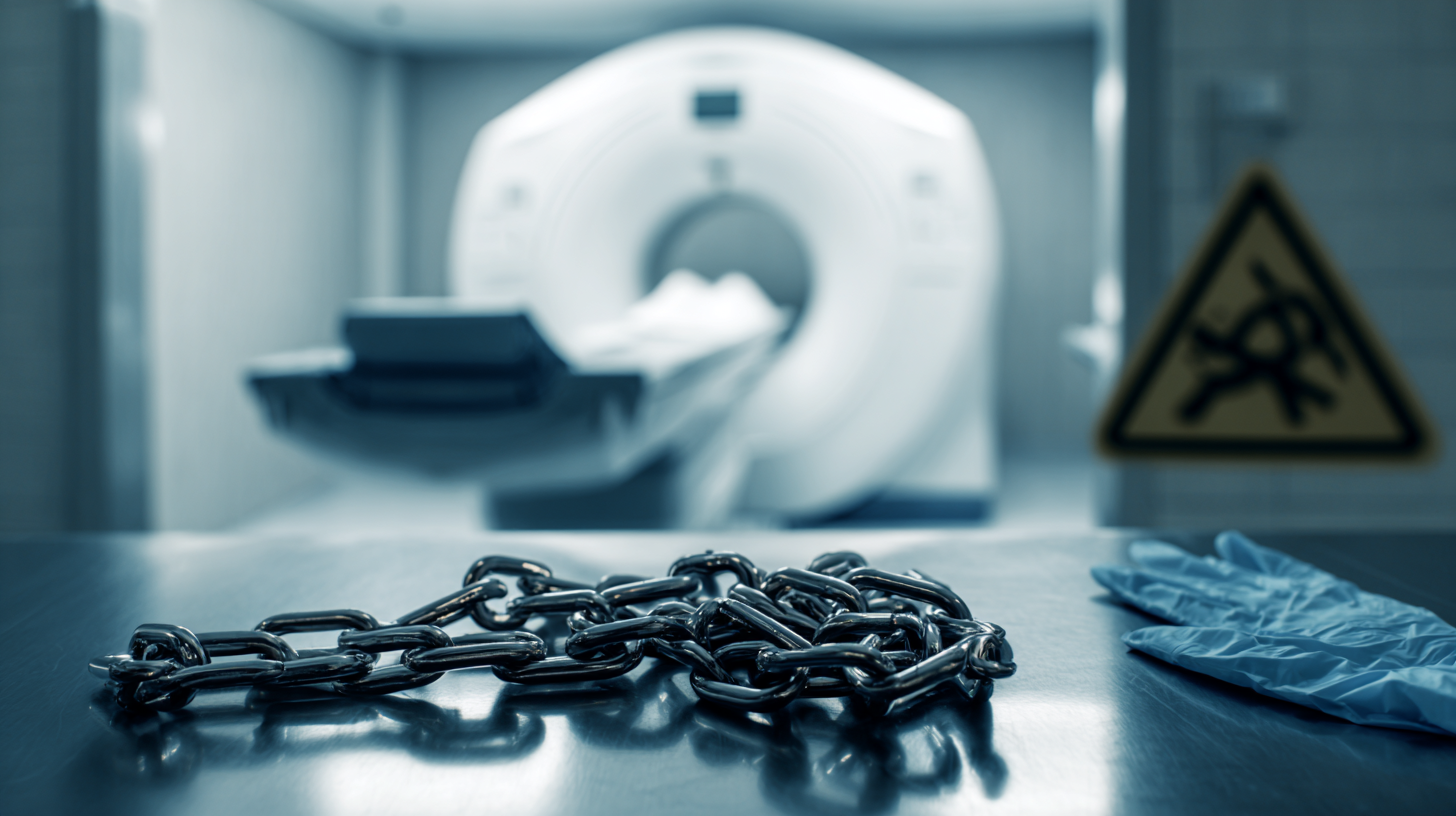
On July 16, 2025, at the Nassau Open MRI clinic in Westbury, Long Island, a routine medical visit turned horrific. Sixty-one-year-old Keith McAllister went into the MRI room wearing a nearly 20-pound metal chain, his standard weight-training gear.
His wife, Adrienne Jones-McAllister, was undergoing a knee scan when she called for help to rise from the table. Despite the heavy necklace being well-known to staff from previous visits, a technician allowed him to enter, and the machine’s powerful magnet did the rest.
“He went limp in my arms,” Adrienne later said. The chain, drawn in like a torpedo, pinned him to the MRI bore. Attempts to free him failed, and pleas to power down the machine were ignored too long. McAllister suffered multiple heart attacks and died the next day at North Shore University Hospital.

MRI machines generate intensely strong magnetic fields that never turn off. These fields can pull ferromagnetic objects with lethal force. Standard protocols require screening everyone who enters an MRI suite, including caregivers. The magnet’s power is not a secret. But protocols failed. The technician not only permitted McAllister to enter unscreened, but also had reportedly seen him wear the chain before.
What followed was chaos. Adrienne screamed for help. The chain yanked her husband off his feet and locked him to the machine. No one could pry him loose. He was trapped for nearly an hour before first responders were able to remove him.
State regulators have launched an investigation. Nassau County police are conducting interviews. The MRI technician may face professional sanctions or worse. Meanwhile, Adrienne is left haunted by her husband’s final gesture: a wave goodbye as he slipped from consciousness.
The tragedy is a reminder: MRI safety is absolute. There are no exceptions. The rules exist for a reason, and breaking them can be fatal.



Leave a comment