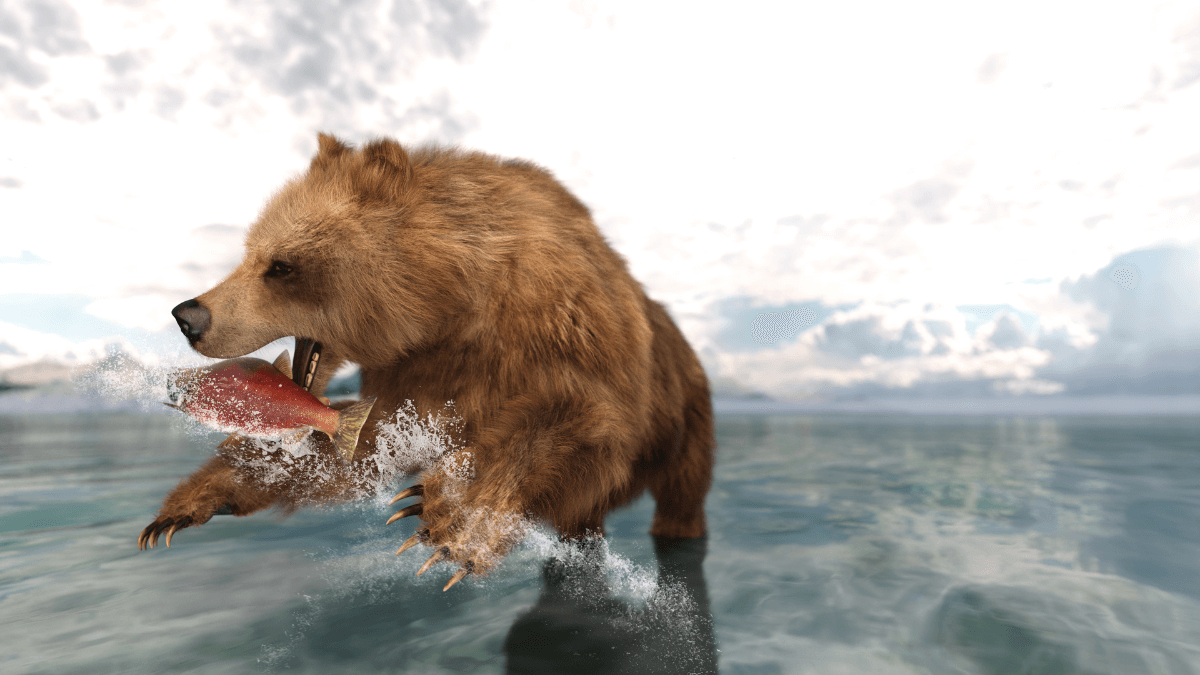
The relationship between brown bears and salmon offers a fascinating window into nature’s complexity. These waterways become the stage for one of the most spectacular wildlife events each year.
The migrating salmon, swimming upstream to their spawning grounds, are a vital resource for the brown bears that inhabit the area. They rely on this abundance to fatten up for the long winter hibernation.
Observing brown bears catch salmon is to witness a masterclass in survival and adaptation. Bears employ various techniques to capture their prey, depending on their skill, experience, and position in the social hierarchy.
The salmon runs are so profuse that dominant male bears can catch and consume upwards of 30 fish daily during peak times. In contrast, smaller and less skilled bears may have lesser catches, but each bear’s fishing strategy is remarkable to observe.
In Katmai National Park, places like Brooks Falls provide unique vantage points to see brown bears in action. The bears stand atop waterfalls or alongside the river, waiting for the right moment to snag a salmon.
They may also be seen chasing fish in shallow waters or digging for them among riverbeds. As the salmon journey takes them through challenging obstacles, the bears’ extraordinary hunting methods highlight the interconnectedness of this ecosystem.
Bear Fishing Techniques

In the competitive world of bear fishing, these magnificent creatures employ various techniques that capitalize on their strengths and the surrounding environment. Particularly, grizzly bears, including the Alaskan brown bear and black bears, are known to be incredibly skilled at snatching salmon, especially during the height of the salmon run in July when sockeye salmon migrate upstream for spawning.
Stand and Wait
In the stand-and-wait approach, a bear selects a prime fishing spot, typically where salmon congregate before making their next leap upstream. You might observe a grizzly at Brooks River, remaining statuesque for periods, suddenly lunging its head into the water to catch an unsuspecting salmon.
Dash and Grab
Dash and grab require a more dynamic strategy. Bears often patrol the stream paths, waiting for the perfect moment to charge and snatch salmon directly from the water. This method demands speed and precision, making it a test of the bear’s agility and reflexes.
Plunge Pool
In the plunge pool technique, bears take advantage of natural pools formed in the river where salmon might rest. A bear uses its weight to create a splash in the pool, stunning the fish before snatching them with its powerful jaws or scooping them out with its claws.
Diving
Not all bears stay at the water’s edge. Some partake in diving, fully submerging themselves to chase after salmon underwater. An impressive display of their swimming capabilities, dive fishing allows bears to target salmon that are deeper in the water column and less accessible by other means.
Pirating
Lastly, pirating is a less frequently employed technique where a bear capitalizes on the efforts of others. If a bear spots another with a fresh catch, it might attempt to steal the salmon, especially if it’s a younger or less dominant bear trying to avoid the exertion of fishing.
Best Times and Places for Bear Viewing
When planning your bear-watching trip, your best opportunities reside in Alaska, particularly in areas like Brooks Falls and Katmai National Park and Preserve during the peak months when bears are most active in their salmon-catching activities.
Brooks Falls
Brooks Falls in Katmai National Park and Preserve is arguably one of the most iconic spots for bear viewing. Here, you can expect:
- Prime Viewing Time: July is peak, although activities can stretch into September.
- Key Features:
- A viewing platform that allows for safe and unobstructed observations of bears.
- Webcam Access: Even if you can’t make it in person, Explore.org provides a live feed so you can witness the spectacle from anywhere.
Katmai National Park and Preserve
Katmai National Park offers a larger bear-watching canvas outside of Brooks Falls:
- Geographic Locations: Geographic Harbor and McNeil River Falls are notable.
- Wildlife Beyond Bears: Spot eagles, and watch the life cycle of salmon.
- Visitor Facilities: Ample boardwalks and additional viewing platforms.
Seasonal Viewing Patterns
Understanding the life cycle of salmon is key to planning your viewing experience:
- Best Months to Visit:
- Early July to mid-August when salmon runs peak.
- Bear Activities:
- Cubs learn to fish alongside their mothers.
- Bears often gather in places like the “Jacuzzi” at Brooks Falls, where they catch leaping king salmon.
How do Bears Eat Salmon
When observing bears, particularly during salmon spawning seasons, you’ll notice their remarkable fishing techniques and dietary habits focused on this nutritious fish.
How Many Salmon Do Bears Eat a Year?
Bears, depending on their size and the abundance of salmon in their habitat, can consume up to several hundred salmon a year. It is estimated that a bear could need to catch and eat about one salmon per day during peak season to maintain its weight, meaning some bears might eat over 100 salmon in a year.
Which Bears Eat Salmon?
Brown bears and grizzly bears are the most noted for eating salmon. They are commonly found near salmon streams during spawning seasons. Black bears also consume salmon, but less frequently, since they have broader habitats away from salmon-rich waters.
Why Bears Eat Salmon
Salmon are an essential food source that provides high-quality protein and fats needed for the bears’ survival. These nutrients are vital for building fat reserves to sustain bears through the hibernation period.
Do Bears Eat Salmon Skin?
Yes, bears do eat the salmon skin. The skin is rich in fats, which are crucial for the bears’ energy reserves. This is especially important in preparing for hibernation. Bears typically eat the entire salmon, including the skin, to maximize their caloric intake.
Leave a comment