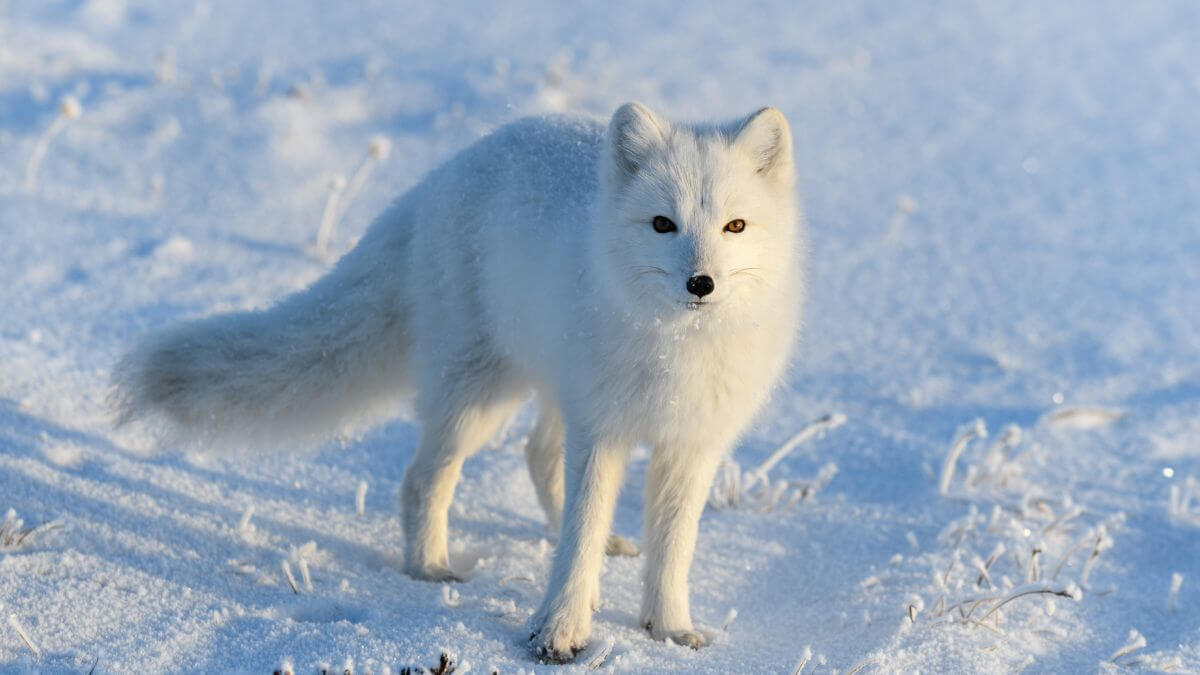
Arctic foxes are a remarkable example of adaptation in the animal kingdom. These small, omnivorous mammals, also known as Vulpes lagopus, have developed behavioral and physiological adaptations that enable them to thrive in the extreme conditions of their habitat. Among the most notable of these adaptations is their ability to change the color of their coat, which provides a stark illustration of their evolutionary ingenuity.
In the winter, the Arctic fox sports a thick, white coat, a critical form of camouflage amidst the snow and ice, protecting it from predators and aiding in hunting. Their fur turns snowy white in response to changing seasons due to variations in light levels and resulting hormonal changes. This seasonal change in appearance is a crucial survival strategy as it allows the Arctic fox to remain inconspicuous to predators and prey throughout the year.


Understanding the Arctic fox’s adaptive mechanisms showcases their resilience and contributes to our broader knowledge of how species can evolve traits in direct response to environmental pressures. This ability to shift colors with the seasons is an elegant demonstration of adaptation that ensures their survival in one of Earth’s most demanding ecosystems.
Arctic Fox Habitats and Behaviour
The Arctic fox, a resilient species well-adapted to extreme cold, demonstrates remarkable behaviors linked to its habitat and survival strategies.
Habitat Distribution
Arctic foxes are native to circumpolar regions, inhabiting the Arctic tundra and coastal areas. They make their homes in regions where temperatures can plummet to as low as -58°F, showcasing their exceptional adaptability. Arctic foxes have adapted to life on land and sea ice, with their habitats spanning from the northernmost parts of North America to the edges of the Eurasian landmass.
Their dens are often in low-lying areas and can be complex structures with multiple entrances. They are used not only for shelter from the harsh climate but also for raising their kits. The dens can be centuries old, passed down through generations, and reused annually.
Dietary Habits
Arctic foxes exhibit omnivorous dietary patterns, primarily preying on small mammals like lemmings and voles. Their diet varies seasonally, including birds, bird eggs, and carrion. Observers have noted that Arctic foxes trail polar bears to scavenge leftover prey during winter.
Their keen hunting skills and diverse diet are vital for survival in the sparse Arctic environment, where resources fluctuate throughout the year.
Arctic foxes can use their acute hearing to pinpoint the exact location of prey beneath the snow. During summer, they will also eat vegetation and berries, showcasing their opportunistic feeding behavior to use available resources efficiently.
Winter Coat Transformation
The Arctic fox undergoes a remarkable transformation as winter encroaches on the tundra. Its fur changes color to adapt to the harsh and snowy environment—this is not just a curious trait; it’s a vital adaptation for survival.
Mechanism of Color Change
The changing daylight hours in its habitat is the primary driver of the Arctic fox’s color change. As the days get shorter, the fox produces less melanin, the pigment responsible for the brown or grey coloring in its summer coat. This reduction in melanin allows the fox to grow a new, white winter coat, which aligns with the snowy surroundings.
Benefits of Seasonal Camouflage
The Arctic fox’s white coat during winter offers camouflage against the snow and provides two significant benefits: insulation and concealment from predators. The dense, white fur is thicker, enhancing its insulation properties and keeping the fox warm in temperatures as low as -58°F. Moreover, this seasonal adaptation makes the Arctic fox nearly invisible to its prey and predators, increasing its chances of survival during the harsh winter.
Adaptations for Extreme Cold
Arctic foxes exhibit remarkable adaptations that enable them to withstand the brutal cold of their environment. Their survival is a testament to the power of evolution in shaping species to thrive under specific conditions.
Insulating Properties
The Arctic fox’s fur is one of its most defining adaptations for surviving extreme cold. The coat becomes thicker and white during winter, blending with the snow and ice. This transformation provides camouflage from predators and significantly enhances its thermal insulation. Its winter coat is so effective that Arctic foxes maintain a consistent body temperature of -50 degrees Celsius.
Physical and Behavioral Adaptations
In addition to their fur, Arctic foxes have several other physical adaptations. They have a compact body shape, short ears and legs, and a short muzzle, all of which minimize the surface area exposed to the cold. Even the soles of their feet are covered in thick fur, shielding them from the freezing ground.
Behaviorally, these animals exhibit adaptations such as curling into a tight ball and wrapping their fluffy tails around themselves to reduce heat loss. In the face of scarcity, they also adapt their diet by scavenging on the leftovers of larger predators to sustain themselves, demonstrating impressive flexibility.
Leave a Reply to Activités Arctic Fox pour les enfants – Plans de cours – ETHAN PIKECancel reply