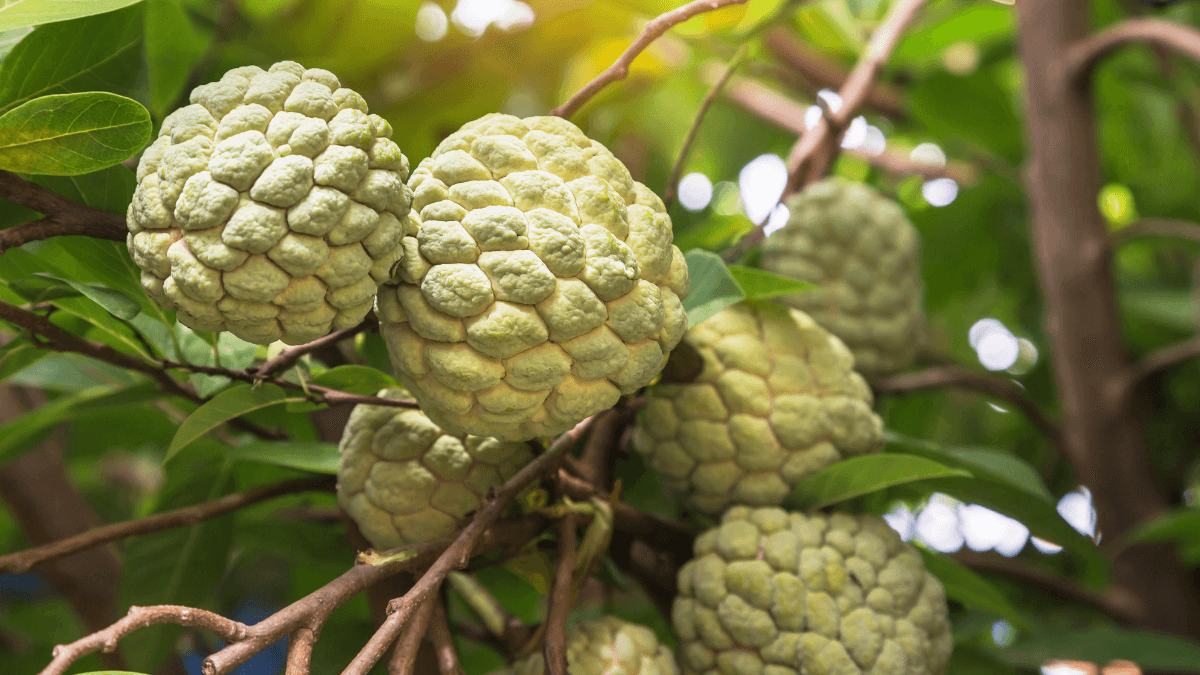
Custard apple is a term used for a collection of fruit-bearing trees and shrubs belonging to the genus Annona. You’ll find these plants primarily in the tropical regions of the Americas, where they are native. They thrive in warm climates.
These plants are cultivated not only for their delicious fruits but also for traditional medicinal uses. The various species of Annona have adapted to different environmental conditions, allowing them to spread across the New World tropics from Central and South America to the Caribbean.
As a tropical fruit, custard apple’s popularity extends beyond its native habitat due to its rich, creamy texture and sweet taste, reminiscent of a blend of banana, pineapple, and peach. This makes the fruit highly sought after in international markets.


The Annona genus includes several species such as A. reticulata, A. cherimola, and A. squamosa, each known for a distinct type of custard apple like the cherimoya or sugar-apple. These species are the ones typically referenced when discussing custard apples.
Your encounter with custard apple might extend to garden cultivation or speciality grocery stores, as there’s a growing interest in tropical fruits for their potential health benefits and exotic flavors.
The Annona trees are generally small to medium in size, making them suitable for backyard orchards in tropical and subtropical regions where conditions allow. If you live in a suitable climate, you might consider adding this fruit tree to your home garden.
Origins and Distribution
Custard apple, known botanically as Annona spp., originates from regions where tropical climates prevail. Your exploration of this fruit’s journey reveals a history rooted in warmth and an expansion that showcases agriculture’s adaptive nature.
Geographical Range
Custard apples are indigenous to the New World tropics, primarily found in areas such as the West Indies and South America. The fruit’s natural range extends across various tropical regions where the climate supports its growth.
The Andes Mountains are notable for being home to Annona cherimola, often at high altitudes.
- Native regions:
- South America
- West Indies
- High-altitude presence:
- Andes Mountains
Cultivation and Spread
Custard apples have been cultivated and naturalized in many tropical regions worldwide, owing to their desirable fruit. Countries like India have incorporated the custard apple into their agricultural practices.
You’ll find the fruit is grown in regions from Ecuador and Peru, reaching across to Florida in the United States. The fruit thrives in areas that provide a warm climate necessary for their successful growth and fruit production.
- Areas of cultivation:
- Tropics globally
- India
- Ecuador
- Peru
- Florida (U.S.)
- Growth conditions:
- Warm climates suitable for tropical plant species
Botanical Characteristics
In exploring the botanical characteristics of the custard apple, you’ll find two primary aspects that define this exotic plant: the tree it grows on and the distinct features of its fruit and flowers.
Tree Description
The custard apple tree, part of the Annonaceae family, possesses an open, irregular crown and is typically semi-evergreen. They range from 8 to 10 meters in height.
The leaves you’ll observe are simple, typically alternate, and have a smooth margin. They are known for their resilience and ability to thrive in tropical climates.
Fruit and Flower Properties
The fruit of the custard apple tree is distinguishable by its fleshy nature. When ripe, it can have a dark brown skin with a quilted appearance.
The fruit also contains reddish yellow, edible pulp.
The flowers, often less noticeable than the fruit, are small. They house several white petals, numerous stamens, and pistils with ovules at the base.
This complex structure is key for the reproduction of these trees and the development of the seeds within the fruit.
Leave a comment