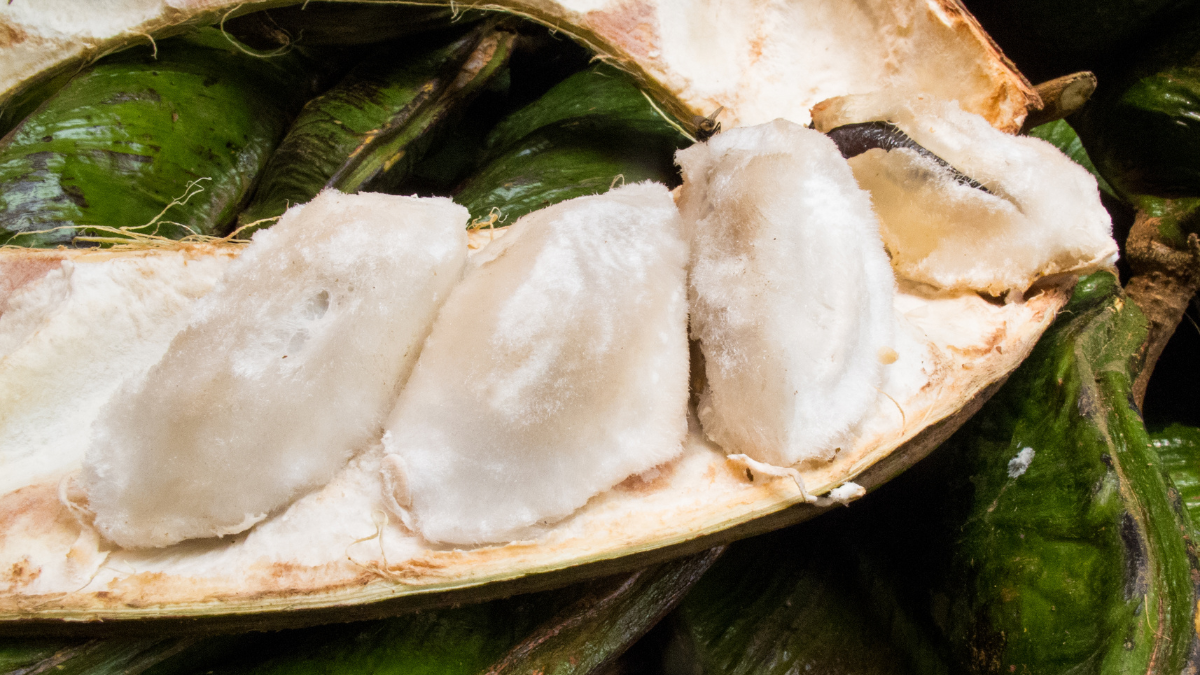
Ice cream beans (Inga edulis) are legumes that grow on the Inga trees in Central and South America. These 60-foot tall trees can produce pods that are over six feet long.
Inside these pods, you will find a sweet and fluffy fruit that tastes like vanilla and cotton candy.
Indigenous people in Peru, Ecuador, and Colombia enjoy eating the ice cream beans in their raw form, and they are a favorite of various wildlife (birds, monkeys, bats) in the region. The Inga trees are also valuable for farmers because they provide timber and shade for other crops.
People have found innovative ways to consume the seeds by roasting them or incorporating them into different desserts, such as chocolate and creamy beverages. Overall, ice cream beans are a delicious and sustainable crop that has a wide range of uses.
Opening and tasting the Ice Cream Bean
The ice cream bean offers a sweet pulp that you might find reminiscent of vanilla ice cream. The texture of it is spongy, and its flavor is a mild perfume with a complexity that some people compare to a hint of cinnamon.
To open the pod:
- Apply gentle pressure along its seam.
- Twist the pod; it will yield to reveal a row of seeds enveloped in fluffy, sweet pulp.
- Be gentle to avoid crushing the soft, cotton-like pulp.
You’ll discover the edible white pulp encasing the seeds as you handle the large pods. While the exterior might not hint at it, the interior promises a uniquely tropical flavor experience often enjoyed raw in its native regions.
Cultivating the ice cream bean requires a tropical setup, as the tree thrives in warm environments and can benefit from nitrogen-fixing bacteria in the soil.





Leave a comment