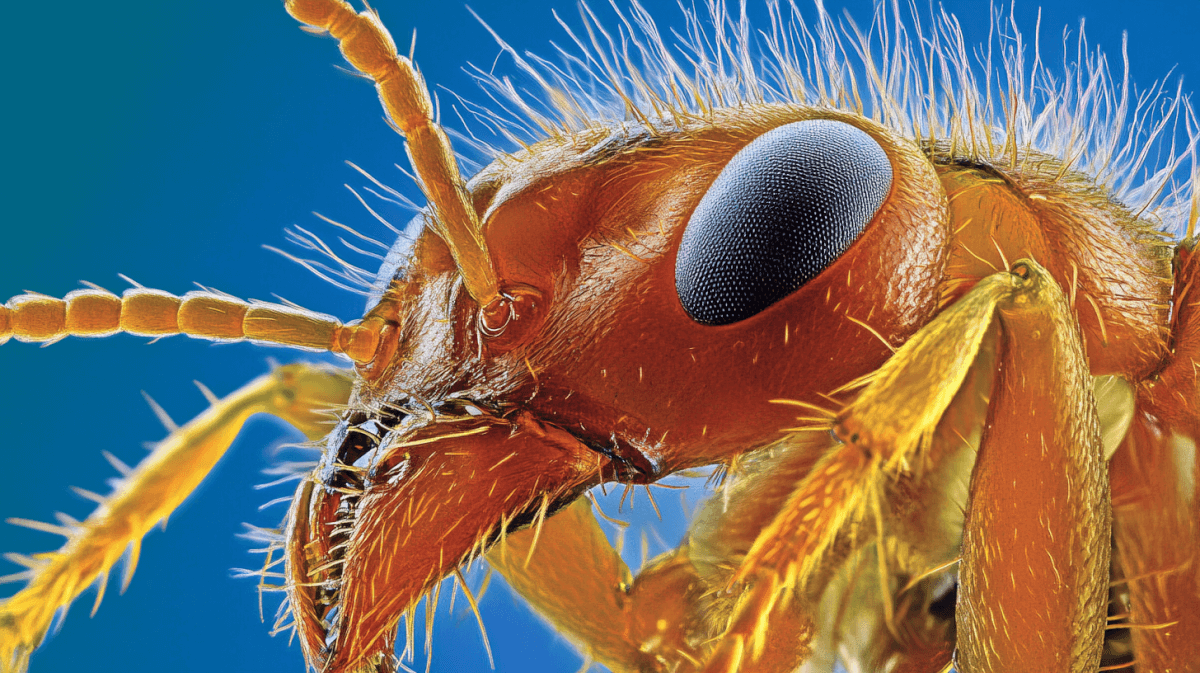
Ants can be easy to overlook. They’re small, persistent, and ever-present in yards and gardens. Yet hidden inside their diminutive bodies is a world of intricate memory and collective insight. From tracking familiar odors to navigating with internal stride counters, ants display abilities that can surprise even the most seasoned scientists.
They might not have the largest brains in the animal kingdom, but what they lack in size, they make up for in organizational genius. In some species, older worker ants teach younger ones well-trodden routes to food, allowing the colony’s knowledge to outlast the workers themselves. As Deborah M. Gordon once explained, “No individual ant remembered anything but, in some sense, the colony did.” Her words highlight how ants transform personal experiences into a broader group memory.

The Hidden Depths of Collective Learning
Research at the University of Freiburg has shown that ants recognize and respond aggressively to old adversaries. In carefully managed encounters, ants quickly displayed heightened hostility toward previous rivals while staying more subdued with newcomers. “We often have the idea that insects function like pre-programmed robots,” said Dr. Volker Nehring, one of the lead researchers, “but our study provides new evidence that ants also learn from their experiences and can hold a grudge.” When ants were prevented from physically fighting their opponents, they couldn’t form that focused memory, suggesting conflict itself, not just a strange scent, is what cements recognition.

Other experiments reveal that desert ants rely on more than chemical signals. Some can effectively count their steps. When scientists artificially lengthened or shortened an ant’s legs, the ant overshot or undershot its nest by a predictable amount, showing that memory steers navigation as much as any external trail of pheromones.
A Tale of Two Brain Hemispheres
In wood ants, memory can be separated across the two sides of the brain. Scientists found that ants remember certain cues for only minutes when processed by one antenna, yet recall them for at least a day when they involve the other. Short-term and long-term memory appear to reside in distinct hemispheres, a setup that helps them store different levels of detail in their small but efficient brains.
They also rely on odor recognition in remarkable ways. Lab tests discovered that ants trained to associate a particular smell with a food reward kept that memory for weeks, especially when the smell was linked to successful foraging. “We were amazed how quickly the ants learned food-associated odors and how long they could remember them,” said Markus Knaden, who researched desert ant memory. This ability helps them navigate places where a single reliable meal can be the difference between survival and starvation.

Meanwhile, older foragers often become more defensive, having learned which neighboring colonies pose the greatest threats. Younger ants absorb these lessons by following their elders or picking up on scent trails left behind. Every time an ant leaves its nest, it’s building—or reinforcing—a part of its colony’s shared knowledge.
That blend of personal recall and communal experience reveals a system that, while tiny, adapts with every encounter. There’s still much to uncover about the details behind these feats, but what’s clear is that ants aren’t just mindless drones governed by instinct alone.

They remember, they learn, and they share. When you see a small ant ambling along the sidewalk, it’s possible it carries inside it the story of yesterday’s conflict, last week’s foraging success, and lessons from rivals long gone.

Leave a comment