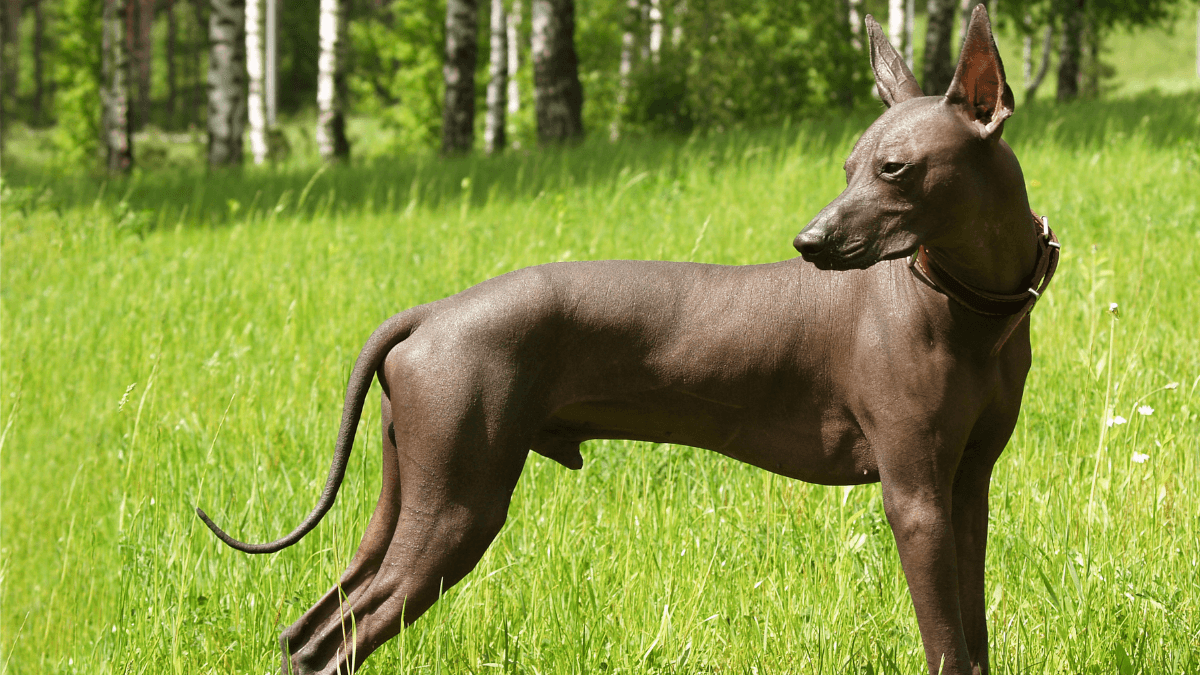
The Xoloitzcuintli, also called the Xolo or Mexican Hairless, is one of the world’s oldest and rarest dog breeds. These dogs come in three sizes: standard, intermediate, and miniature. They also appear in two varieties—hairless and coated.
Known for their calm and loyal nature, Xolos thrive as family pets while maintaining a certain elegance and agility.
The breed’s name might be a mouthful, but their unique appearance makes them unforgettable. Xolos are closely related to other small, ancient breeds like the Chinese Crested and Chihuahua. Their distinctive, hairless bodies are not just for show; historically, they served as warm companions and even believed to have healing properties.
Despite their ancient roots, Xoloitzcuintlis have adapted well to modern living. They are calm and gentle, but they also enjoy playtime and regular exercise. What really sets the Xolo apart is their striking appearance combined with a serene yet playful temperament.
The Origins of the Xoloitzcuintli: A Breed Rooted in Ancient History
The Xoloitzcuintli, often referred to as the Xolo or Mexican Hairless Dog, is one of the oldest and most primitive dog breeds in the world. This ancient breed traces its origins back to over 3,000 years ago in Mexico.
The name “Xoloitzcuintli” comes from the Nahuatl words Xolotl, an Aztec god, and itzcuintli, meaning dog. Xolotl was the god of fire and lightning.
The breed held a special place in Aztec culture. They were seen as sacred dogs and were often associated with the gods. They were believed to possess healing properties and were used in various rituals.
Research suggests that the Xoloitzcuintli may have accompanied the earliest human migrants across the Bering Strait. This highlights its importance in ancient human history.
The Xoloitzcuintli comes in three sizes: standard, intermediate, and miniature. Additionally, the breed can be hairless or coated, with both types born in the same litter.
The Xoloitzcuintli was created in Aztec mythology to guard the living and guide souls to the afterlife. This made the breed highly revered and protected in ancient Mexican society.
Despite its ancient origins, the Xoloitzcuintli faced near extinction by the mid-20th century. However, dedicated efforts in the 1950s helped revive the breed, ensuring its survival and continued prominence today.
Unique Characteristics of the Xoloitzcuintli: Appearance, Temperament, and Care
The Xoloitzcuintli, also known as the Mexican Hairless Dog, comes in three sizes: toy, mini, and standard. The breed can have hairless or coated varieties.
A hairless Xolo has a smooth, tough skin that might have short hair on the head, feet, and tail. The coated Xolo has a short, flat coat. Common skin colors include black, brown, and liver.
The Xolo is an intelligent and sensitive breed. They are usually calm indoors but require daily exercise. They enjoy activities such as walks and playtime in the yard. The breed is known for being alert and protective, making them excellent watchdogs.
Temperament:
- Loyal and affectionate with family but often wary of strangers.
- Tends to be independent and can sometimes show dominant traits.
- Proper training and socialization are essential for good behavior.
- Xolos can be playful and affectionate companions, especially good with children.
Care:
- Skin Care: Hairless Xolos may need regular skin care to prevent acne and dry skin. Applying sunscreen can protect them from sunburn.
- Exercise: Daily walks and playtime are important for their physical and mental health.
- Grooming: Minimal grooming for hairless; coated Xolos require regular brushing.
- Health: Regular check-ups can prevent common health problems.
- Nutrition: A balanced diet supports their overall health and maintains their weight.
Depending on their size and care, Xolos have a lifespan of around 13-18 years. A loving and structured environment ensures they thrive as healthy, happy pets.
The Cultural Significance of Xoloitzcuintli in Mexican Heritage
The Xoloitzcuintli, also known as the Mexican Hairless Dog, has deep roots in Mexican culture.
In ancient Mexican civilizations, such as the Aztecs, the Xoloitzcuintli was a sacred animal. People believed it had spiritual powers and often associated it with guiding souls to the afterlife.
Two of Mexico’s most famous artists, Frida Kahlo and Diego Rivera, often featured Xolos in their paintings, cementing the breed’s cultural importance in modern times.
Breeders today continue to honor this heritage. The Xoloitzcuintli Club of America works alongside the American Kennel Club (AKC) to ensure this rare breed remains protected and respected.
Xolos are not just historical symbols; they are also beloved pets. Reputable breeders emphasize the breed’s cultural background, ensuring that new owners understand the significance of these unique dogs.
The Xolo’s distinct appearance and mystical heritage make them a celebrated part of Mexico’s rich tapestry of history and culture.


Leave a comment