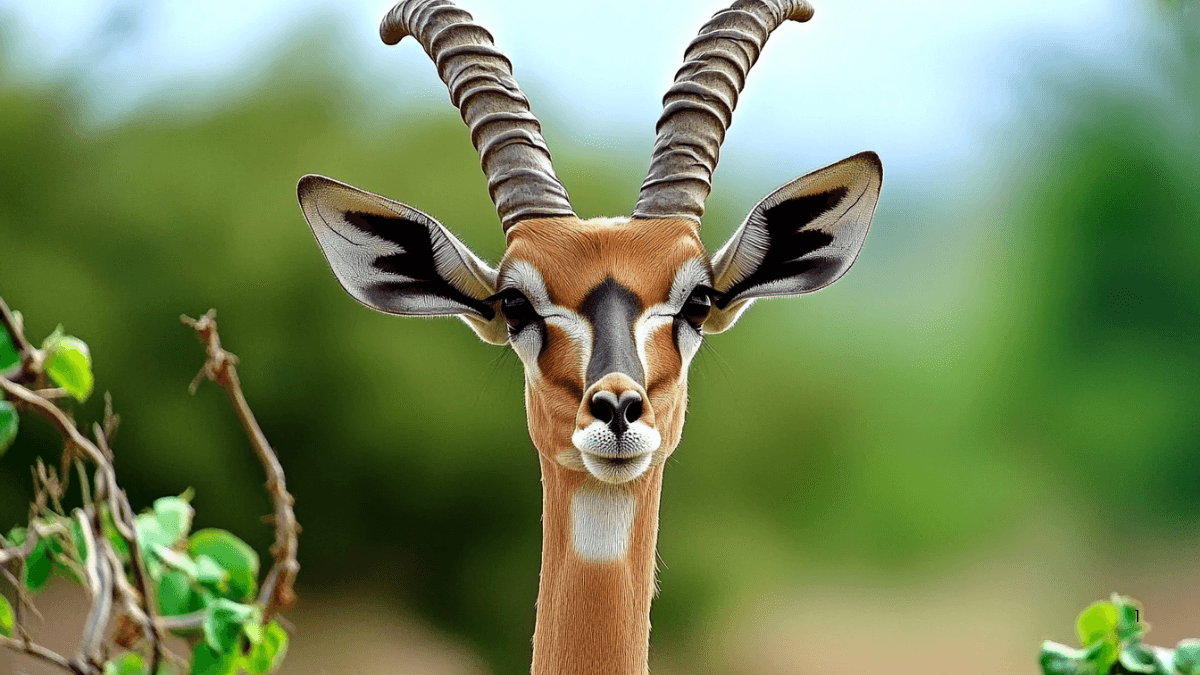
In the dry shrublands of East Africa, the gerenuk, or “giraffe gazelle,” stands out with its distinctive adaptations. Its elongated neck and ability to stand on hind legs allow it to reach high branches, setting it apart from other antelopes.
This graceful forager plays a unique role in the ecosystems of Kenya and Tanzania, shaping the vegetation it depends on. The gerenuk’s quiet elegance and resourcefulness make it a striking example of nature’s ingenuity.
1) Unique Long-Necked Elegance

The gerenuk is known for its long neck, which sets it apart in the animal kingdom. This graceful and functional feature allows the gerenuk to reach vegetation that other animals cannot.
Standing on its hind legs, the gerenuk can graze on leaves and shoots high up in trees, a behavior rarely seen in other antelope species.
Its neck, along with its slender legs and body, creates a striking profile. The gerenuk’s elegant form contributes to its unique beauty in the wild.
Unlike the giraffe, which shares its long-necked characteristic, the gerenuk’s approach to feeding is distinct. The strategy ensures it has access to food in environments that might seem scarce to others.
2) Adaptations for Leaf Feeding

The gerenuk, known as Litocranius walleri, has several unique features that help it feed on leaves. Its long neck and legs allow it to reach higher branches that other animals might not easily access. This adaptation helps it find food that is out of reach for many other browsers.
Gerenuks have a remarkable ability to stand on their hind legs. This bipedal stance enables them to stretch even further for leaves on tall trees. Such a posture is uncommon among similar animals, giving the gerenuk an advantage in feeding habits.
Its digestive system is also adapted to process leaves efficiently. This allows the gerenuk to extract the maximum nutrients from its diet, mainly from leaves. These specialized adaptations make gerenuks thrive in environments where food can be scarce.
Another adaptation is its ability to survive in dry areas with limited water sources. Gerenuks can obtain moisture from the leaves they eat, reducing their need for open water. This makes them well-suited to arid habitats where other animals might struggle to survive.
3) Gender-Based Antler Differences

The gerenuk, known for its long neck and graceful stance, does not actually have antlers. This distinguishes it from many other antelope species where antlers are present primarily in males.
Instead, gerenuks exhibit sexual dimorphism in other ways. Males are generally larger and more robust than females. They also possess thicker necks, which help them display strength during mating rituals.
Though they lack antlers, males have unique physical features like strong horns. These slightly curved horns add to their distinctive appearance. They use them for defense and to establish dominance among other males.
Females, in contrast, do not have horns. This difference aids in quick identification between genders. While males and females share similar body markings and colors, these features clarify their roles in the wild.
This lack of antlers does not limit their ability to thrive. Instead, they have adapted other skills and traits suited to their environment. Their distinctive physical characteristics continue to intrigue wildlife enthusiasts and researchers alike.
4) Unique Gait: The Swaying Walk

The gerenuk, a slender, long-legged antelope, has a remarkable way of moving. Unlike many other animals, it has a unique swaying walk, which helps it conserve energy while traveling.
When a gerenuk walks, its body rocks slightly from side to side. This motion is due to the arrangement of its limbs and joints. The swaying walk is not just for show; it provides stability as the gerenuk maneuvers through its environment.
This unusual gait also aids in balance. The long neck and legs of the gerenuk require this adaptation for efficient movement. As a browser, the gerenuk often stretches to reach leaves and branches, making stability crucial.
This way of walking sets the gerenuk apart from many other animals in the wild. Observing this graceful creature can be captivating, showcasing the adaptations that make it successful in its habitat.
5) Habitat: Arid Regions Expert

The gerenuk is highly adapted to life in arid and semi-arid regions. These habitats are known for their dry conditions, sparse vegetation, and extreme temperatures. Yet, the gerenuk thrives in these environments, showing its exceptional ability to survive where many other animals might struggle.
Their long necks and legs allow them to reach higher branches and leaves that other herbivores can’t access. This unique browsing technique helps them find food in areas with limited vegetation and often out of reach.
The gerenuk’s ability to go without drinking water and get moisture from the plants they eat also aids their survival. This adaptation is crucial in arid habitats where water sources are scarce.
In the ecosystems they inhabit, gerenuks coexist with other animals like elands and kudus. They often thrive in brushy areas and avoid competition by feeding on vegetation layers different from other species. This specialization supports their role in these delicate ecosystems.
Leave a comment