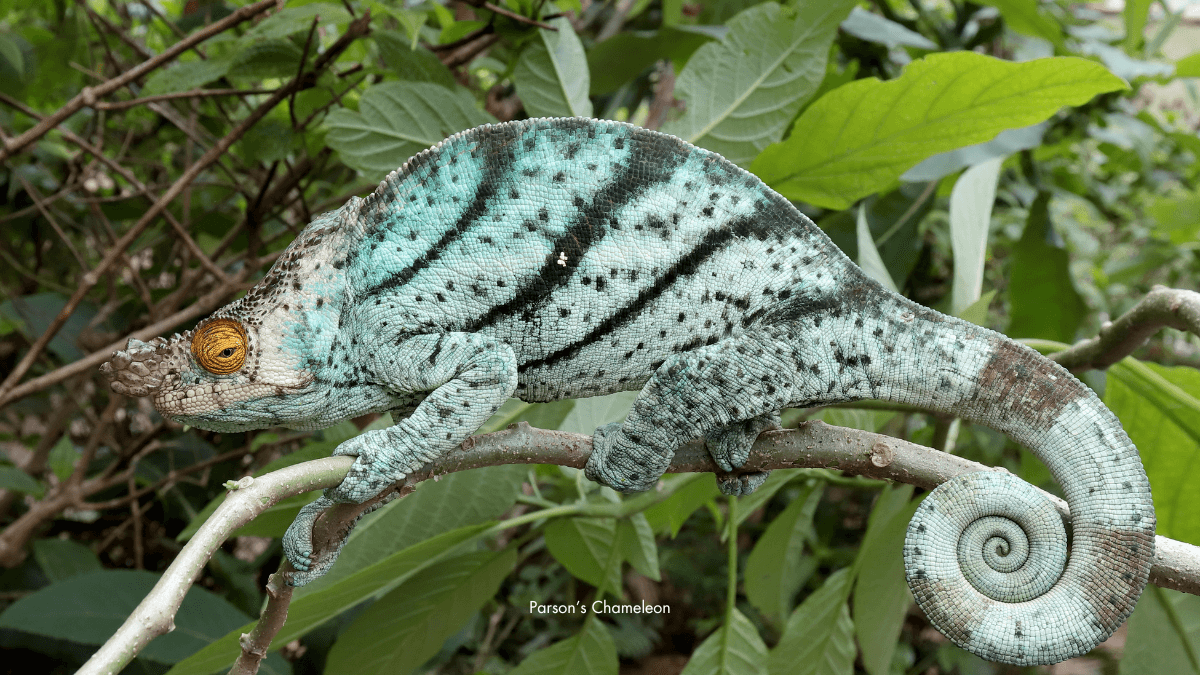
A gentle giant perched among the branches in the mist-laden rainforests of eastern Madagascar. The Parson’s chameleon, known scientifically as Calumma parsonii, is far from the stereotypical tiny tree-dweller.
Its imposing silhouette, which can stretch to nearly 27 inches, has earned it a reputation as the biggest chameleon in the world. Few forget this sight.
With their robust frames and distinctive head casques, males sometimes reach the size of a small cat. Females are smaller yet no less fascinating. Their powerful limbs grip branches with surprising force, and their turreted eyes move independently, surveying their surroundings in a slow, hypnotic dance.

“The Parson’s chameleon is listed on CITES Appendix II, meaning that trade in this species is regulated,” wrote Christian Boix in Africa Geographic. That cautionary note reflects how sought-after these chameleons are, both for their striking appearance and for collectors’ desires.
Sadly, they face threats from habitat loss, driven by slash-and-burn agriculture, leading the IUCN to classify them as Near Threatened.
A creature of notable size


While other chameleons might dazzle with rapid color changes or intricate head crests, Parson’s chameleons stand out simply by being large. Their steady movements can seem almost meditative.
Watching them for hours as they navigate branches with deliberate steps is easy. Their diet can include insects, small birds, and even some vegetation. “They have been known to also eat vegetation such as flowers and fruit,” says Boix, underscoring their omnivorous tendencies.
In the wild, they’re elusive. They favor humid, old-growth forests and are adept at blending into dappled light. If you’re lucky, you might spot one extending its exceptionally long tongue to snatch an unsuspecting cricket.
Speed is not their forte on foot, but their tongue strike is lightning-fast, reminding onlookers that even the calmest creatures can surprise you.
Years of quiet observation

One of the most intriguing aspects of Parson’s chameleons is their long lifespan. Many chameleon species live only a handful of years, but these animals can sometimes surpass a decade or more in human care.
Reports have even suggested they might reach or exceed 20 years when conditions are ideal. That means keeping one is a serious commitment, requiring spacious enclosures, carefully maintained humidity levels, and a varied diet supplemented with vitamins. It’s not unusual for breeders to mention waiting close to two years for eggs to hatch, which is a remarkable gestation period compared to other reptiles.
Those who study Parson’s chameleons often mention their docile temperaments. Although they can display territorial behavior, especially among males, their usual response to disturbance is a measured glare or a calculated retreat into thick foliage. It starkly contrasts smaller chameleons that sometimes react with a flurry of motion or color changes.
Observing a healthy Parson’s in its forest home offers a glimpse of primal Madagascar, a place of towering trees and hidden wonders. With every careful step, the chameleon embodies the slow heartbeat of an ancient ecosystem. It’s a reminder that strength doesn’t always come from speed, and that subtlety can be just as captivating as flamboyant displays.
Conservationists remain hopeful. Select breeding initiatives and stricter regulations on export could help safeguard populations in their native habitat. Responsible ecotourism also highlights the delicate balance of these forests, showing why these chameleons deserve protection.
Leave a comment