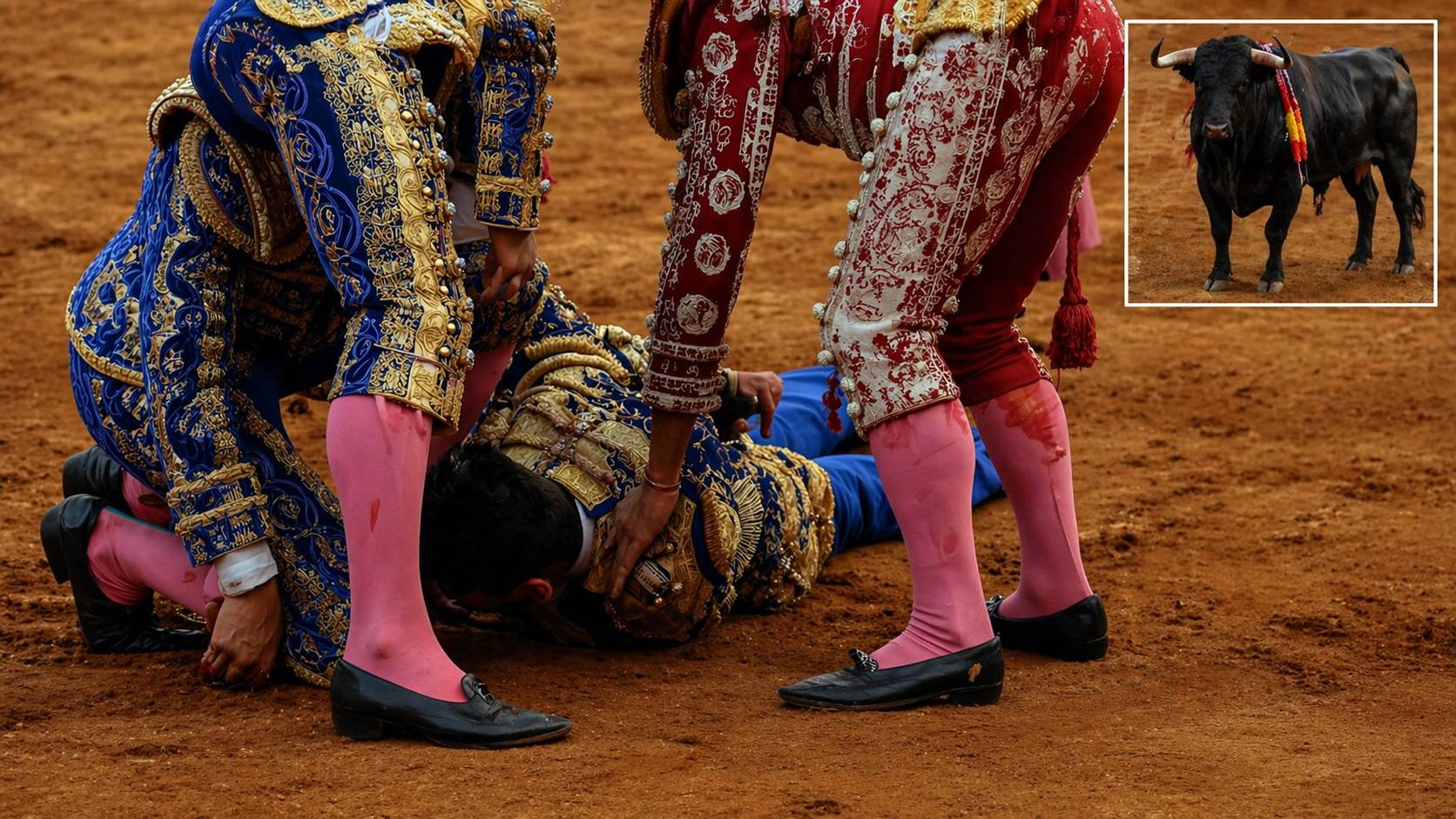
In the bullring, danger is part of the ritual. It sits beneath the music, the costumes, the applause, and the carefully measured steps between man and animal.
For Morante de la Puebla, one of Spain’s best-known matadors, that danger became immediate during a bullfight at Seville’s Maestranza arena. Reports say the 46-year-old was gored during the performance, suffering a severe rectal injury that required extensive surgery and left him struggling to sleep or eat during recovery.
The injury happened after Morante had already faced several bulls. During the encounter with the fourth, the bull charged while his back was exposed, turning a choreographed public spectacle into an emergency.
Other matadors rushed in. Morante was carried from the arena and later treated in a hospital, where doctors repaired damage to the rectal wall and sphincter. The reported wound measured about four inches, or 10 centimeters, with medical accounts describing partial sphincter damage and rectal perforation.
The injury behind the headline
In plain language, the danger wasn’t only the visible wound. Horn injuries can move beneath the skin in ways that aren’t obvious from the outside. They can tear muscle, damage organs, introduce contamination, and create a serious infection risk.
That helps explain why recovery can be so controlled. Morante was reportedly placed on strict fasting and intravenous nutrition while doctors monitored healing, a difficult step meant to reduce complications after such a sensitive repair.
The case also shows why bullring injuries occupy a strange place between tradition and trauma medicine. Bullfighting is staged as a test of nerve, timing, and control. But the body does not experience it as symbolism when a horn lands.
Medical literature makes clear that these injuries are not isolated curiosities. A 2021 Scientific Reports study reviewed 1,239 patients with bull horn injuries in Spain, Portugal, and southern France between January 2012 and November 2019. The researchers found an average accident rate of 9.13% and a mortality rate of 0.48%, with goring listed as the most frequent trauma mechanism.
Those numbers help explain the importance of medical teams inside bullrings. The same study identified vascular injury, head trauma, fractures, goring, and the age of the animal as factors linked to injury severity. It also emphasized the need for experienced surgical and anesthesia care at events where minutes can matter.
For Morante, the next act is not in the arena. It is recovery.
The headline is shocking, but what follows is quieter and more demanding: pain control, infection prevention, nutrition, rest, and the slow work of trusting the body again. In a profession built around composure, the aftermath may be the hardest performance of all.
Leave a comment