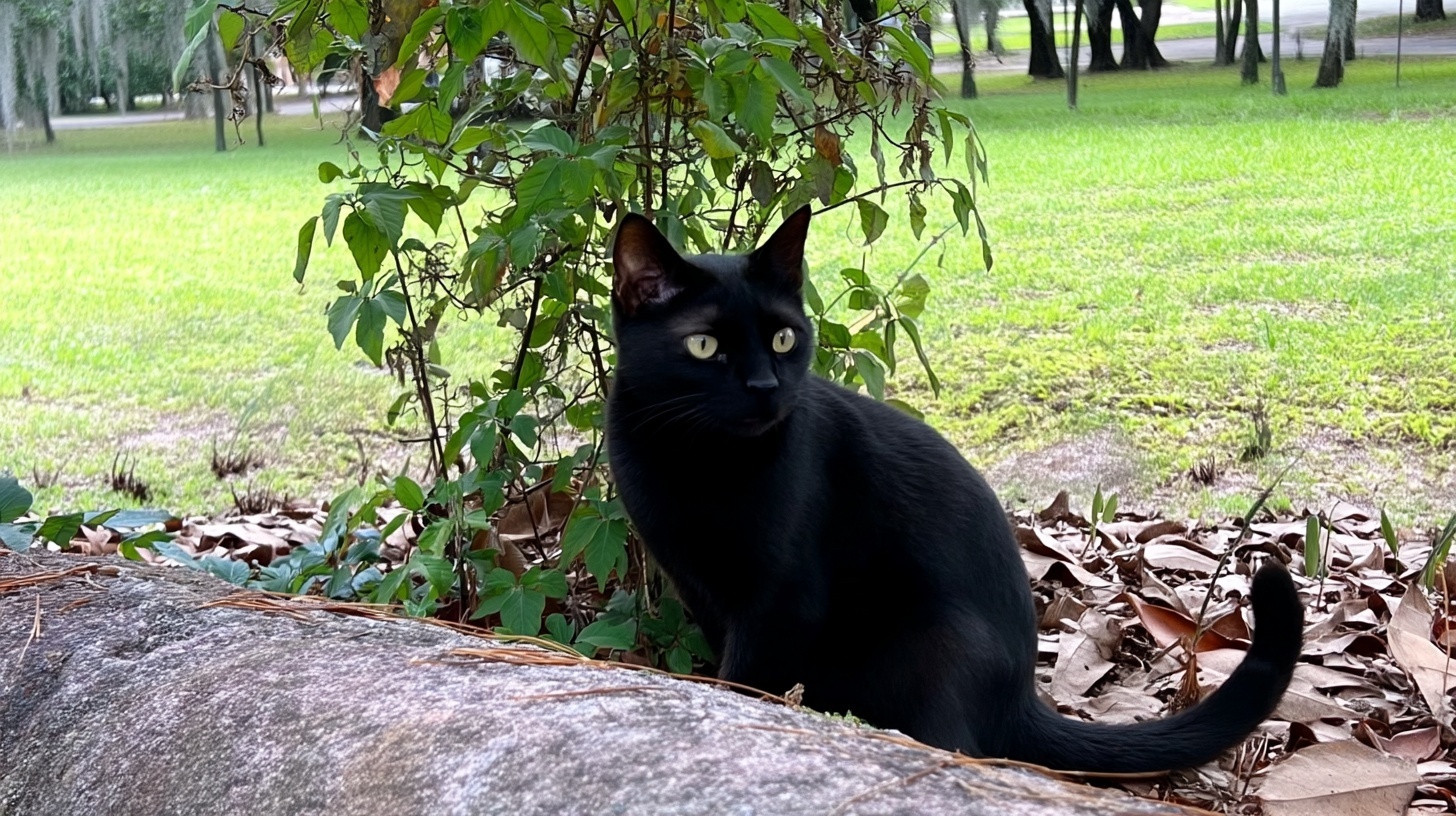
When a black cat showed up with a dead shrew in its mouth, it seemed like any other day in the Gainesville backyard of virologist John Lednicky. But Pepper isn’t just any cat, and that wasn’t just any shrew.
The animal turned out to be infected with a virus scientists had never seen before. Lednicky, a researcher at the University of Florida’s Emerging Pathogens Institute, brought the tiny mammal into his lab and discovered a brand-new strain of orthoreovirus—a segmented, double-stranded RNA virus typically found in mammals. The find was quickly confirmed and published under the name Gainesville shrew mammalian orthoreovirus type 3 strain UF-1.
It was the second time Pepper helped science uncover something hidden in plain sight.
In 2024, he dropped off a dead cotton mouse that led Lednicky’s team to identify the first jeilongvirus ever discovered in the United States—a member of the paramyxovirus family that infects rodents and, in lab studies, replicated easily in human lung cells.
Now the cat is back, and the implications go far beyond one rogue virus.

Wildlife, surveillance, and the cat at the crossroads
Orthoreoviruses were once dismissed as harmless “orphan” viruses because they weren’t associated with any particular disease. But that’s changing. Rare human cases have been tied to meningitis, encephalitis, and gastrointestinal distress—especially in children. In animals, these viruses have been found in farmed mink, deer, and even lions, often with identical or recombined gene segments.
These are viruses with range. And in ecosystems like Florida—where wild rodents, suburban homes, and backyard pets interact daily—the opportunity for spillover is very real.
What makes Pepper’s story remarkable is not just that he caught a shrew with a mystery virus. It’s that his owner had the tools and training to investigate it.
Lednicky’s approach is part of a growing One Health movement that sees human, animal, and environmental health as interconnected. Wildlife can be reservoirs. Pets can be sentinels. And sometimes the viruses themselves are neither new nor rare—just undiscovered.
The Gainesville orthoreovirus showed up not because it caused an outbreak, but because someone paid attention.
It’s also a reminder that genomic surveillance—especially when extended to animals—can help us catch viruses early. Lednicky’s team deposited the complete genome in public databases. Other researchers can now test for it, or track it if it shows up elsewhere.
Pepper, meanwhile, remains in good health. As Lednicky notes, the cat never eats the spleen or intestines—organs that often carry the highest viral loads. Instinct? Maybe. Luck? Probably.
But science doesn’t need many lucky breaks. Just the right one at the right time.
The bigger picture

There are millions of viruses circulating in the animal kingdom. Most never make the leap to humans. But the ones that do—like SARS, Nipah, or Hendra—can change everything.
Pepper’s story is a microcosm of the larger challenge: How do we detect and understand viruses that aren’t on our radar yet?
The answer may lie in unexpected places. A backyard. A lab. Or a cat named Pepper who, twice now, has dragged the invisible into view.
And if a housecat can help us get ahead of the next threat, maybe we’re not as helpless as we think.

Leave a comment