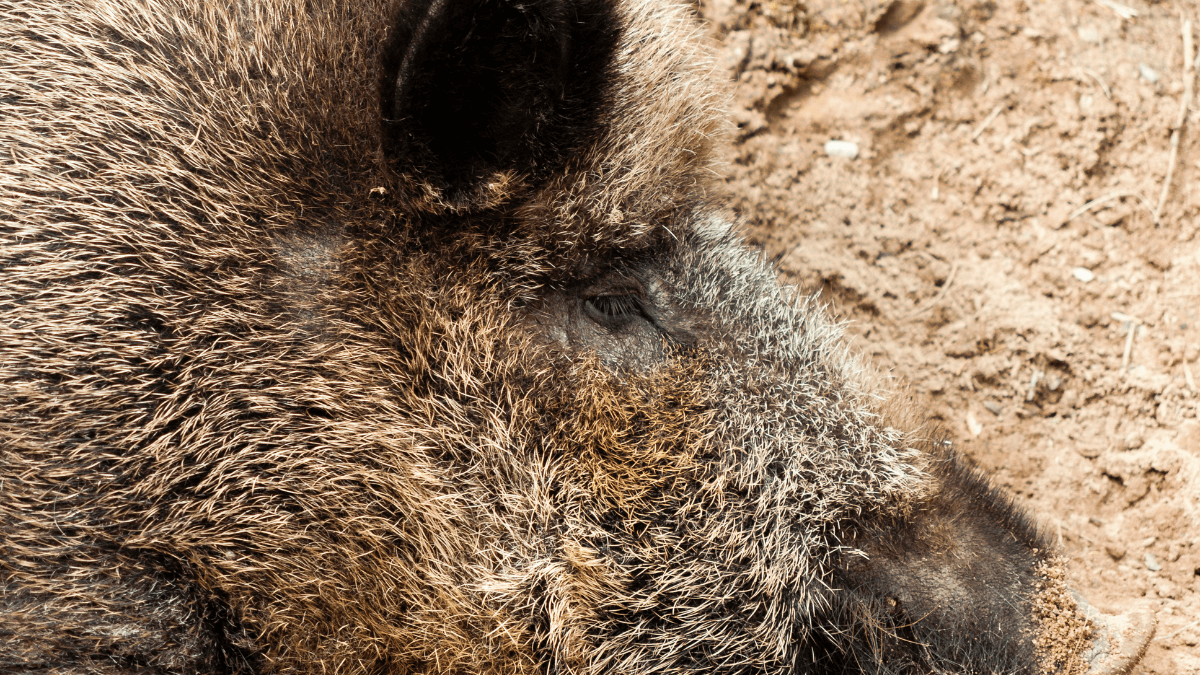
In the frozen landscapes of North America’s heartland, a new threat emerges that reads like science fiction: hybrid super pigs that combine the cunning of wild boars with the size and adaptability of domestic swine. These formidable creatures, born from a failed Canadian farming experiment, are poised to reshape ecosystems across the U.S. northern border.
Standing as tall as white-tailed deer and weighing up to 300 pounds, these bristled behemoths represent one of North America’s most significant invasive species challenges. Their remarkable intelligence and ability to survive temperatures as low as -40°F (-40°C) has created what wildlife experts call a “perfect ecological storm.”

The Rise of Super Pigs: A Growing Threat to America’s Heartland
Origins of an Invasive Giant
In the quiet farmlands of Canada during the 1980s, a decision was made that would later spawn one of North America’s most formidable invasive species. Farmers introduced Eurasian wild boars alongside domestic swine, creating what would become known as “super pigs.” When the market collapsed in 2001, these hybrid creatures were released into the wild, where nature’s laboratory began its work.
These highly intelligent super pigs, a testament to unintended consequences, emerged as evolutionary marvels. The hybridization between wild boars and domestic swine created creatures with remarkable survival capabilities. Like living tanks wrapped in bristled armor, they developed thick fur and sophisticated behavioral adaptations that allow them to endure the harshest Canadian winters.

A Growing Ecological Crisis
These invasive swine have carved out territories in diverse landscapes along the northern U.S. border. They show particular affinity for wetlands and deciduous forests, often establishing themselves near significant water bodies like Montana’s Fort Peck Lake and North Dakota’s Devils Lake. Their presence transforms these ecosystems into staging grounds for further expansion.
The dietary range of these super pigs from Canada is staggering. From tender shoots of native plants to helpless ground-nesting birds, nothing seems beyond their appetite. Even adult whitetail deer aren’t safe from these voracious feeders. Like natural bulldozers, their rooting behavior leaves agricultural fields looking like miniature war zones.
Environmental Devastation
The environmental toll of this most invasive animal extends far beyond visible destruction. As they wallow and root near waterways, their activities contaminate streams and rivers with fecal matter, creating a cascade of water quality issues. Native amphibians, including vulnerable frog and salamander populations, face unprecedented pressure from these newcomers.
In what amounts to an ecological siege, ground-nesting birds watch their numbers dwindle as super pigs raid their nests. The delicate balance of local ecosystems, shaped over millennia, faces disruption from these intelligent and adaptable invaders.

Agricultural Nightmare
The threat looms large for American farmers. These feral swine cause approximately $2.5 billion in crop damage annually across the United States. Their systematic destruction of cornfields and other agricultural plots is a testament to their devastating efficiency. Beyond crops, they terrorize livestock and damage essential farming infrastructure, creating a multi-faceted crisis for agrarian communities.
Health Concerns and Control Measures
Adding to the situation’s complexity, super pigs serve as vectors for various parasites and diseases that can affect both animals and humans. This health risk has prompted authorities to employ sophisticated tracking methods, including GPS collars and aerial surveillance using drones and aircraft.
Control efforts have evolved into a high-tech battle against these clever adversaries. Ground traps and helicopter-mounted net guns represent the front lines of defense, while crowdsourced tracking programs enlist public support in monitoring their movements. Several states have implemented strict bans on raising and transporting wild pigs, recognizing the gravity of the threat.

The Path Forward
Wildlife management experts emphasize that controlling these super pigs requires immediate, aggressive action. Their remarkable reproductive rates—sows can produce multiple litters per year—combined with their adaptability make traditional control methods insufficient. Long-term strategies now focus on limiting habitat access through strategic crop selection and enhanced fencing systems. Still, the battle against these formidable invaders continues to challenge even the most experienced wildlife managers.
Leave a comment