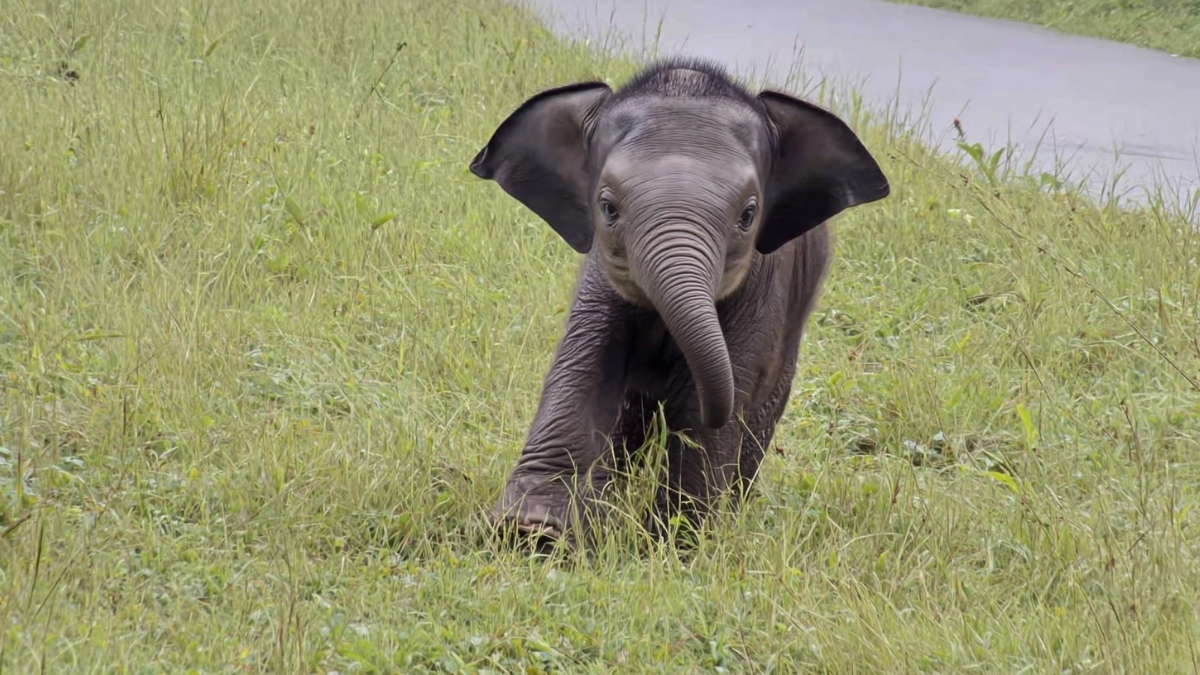
Earlier this month in Assam, India, a wild elephant calf was separated from its herd near Borjuri village during a routine forest patrol. The eight-week-old, visibly distressed, ran toward a patrolling jeep and approached humans, seemingly asking for help.
Locals alerted the Kaziranga Forest Department and the Wildlife Trust of India (WTI), launching a swift rescue effort. Nicknamed “Chotu,” the calf was healthy but lost.
#Heartwarmingreunion
— Webdunia English (@WDEng_Portal) July 7, 2025
A new born elephant calf got separated from mother in Kaziranga, Assam.
The calf was rescued and applied mother’s dung to suppress human smell.
Finally the mother accepted the rescued calf and took away in jungle.
Source: X/Susanta Nanda IFS (Retd) pic.twitter.com/iaahNOW90Z
Rescuers traced the herd, transported the calf along their trail, and used a clever trick: rubbing his mother’s dung on his body to mask human scent and ensure the mother would recognize him. Once released near the forest’s edge, the team watched as the mother emerged, greeted her calf, and walked back into the woods with him.
The moment was captured on video. Forest staff softly encouraged the baby with “Haan, jaa, jaa, jaa,” Hindi for “Go on.”
Chotu responded with a small trumpet as if to say thank you. The footage quickly went viral.
Elephants are known for their tight family bonds and intelligence. Calves depend on their mothers for food, protection, and social learning.
Separation at such a young age is often fatal. This reunion, made possible by knowledge of elephant behavior and olfactory cues, showed how deeply elephants communicate through scent and sound.
Chotu’s case also highlights the growing challenge of human-elephant conflict in Assam. With herds frequently crossing into villages, accidents and crop damage are common.
Between 2000 and 2023, over 1,400 people and 1,200 elephants died in such conflicts. In this case, villagers helped steer the herd away peacefully, though the baby was unintentionally left behind.
To improve coexistence, the state launched Gajah Mitra, a volunteer network trained to guide elephants away from danger zones. The Wildlife Trust of India has also rehabilitated thousands of animals and led many similar reunions.
The rescue stirred global reactions and praise for its compassion. Many viewers described the scene as proof that “nature has its own language” and praised how “the forest officials spoke it with heart.”
Leave a comment