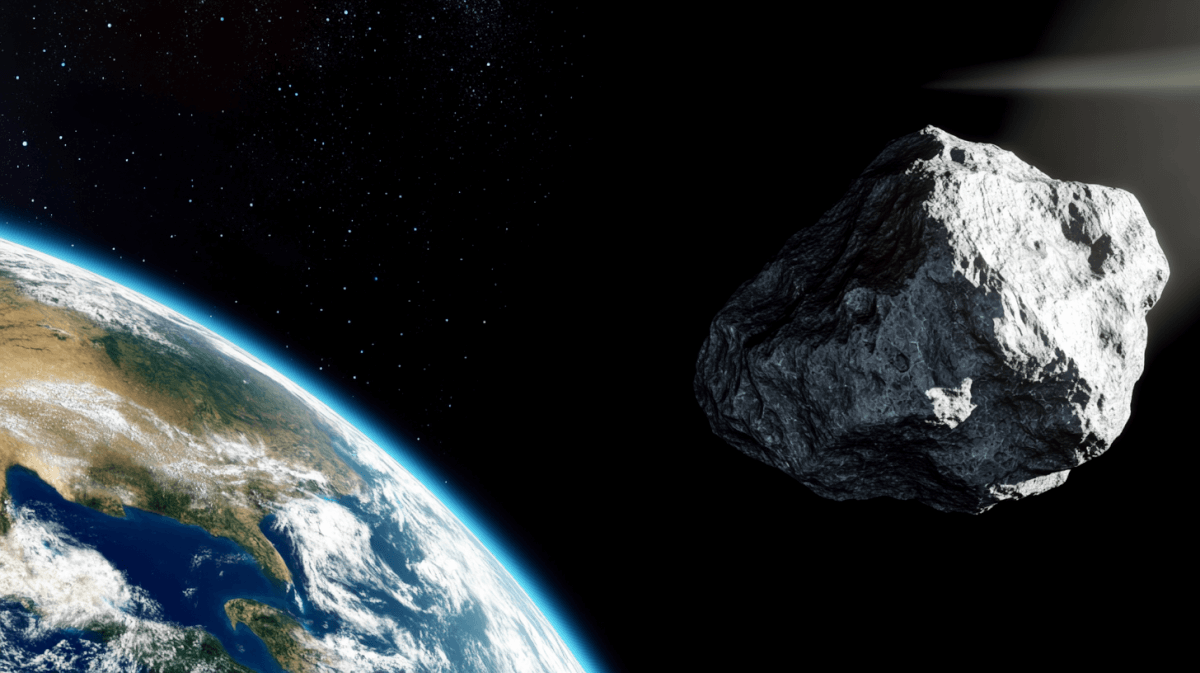
Only a few days after Christmas 2024, astronomers identified an asteroid that could test humanity’s ability to protect itself.
Known as 2024 YR4, this object is estimated to measure between 130 and 330 feet in length, making it potentially large enough to inflict severe local damage if it ever struck land. Its projected approach date is December 22, 2032, and while the current probability of impact hovers around one percent, some governments and space agencies aren’t taking any chances.
They’ve started coordinating a global defense strategy that involves everything from detailed orbital tracking to potential redirection missions. “The international systems we’re putting in place… are working as intended,” said Andy Rivkin of Johns Hopkins Applied Physics Laboratory. Experts note that because 2024 YR4 was discovered years before its possible close pass, there’s ample time to gather data, refine forecasts, and, if necessary, mount a response.
An Early Wake-Up Call
Many scientists believe that warnings about near-Earth asteroids should never be dismissed. Historically, objects much larger than 2024 YR4 have collided with our planet and reshaped entire ecosystems.
Even a smaller asteroid, however, could devastate a dense urban area or vulnerable coastal region. David Rankin, an astronomer at the University of Arizona, acknowledges that the initial numbers can sound worrisome, but he also urges the public to keep things in perspective. “It’s not a number you want to ignore, but it’s not a number you need to lose sleep over,” he said about the estimated impact probability.
Yet those who monitor such events stress that a coordinated defense system remains a necessity, not a luxury. This vigilance includes advanced warning networks and partnerships between space agencies, military operations, and emergency organizations worldwide. Although the thought of redirecting an asteroid once seemed confined to science fiction, it’s gradually becoming an essential component of planetary safety.
What the Experts Are Saying
NASA rates 2024 YR4 at Level 3 on the Torino Scale, a classification suggesting that officials and the general public pay attention if the potential encounter is within the next decade. While that might sound alarming, Tony Dunn, an astronomer closely tracking this space rock, has emphasized that key details about 2024 YR4’s size remain uncertain. “It is thought to be 40 to 100 meters wide,” he said, noting that experts need more observations to refine these estimates.
Paul Chodas, director of NASA’s Center for Near Earth Object Studies, shares a balanced perspective. “We are not worried at all, because of this 99 percent chance it will miss,” he said. “But it deserves attention.” He cautions that the asteroid’s risk assessment could shift with each new bit of data. If older sky surveys confirm a slightly altered path, that one-percent figure might either increase or drop toward zero.
Despite the small odds, the very act of coordinating a global response points to growing confidence in planetary defense tools. Satellites and ground-based observatories worldwide will keep tabs on 2024 YR4, ensuring that any sudden changes in its trajectory trigger immediate follow-up. Researchers hope that further observations will lower the impact probability, leaving 2024 YR4 as another near miss in Earth’s long history of cosmic encounters.
For now, most experts say there’s no cause for panic. “No, absolutely not,” David Rankin remarked, when asked if the general public should be alarmed. His stance reflects a reassuring message that, while large asteroids can pose real threats, diligent monitoring and swift international collaboration remain our best defense.
If you’re curious about the underlying science behind near-Earth objects and the steps humanity is taking to prevent a potential impact, these books offer a deeper look into asteroid detection, planetary defense, and the long history of cosmic collisions.
Leave a comment