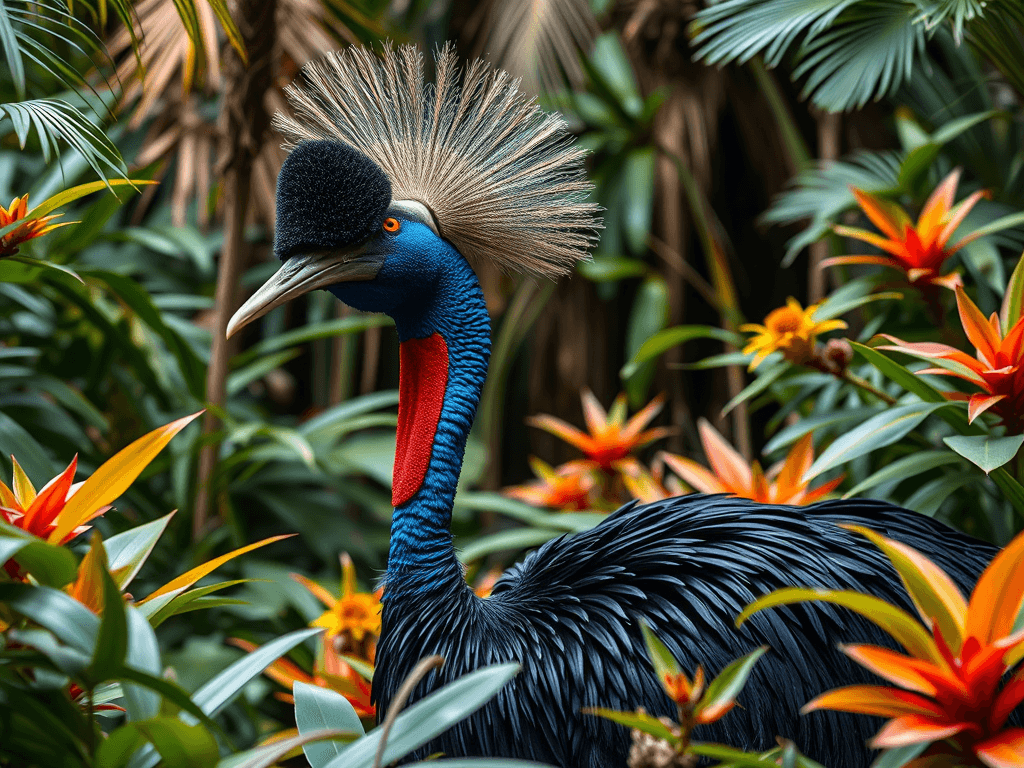
The cassowary is one of the most intriguing and mysterious birds on the planet. Found largely in the rainforests of Australia and New Guinea, this large, flightless bird is known for its striking appearance and significant role in the ecosystem. Understanding what makes cassowaries so unique offers insight into both their behavior and the challenges they face in the wild.

Often resembling ostriches or emus in their stature, cassowaries have captivated the attention of zoologists and bird enthusiasts alike. Their vibrant features and elusive nature make them compelling subjects for study, prompting further exploration into their habits and habitats. This article will uncover some of the most fascinating aspects of these unusual creatures.
1) The cassowary can run up to 31 miles per hour
The cassowary is an impressive runner. This large, flightless bird can achieve speeds of up to 31 miles per hour, making it one of the fastest-running birds in the world.
Cassowaries use their strong legs to move swiftly through their forest habitats. These birds rely on their running ability to escape predators and navigate through dense underbrush. They have a unique adaptation that aids their speed.
Despite their heavy build, cassowaries are quite agile. Their powerful legs enable them to make quick turns and even leap into the air if needed, helping them move efficiently in their environment.
Running fast is not just a method of escape for the cassowary. It also helps them quickly reach food sources. They roam their territories in search of fallen fruits, which are a major part of their diet.
2) Cassowaries are critical to rainforest ecosystems
Cassowaries play an important role in maintaining the health of rainforest ecosystems. These large, flightless birds are known for their ability to disperse seeds over great distances. As they eat fruits, seeds pass through their systems and are deposited in new locations. This helps plants grow in different areas of the rainforest.
In regions like Papua New Guinea, cassowaries contribute to the diversity of tropical plants. By moving seeds to new areas, they facilitate plant reproduction and growth. This process is crucial for the regeneration of the forest, ensuring that various plant species have the opportunity to thrive.
By spreading seeds, cassowaries help maintain the delicate balance of rainforest ecosystems. Their actions support a wide range of plant and animal species. Without them, many plants would struggle to reproduce and spread, leading to less biodiversity in the rainforest environment.
Cassowaries also help in creating gaps in the forest canopy. These gaps allow sunlight to reach the forest floor, promoting the growth of different plant species. This diversity of plants supports various animal species, contributing to a vibrant and balanced ecosystem.
3) This bird has a helmet-like casque on its head
The cassowary is known for its distinctive helmet-like casque on its head. This structure is made of a keratinous material, the same substance found in human nails and hair. The casque is tough and can vary in size and shape among different cassowaries.
Some scientists believe the casque helps the bird move through dense forest by pushing aside vines and branches. Others suggest it may play a role in attracting mates or even as a sign of health and age.
The casque may also be used for sound resonance. Cassowaries make deep, booming calls that travel long distances in the rainforest. This feature could help amplify these sounds, allowing the bird to communicate over large areas.
The exact purpose of the casque is still a topic of research. Many theories exist, but no single explanation has been confirmed. What’s clear is that the casque is a unique and fascinating feature of the cassowary’s anatomy.
4) Cassowaries are known for their striking blue skin

Cassowaries, large flightless birds native to the tropical forests of New Guinea, nearby islands, and northern Australia, have a distinctive appearance. One of the most notable features is their striking blue skin, found on their heads and necks.
This vivid blue hue is due to a combination of structural coloration and natural pigments. The color helps them stand out amongst the dense greenery of their rainforest habitats. It can also play a role in communication, helping cassowaries identify and interact with each other.
In addition to blue skin, cassowaries sport a cask, or casque, on their heads. This adds to their unique look and further distinguishes them from other large birds. The vibrant skin and dramatic casque make cassowaries a truly remarkable sight in their natural environment.
These features contribute to their reputation as elusive and intriguing creatures. Although cassowaries are known for being hard to spot, their bright blue skin makes them unforgettable once encountered.
5) The double-wattled cassowary is the most well-known species
The double-wattled cassowary, also known as the southern cassowary, is the most recognized species of cassowary. It stands out due to its striking appearance and unique behavior. Its name refers to the two fleshy wattles hanging from its neck.
This species is primarily found in the tropical rainforests of New Guinea, nearby islands, and northern Australia. Its bright blue and black feathers, along with its helmet-like casques, make it particularly distinctive. The cassowary’s vivid colors help it blend into dense forest environments.
Cassowaries are flightless birds, relying on their strong legs to move swiftly through the forest underbrush. They are known for their powerful legs and sharp claws, which they use for defense if threatened. Despite their intimidating appearance, they play a vital role in their ecosystem.
The double-wattled cassowary is a key seed disperser, helping to maintain the health of rainforest environments. By consuming fruit and excreting seeds far from the parent tree, it ensures the growth of diverse plant species, making it essential to the ecological balance of its habitats.
6) They have incredibly powerful legs and sharp claws

Cassowaries are known for their remarkable leg strength. Each leg is equipped with muscles that allow these birds to run swiftly through dense forests. Despite being flightless, their legs make them a formidable creature in the animal kingdom.
Their legs end in three toes, each equipped with strong, sharp claws. The inner toe’s claw is especially notable, resembling a dagger in both length and sharpness. This claw is vital for self-defense and can inflict serious injuries when used in an attack.
Besides being powerful and sharp, the cassowary’s claws and legs play a crucial role in their everyday life. They use them for foraging, allowing them to dig through the forest floor in search of food. These features contribute to their survival, helping them thrive in their habitats.
The strength and sharpness of a cassowary’s legs and claws highlight the bird’s unique adaptation to its environment. Their impressive physical features help them protect themselves, find food, and navigate through the rainforest.
7) Cassowaries are native to the tropical forests of New Guinea
Cassowaries are large, flightless birds found in the lush tropical forests of New Guinea. With their striking appearance, including a prominent casque on their head and vibrant blue and black plumage, they are a visual icon of the region’s wildlife.
These birds play a crucial role in the New Guinea ecosystem as seed dispersers. By consuming various fruits and spreading the seeds through their droppings, cassowaries help maintain the biodiversity of the forest.
The rugged and dense forests of New Guinea provide an ideal habitat for cassowaries. These environments offer the abundant food and shelter they need. While they are difficult to spot, their presence is vital to the health of these tropical ecosystems.
8) These birds are capable swimmers
Cassowaries are among the few flightless birds known for their ability to swim. Despite their bulky appearance, these birds are quite adept in the water. They use their powerful legs to propel themselves through rivers and other bodies of water.
Their swimming skills are useful for crossing obstacles in their natural rainforest habitats. Cassowaries navigate water to reach food sources or escape predators. This skill also aids in their dispersal across various forest areas.
In addition to swimming, their natural habitat includes rainforests, where water is abundant. They have adapted well to their environment, showing unique versatility that aids their survival. This ability is just one of many features that make cassowaries fascinating creatures.
9) Their diet includes fruits, small animals, and plants
Cassowaries are intriguing creatures with a varied diet. They primarily eat fruits, often swallowing them whole. This fruit-eating habit makes them vital seed dispersers in their rainforest habitat.
Besides fruits, cassowaries also consume small animals. Their diet may include insects, small mammals, and birds.
Plants are another important part of their diet. They often munch on shoots and grass, supplementing their nutritional intake. This variety helps them thrive in diverse environments.
10) They are considered the world’s most dangerous bird
The cassowary is often called the world’s most dangerous bird due to its powerful legs and sharp claws. These large birds, native to the tropical forests of New Guinea, nearby islands, and Australia, can kick with great force. Their claws can be up to 5 inches long and can cause serious injuries.
Cassowaries have a unique defensive behavior. When they feel threatened or cornered, they can jump almost five feet in the air to deliver a swift kick. This makes them particularly dangerous to humans who approach too closely.
Encounters with cassowaries are rare because they are naturally shy and prefer to avoid humans. However, when provoked or defending their young, they will attack. Unprovoked attacks on humans are uncommon, but they do occur.
These birds are not aggressive by nature but are protective when they feel their territory or offspring are threatened. Their impressive size, coupled with their speed and agility, are reasons why they are considered so hazardous. Despite their reputation, cassowaries play an essential role in their ecosystem, helping to spread seeds through their droppings.
Habitat and Range
Cassowaries live in dense rainforest environments and are found in specific regions. Their habitat and geographical distribution play a crucial role in their behavior and conservation.
Rainforest Dwellers
Cassowaries are uniquely adapted to life in the rainforest. They thrive in tropical forests where the dense canopy provides cover and food. These lush environments are crucial for their survival, offering a rich variety of fruits, which make up the bulk of their diet.
The thick vegetation offers protection from predators and harsh weather. Cassowaries also play an important role in these ecosystems, acting as seed dispersers for many rainforest plants. This symbiotic relationship helps maintain the forest’s biodiversity and health.
Distribution in Australia and New Guinea
Cassowaries are primarily found in Northern Australia and the tropical forests of New Guinea. In Australia, their range is mainly concentrated in the rainforests of north Queensland. This limited distribution makes them vulnerable to habitat loss due to land development.
In New Guinea, they inhabit the lowland forests and mountainous regions of both Papua New Guinea and West Papua. The varying elevations and climates of these areas provide diverse habitats, but due to their remoteness, they also present unique challenges for conservation efforts.
These locations are critical to cassowaries’ existence, influencing their behavior and conservation status.
Unique Biological Features
Cassowaries exhibit unique biological characteristics that make them stand out among birds. Their distinctive helmets and powerful legs play significant roles in their survival and behavior. These features are essential for navigating their dense rainforest habitat and ensuring their continued existence.
Distinctive Helmet
One of the most striking features of the cassowary is its helmet-like structure on top of its head, known as a casque. The casque is made of keratin, the same material found in human nails. Cassowaries use it to push through dense vegetation in the rainforest.
This structure also plays a role in communication. It helps cassowaries produce low-frequency sounds that travel long distances in the forest. The casque’s design varies among individuals, playing a role in identification and signaling age or gender.
Powerful Legs and Talons
Cassowaries possess strong legs, making them excellent runners and jumpers. These legs are among the most powerful in the bird world, allowing them to run up to 31 mph (50 km/h). Their legs also have three-toed feet equipped with dagger-like middle talons.
These sharp talons can be a formidable defense against predators. They use them to deliver swift kicks if threatened. This strength, combined with their ability to leap high, helps them escape danger and navigate their challenging habitat.
Frequently Asked Questions
Cassowaries play essential roles in their habitats and ecosystems. Their behavior is unique, and they are key contributors to rainforest health. Understanding them can help prevent negative interactions with humans and aid in conservation.
What are some intriguing behavioral traits of cassowaries?
Cassowaries are known for being solitary and assertive. They use their strong legs and sharp claws for defense, allowing them to navigate through dense forests swiftly.
How do cassowaries contribute to their ecosystem?
Cassowaries are vital seed dispersers in rainforests. They eat various fruits and spread the seeds over large distances, promoting plant diversity and forest regeneration.
What is the cassowary’s role in the food chain?
As a primary consumer, the cassowary helps control plant populations and, when old or weak, contributes to the diet of carnivorous predators. Thus, it is important for maintaining ecological balance.
How does the cassowary’s diet affect its habitat?
Their diet consists mostly of fruits, fungi, and small animals. By spreading seeds through their feces, cassowaries support plant growth, which strengthens the forest structure and habitat.
What measures are being taken to prevent cassowary endangerment?
Conservation efforts focus on habitat protection and restoration. Organizations are working to reduce threats like habitat loss and vehicle collisions by raising awareness and creating cassowary corridors.
What should humans do to avoid cassowary attacks?
To avoid conflicts, people should maintain a safe distance from cassowaries, secure food sources, and avoid feeding them. Understanding cassowary behavior can prevent attacks and ensure safety.
Leave a comment