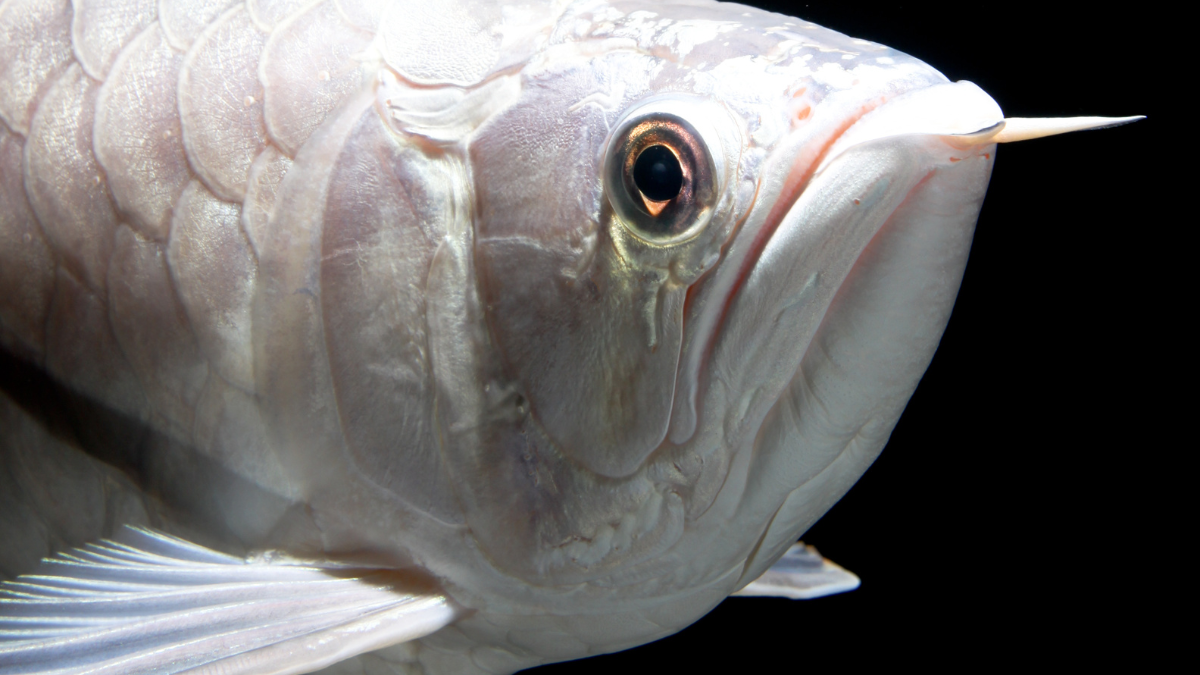
Male Arowana fish exhibit a fascinating form of parental care that sets them apart from many other fish species. Known as mouthbrooding, this behavior involves the male Arowana swallowing the fertilized eggs or larvae to protect them within his mouth until they are ready to fend for themselves.
The primary purpose of this behavior is to provide a safeguarded environment against predators and environmental threats, increasing the offspring’s chances of survival in their natural habitats.
The mouthbrooding process starts immediately after the female lays her eggs and the male fertilizes them. Once the eggs hatch, the larvae continue to develop inside the male Arowana’s mouth for a certain period.
During this time, the Arowana father abstains from eating to refrain from harming his offspring, highlighting his commitment to their care.
This parental strategy is one of nature’s unique solutions to the challenges faced by species in the wild, ensuring that at least a portion of the Arowana’s progeny survives to adulthood.
Understanding why male Arowanas resort to such an extreme form of parenting requires an appreciation for the ecological pressures they face. In the densely populated waters where Arowanas thrive, mouthbrooding provides a competitive advantage. It enables the species to flourish despite the high risks of predation to the vulnerable fry.
This intriguing behavior has been the subject of study by both aquarists and scientists, offering insight into the complex reproductive strategies of fish.
Arowana Parental Behavior and Offspring Care

The Arowana displays a unique approach to offspring care, with male Arowanas taking on the primary role of protecting and raising their young through a process known as mouthbrooding.
Mating and Reproduction
The mating process of Arowana fish involves intricate behaviors and a strong bond between the parents. After a courtship dance, the female Arowana lays eggs, which the male then fertilizes.
These fish are devoted parents, with the males playing an especially active role in the early stages of their offspring’s lives.
Paternal Mouthbrooding and Care
Post-fertilization, the male Arowana transforms into a mouthbrooder, a behavior rooted in paternal care. He safeguards the eggs by swallowing them, which signals the start of parental care.
Inside his mouth, the young Arowanas find a resting place, which offers protection and a safe environment for development. This parenting strategy is crucial for their survival, especially in the predator-rich ecosystems where these freshwater fish dwell.

Offspring Protection and Survival
Mouthbrooding extends beyond just carrying the eggs; the male Arowana continues to shelter the young fish, referred to as fry, in his mouth until they are capable of independent life.
Through this dedicated care, which enhances their protection and survival, the Arowana fish ensures the lineage of its kin. The relationship between the fish and their offspring is strengthened, and the chance of juvenile survival in their natural habitats is significantly increased.
Anatomical and Environmental Adaptations

Male Arowana fish demonstrate significant anatomical and environmental adaptations that contribute to their unique method of offspring care, which includes swallowing their young for protection.
Physiological Traits
Arowanas, or members of the family Osteoglossidae, possess an elongated body with large, heavy scales. These traits are essential for their survival in freshwater habitats.
They are carnivorous, and their upturned mouth structure is adept for surface feeding, which aligns with their diet that primarily consists of other fish, insects, and occasionally birds and small mammals.
The male Arowana is known for being a facultative air breather, using a modified swim bladder to breathe air from the water surface. This ability is crucial for surviving in environments with low oxygen levels.
When it comes to reproduction, they are particularly distinctive: males incubate fertilized eggs in their mouth, a practice known as mouthbrooding. This not only provides the young Arowanas a secure environment but also allows the male to control the temperature and pH levels the eggs are exposed to, which are vital for the hatchlings’ development.
Habitat and Dietary Adjustments
Arowana fish inhabit various freshwater ecosystems. These can range from slow-moving parts of rivers to lakes. Their habitat requires specific parameters.
The water pH should be slightly acidic to neutral. The temperature needs to be stable.
Asian Arowanas and Silver Arowanas may require different tank conditions when kept in captivity. A spacious tank size is necessary for these large fish. Some species like the Asian Arowana can grow over 90 cm (35 inches) in length.
Because of their carnivorous diet, Arowanas must have ample space to exhibit their natural hunting behaviors. They often prey on species that provide them with the nutrition needed for their large size.
The diet adjustments are also crucial when caring for young. The male Arowana must ensure that his offspring have immediate access to food upon release from his mouth.
These adaptations, both anatomical and environmental, have enabled Arowana fish to become resilient inhabitants of their ecosystems and protective parents for their offspring.
Leave a comment